


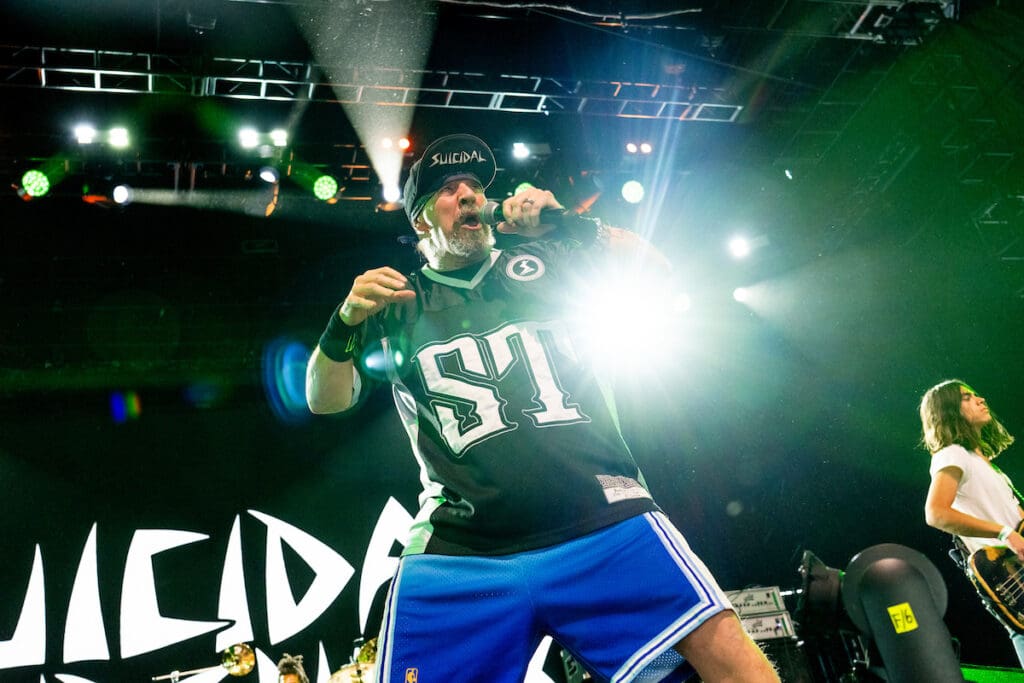
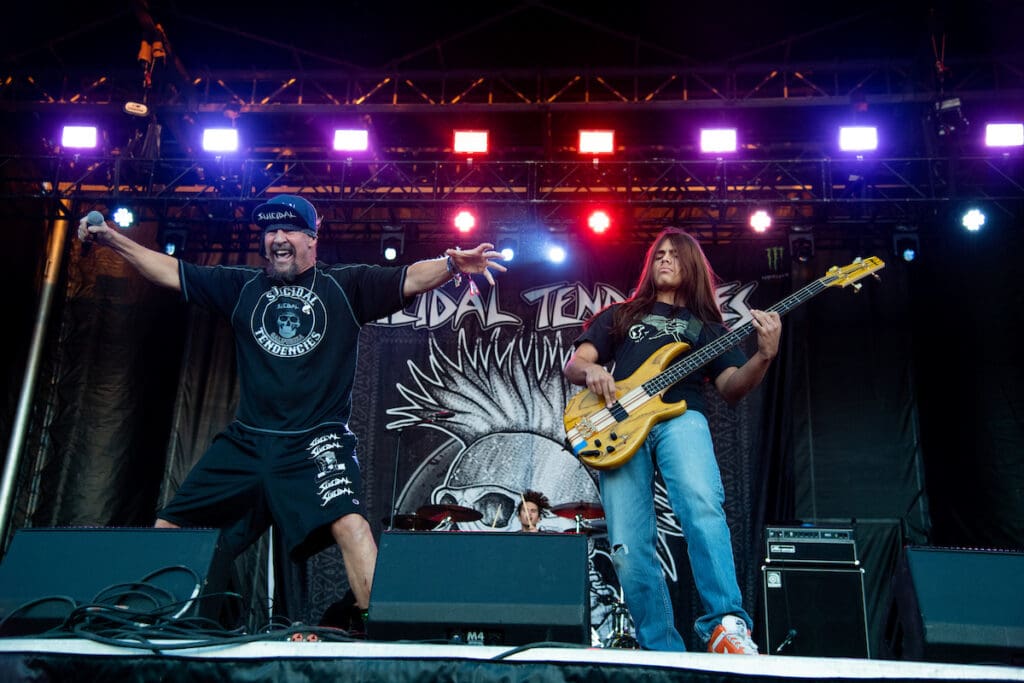
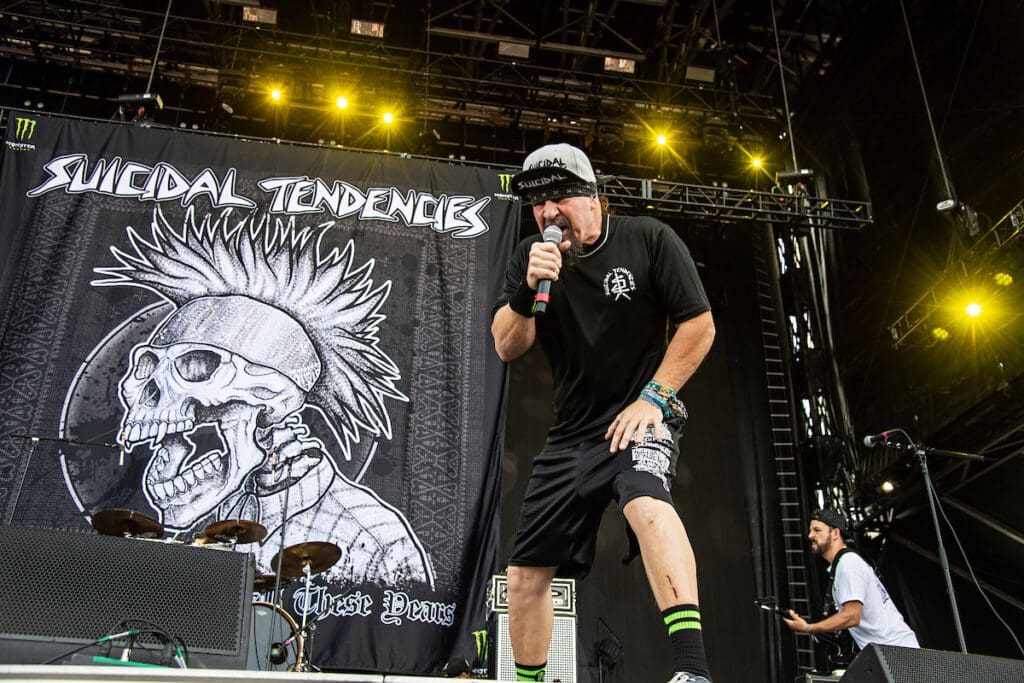
Few bands brought the kind of raw, unfiltered energy to Coachella this year like Suicidal Tendencies. In a weekend packed with polished pop spectacles and meticulously produced headlining sets, their performance felt like a jolt of electricity—chaotic, relentless, and completely authentic.
It’s the kind of energy the band has been delivering since the early 1980s, when they emerged from the Venice, California skate and punk scene, blending hardcore, thrash, and funk into something entirely their own. Led by frontman Mike Muir, the band built a legacy on defying expectations, from their self-titled 1983 debut—which gave the world “Institutionalized”—to decades of genre-bending records and an ever-evolving lineup that has included some of rock’s most respected musicians.
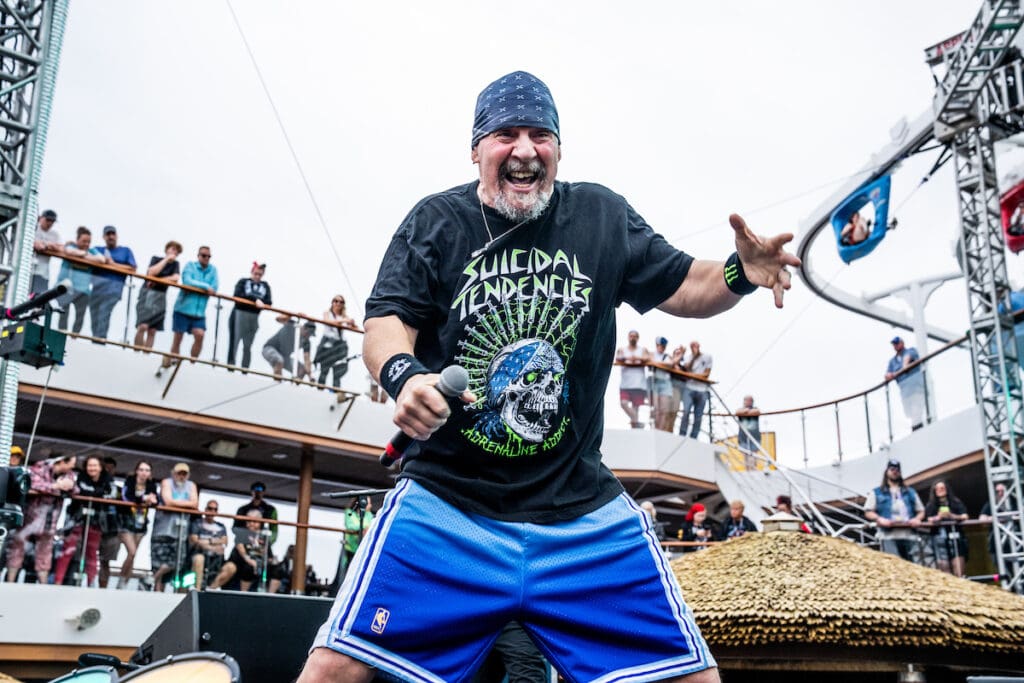
More than 40 years in, that same independent spirit still drives Muir, both onstage and off. We caught up with him aboard ShipRocked following one of the standout sets of the festival to talk about creativity, touring, journalism, and what continues to push him forward after all these years.
Has a place you’ve traveled ever inspired a song?
Not really. For me, it’s never been like writing lyrics first or getting inspired by a place and then building a song around it. It’s always been about the music—it starts as a feeling. The words come from that. I’ve always thought of vocals as another instrument. You can’t just take lyrics from one song and drop them onto another—it wouldn’t work. It’s all connected to that original feeling.
What’s going on with Infectious Grooves right now?
(Laughs) We’ve got this bass player with some potential (Robert Trujillo of Metallica), but he’s busy playing in front of 75,000 people every night. I don’t know what he’s doing… he should probably get serious. But yeah, everyone’s schedules are crazy. We’ve done a few shows recently, including in Australia, and it’s always fun when it comes together. Playing with family—having my son out there, being around Robert—that’s always special.
You mentioned Australia—any standout memories from that tour?
A lot. My kids were born there, so being able to go back and spend real time—not just touring, but actually living there for a bit—was huge. They had a great time and had some freedom to explore. We stayed for almost two months. Did Suicidal shows, did some solo stuff, and just got to experience it differently. It’s one of the few places I’ve ever thought, “Yeah, I could live here.”
Has traveling the world changed your perspective in general?
Definitely. But it’s not just about the places—it’s about the people. When you get off the tourist path and actually spend time with locals, that’s when it changes everything.
I’ve been lucky. Whether it’s Japan, Brazil, France—once you connect with people, language doesn’t matter as much. You realize people are the best thing in the world… and sometimes the worst thing too. But when you meet good people, that’s everything.
Honestly, it’s simple. Being with family. That’s it. When you’re younger, you think certain things matter. As you get older, your definition of what’s important changes. If you’ve got your health and the people you care about around you, you’re off to a pretty good start.
You worked in journalism early on in life—how do you feel about the state of it today?
(Laughs) That’s a loaded question. I think a lot of it now is very agenda-driven. You can tell where someone is coming from right away. And it’s not even subtle anymore. I think people should always ask: Why is this person writing this? What do they want me to think?
It’s like anything—music, art, journalism. There are different ways to interpret things. But I think we’ve lost some of that openness. Everything feels more rigid now. People don’t want to hear other perspectives, and that’s where things start to break down.
What keeps you coming back to ShipRocked year after year?
My kids. You met them last year. They are a walking commercial for this place. They ask about it all year. It really good to be here at the beach with my whole family and get to play for the fans.
What keeps you motivated creatively after all these years?
Having fun again. There was a point where I said I wasn’t going to make any more records—it just wasn’t fun anymore. But recently, working on new music, I realized I was enjoying it again. That’s what matters.
I’ve got a Psycho Miko record coming out, another project called Psycho Star, and we’re starting work on new Suicidal Tendencies material soon. At this point, it’s not about sales or numbers. If we finish a record and the five of us listen to it and go, “This is cool,” that’s success and we will put it out.
The guys in the band want to do one of those records where, you know, ten years from now, 20 years from now, someone goes says I fucking love that record. We want to make songs that you want other people to hear and say that song means something to me.
What advice would you give to people chasing something creative?
I’m glad my Dad told me that there are always a million reasons not to do something. You just have to find one reason to do it. People look for shortcuts now. But life’s hard—it’s supposed to be. You’ve got to put the work in. And more importantly, you’ve got to accept yourself. That’s where real happiness comes from, not from other people’s approval.