


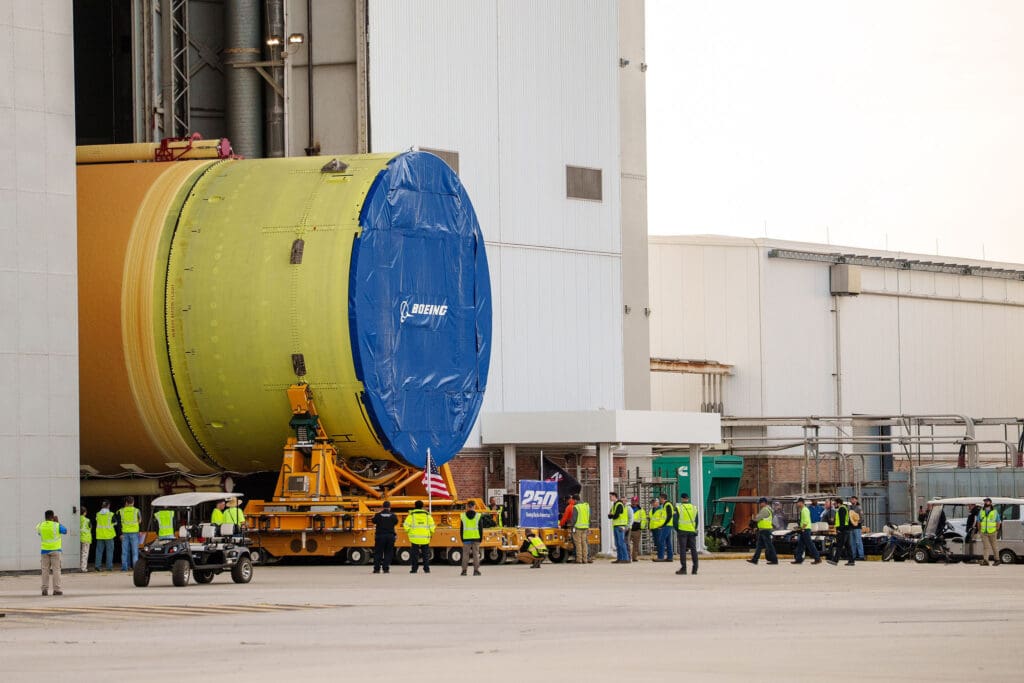
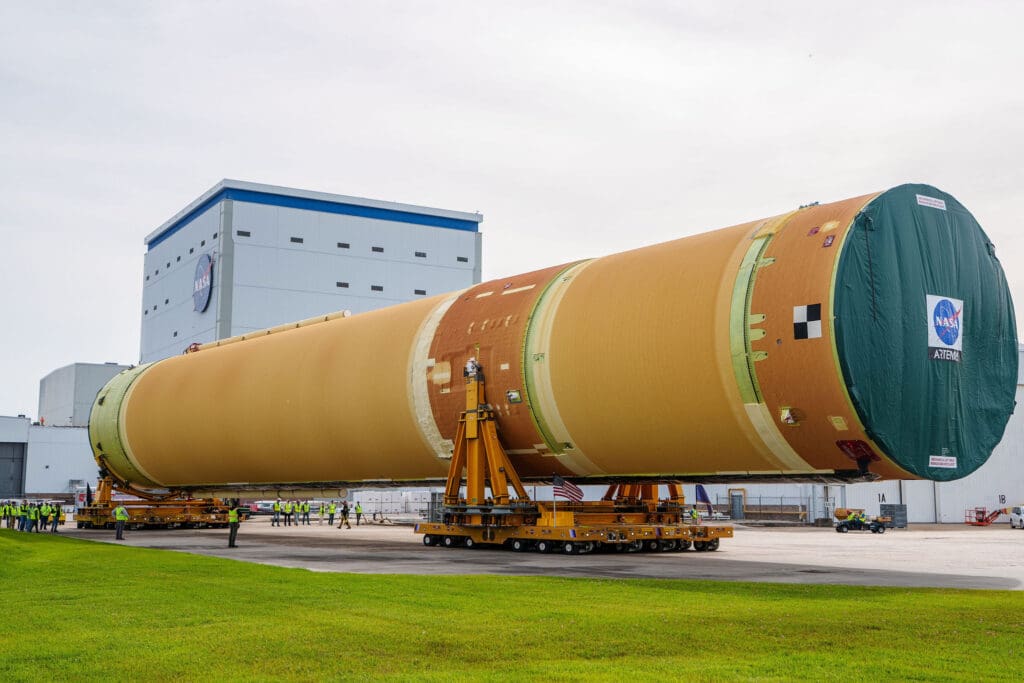
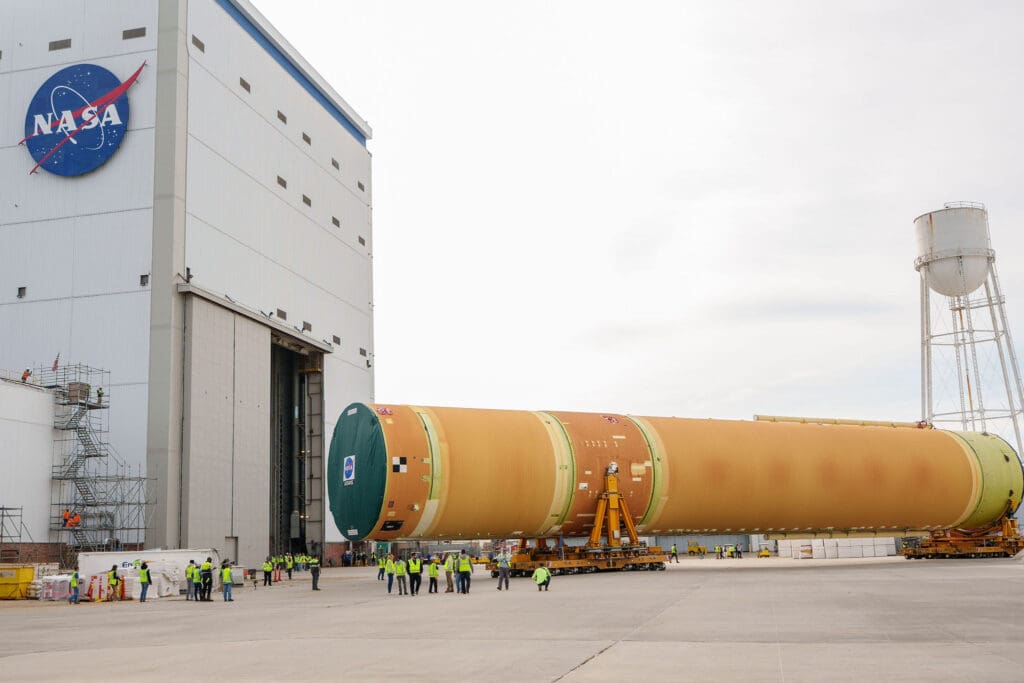
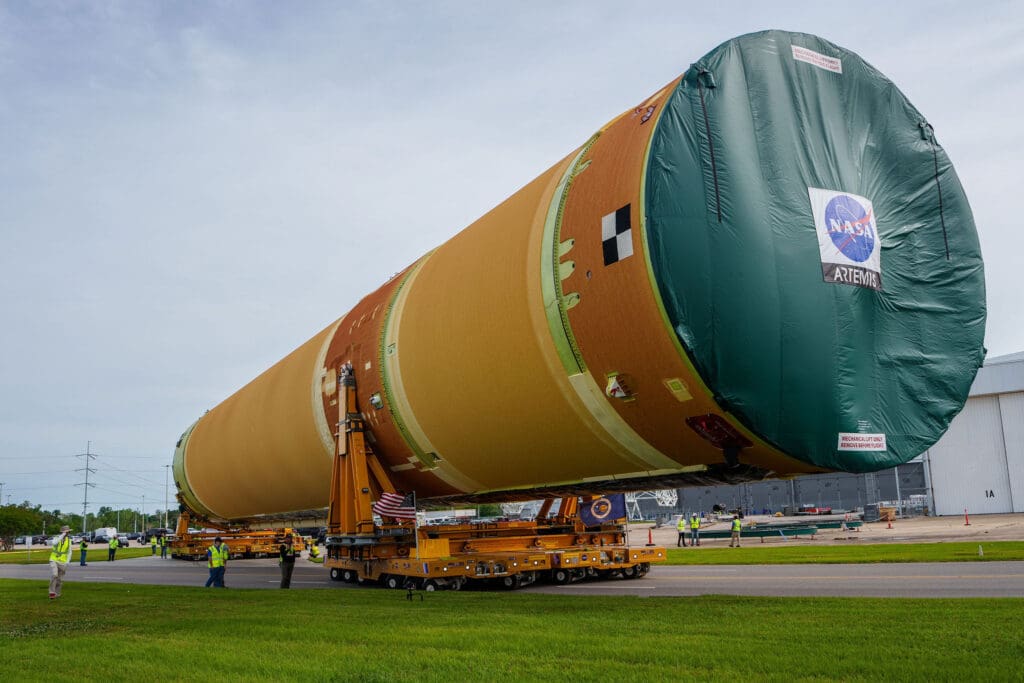
Something massive moved through New Orleans this week—and it wasn’t a parade float or a festival stage. On April 20, NASA rolled out the largest portion of its Space Launch System (SLS) rocket from the Michoud Assembly Facility, marking a major milestone for the agency’s upcoming Artemis missions.
The section, often referred to as the “top four-fifths” of the SLS core stage, includes the liquid hydrogen tank, liquid oxygen tank, intertank, and forward skirt—essentially the backbone of the rocket that will power astronauts beyond Earth’s orbit. Watching it move is a surreal experience: a towering piece of engineering, slowly making its way from factory floor to water, where it was loaded onto NASA’s Pegasus barge for its journey to Kennedy Space Center.
For a city known for music, food, and culture, this moment is a reminder that New Orleans also plays a critical role in the future of space exploration.
From New Orleans to the Moon
The Michoud Assembly Facility has long been one of NASA’s most important production sites, and it continues to serve as the birthplace of the SLS core stage. Every major structural component of the rocket is manufactured here before being shipped out for final assembly and launch preparation.
Once the core stage arrives in Florida, teams at Kennedy Space Center will complete final outfitting and vertical integration. From there, it will be handed over to NASA’s Exploration Ground Systems Program, which oversees stacking the rocket and preparing it for launch.
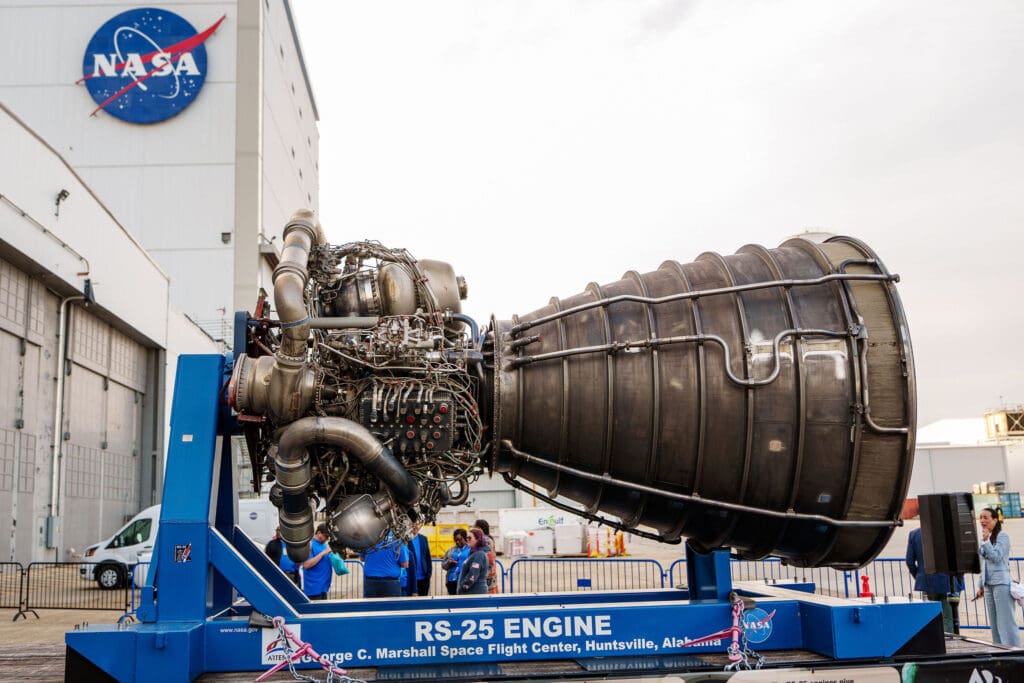
When fully assembled, the SLS rocket—powered by four RS-25 engines—will generate more than 2 million pounds of thrust, enough to send astronauts aboard the Orion spacecraft toward the Moon. It’s currently the only rocket capable of launching Orion, crew, and cargo in a single mission.

Building on Artemis Momentum
This latest rollout comes just days after a major milestone for the Artemis program. Artemis II successfully returned from its journey around the Moon on April 10, proving the systems needed to carry humans deeper into space are working as intended.
Even more remarkable? The rocket that powered Artemis II was also built at the same New Orleans facility. That continuity underscores the city’s growing importance in NASA’s long-term lunar ambitions—and its role in shaping the next era of human spaceflight.
What’s Next for Artemis III
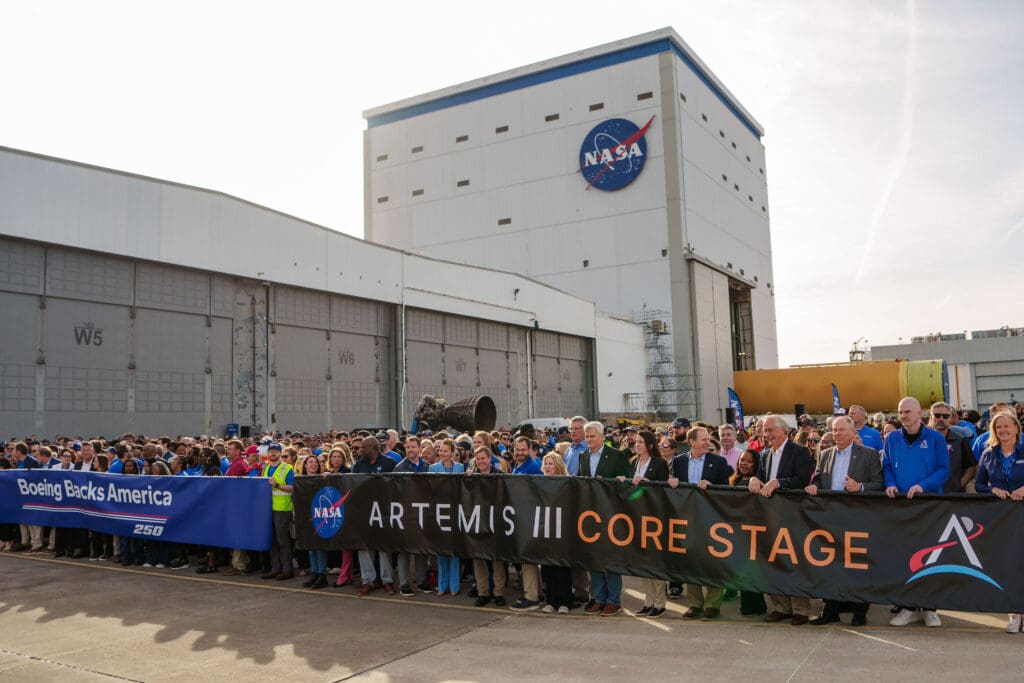
While Artemis II tested the systems with astronauts on board, Artemis III will take things a step further. Currently scheduled for launch in 2027, the mission aims to send astronauts into lunar orbit, where they will test critical rendezvous and docking procedures with commercial spacecraft designed to land on the Moon.
The ultimate goal? Returning humans to the lunar surface and establishing a sustainable presence that will pave the way for future missions to Mars. The SLS rocket is the only rocket capable of sending Orion, astronauts, and supplies to the Moon in a single launch.
Before that can happen, several key components still need to come together. The engine section and boat-tail have already been moved into position at Kennedy Space Center, and the four RS-25 engines—currently at Stennis Space Center in Mississippi—are scheduled to arrive for integration by mid-2026.

A Collaborative Effort
Like most modern space endeavors, the Artemis program is a collaboration. Boeing serves as the lead contractor for the SLS core stage, while L3Harris Technologies leads work on the RS-25 engines. Together with NASA, these partners are helping streamline production and create a more standardized rocket configuration for future missions.
Why It Matters
Moments like this rollout may not have the spectacle of a launch, but they are just as significant. They represent the behind-the-scenes progress that makes those headline-making liftoffs possible.
Standing in New Orleans, watching a rocket stage begin its journey to Florida—and eventually to the Moon—you get a rare perspective on how global exploration often starts in very specific, very local places.
And in this case, the road (or rather, waterway) to the Moon runs straight through Louisiana.