


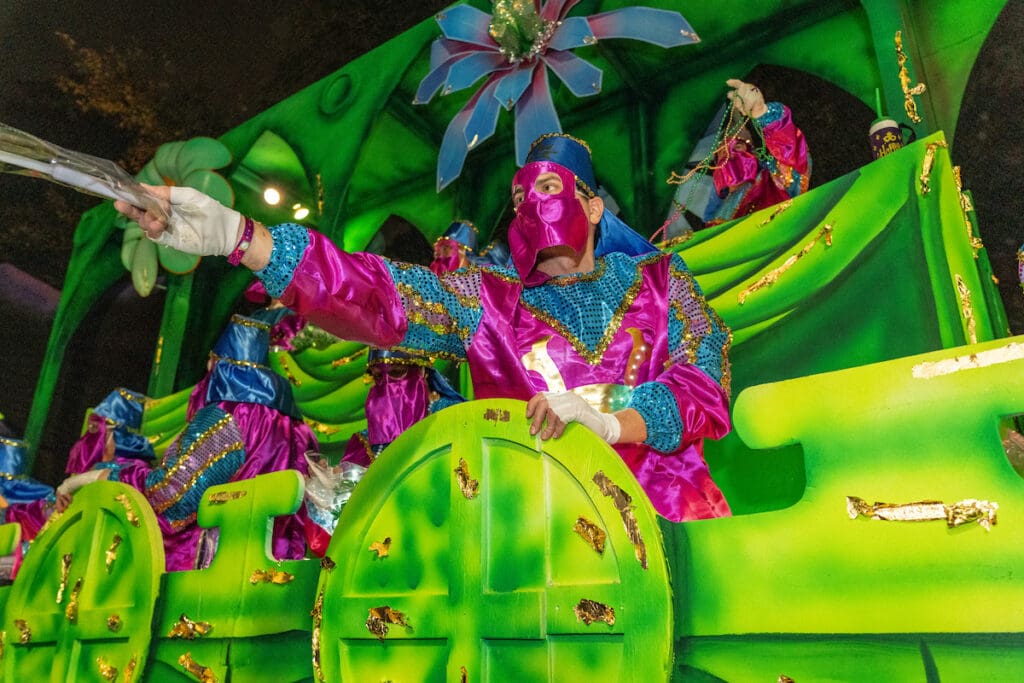
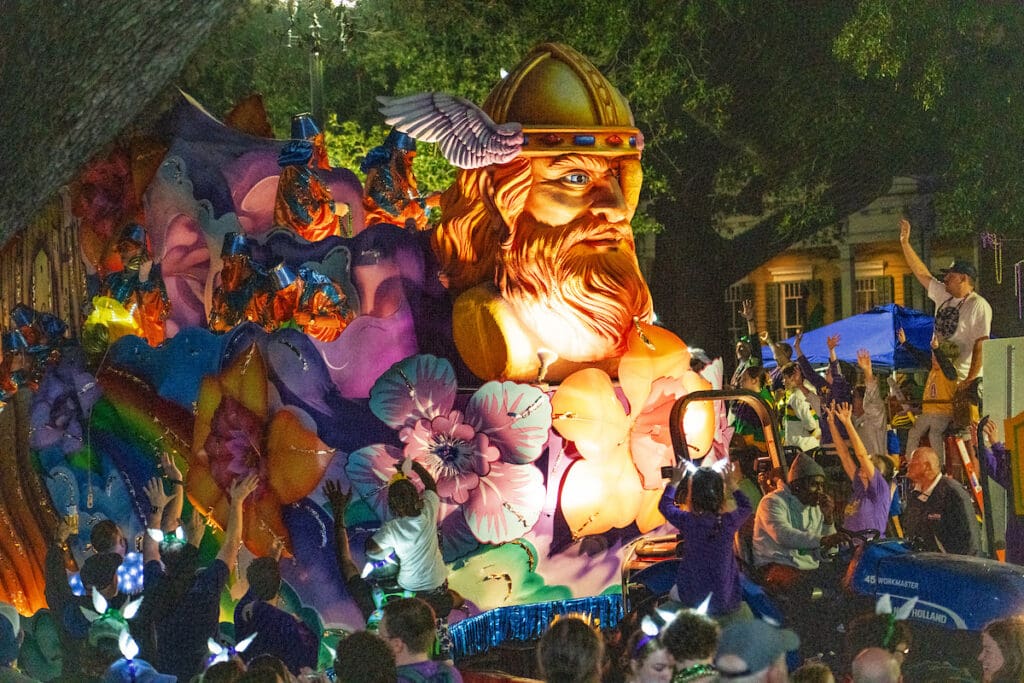
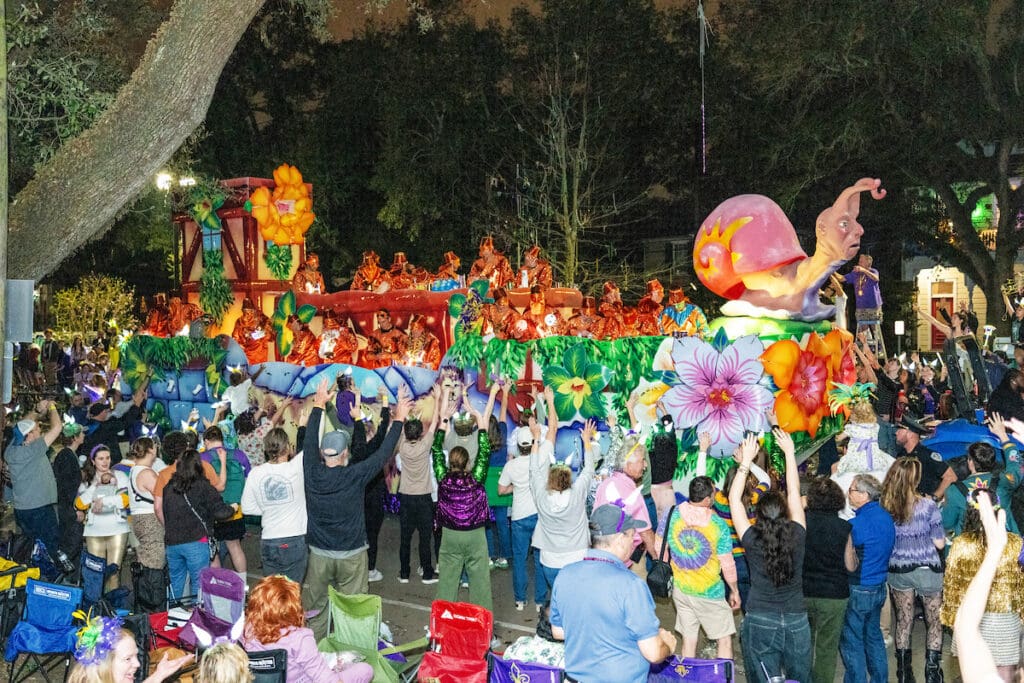
Last Friday evening, under clear skies and near-perfect Carnival weather, the Krewe of Hermes rolled along the Uptown route, delivering a parade that blended mythology, tradition, and heartfelt moments into one of the most enduring nights of the Mardi Gras season. Even with the calendar landing on Friday the 13th, there was nothing unlucky about the scene—just packed sidewalks, glowing floats, and a crowd eager to welcome one of New Orleans’ longest-running night parades.
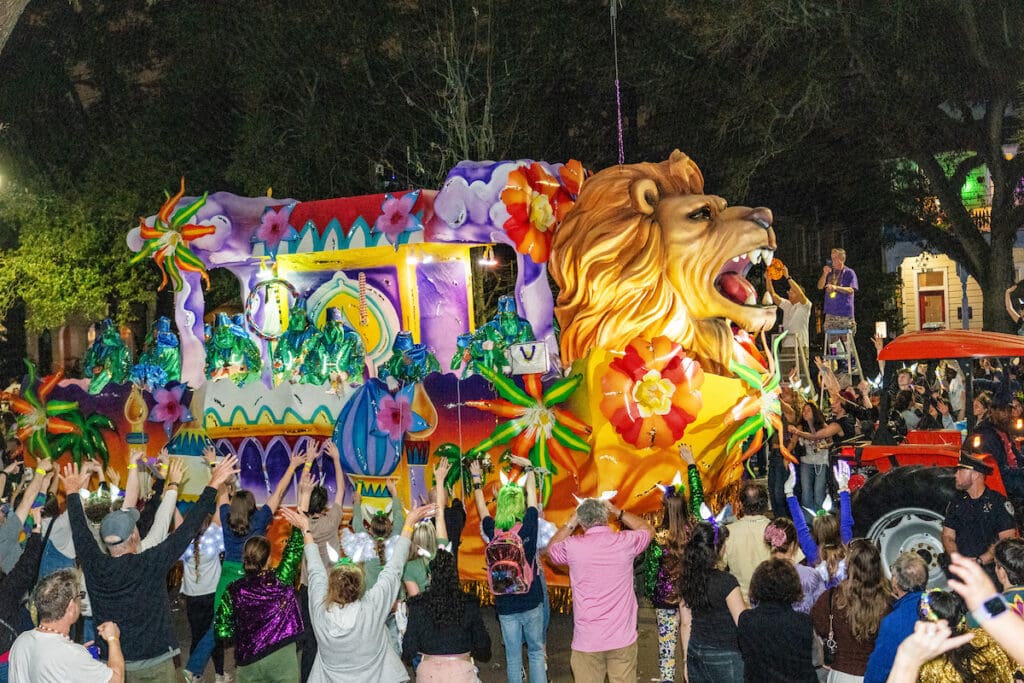
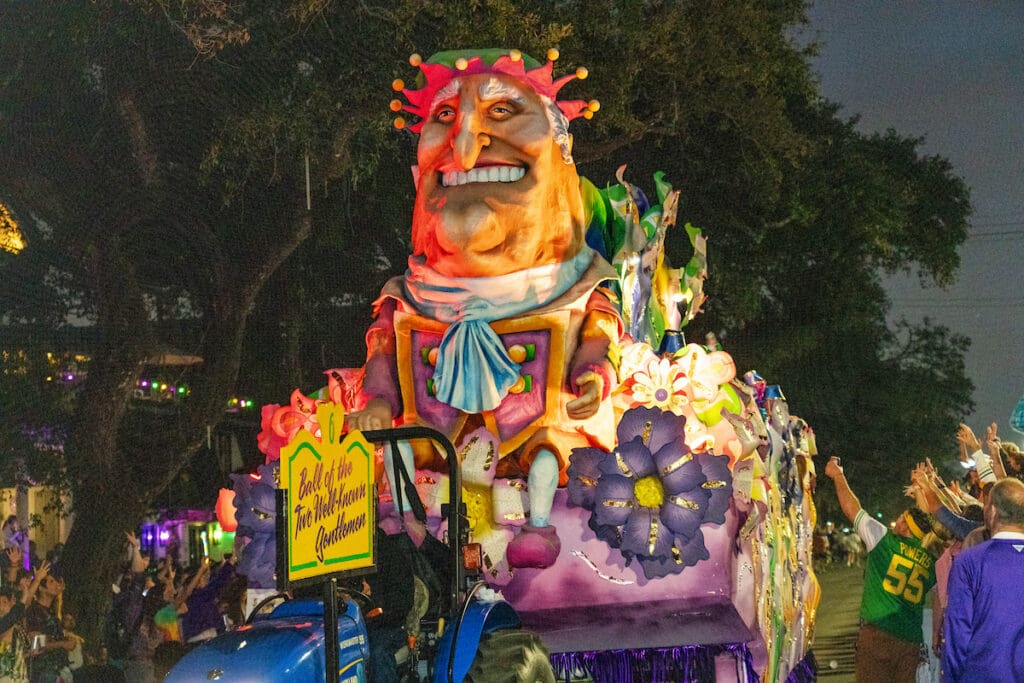
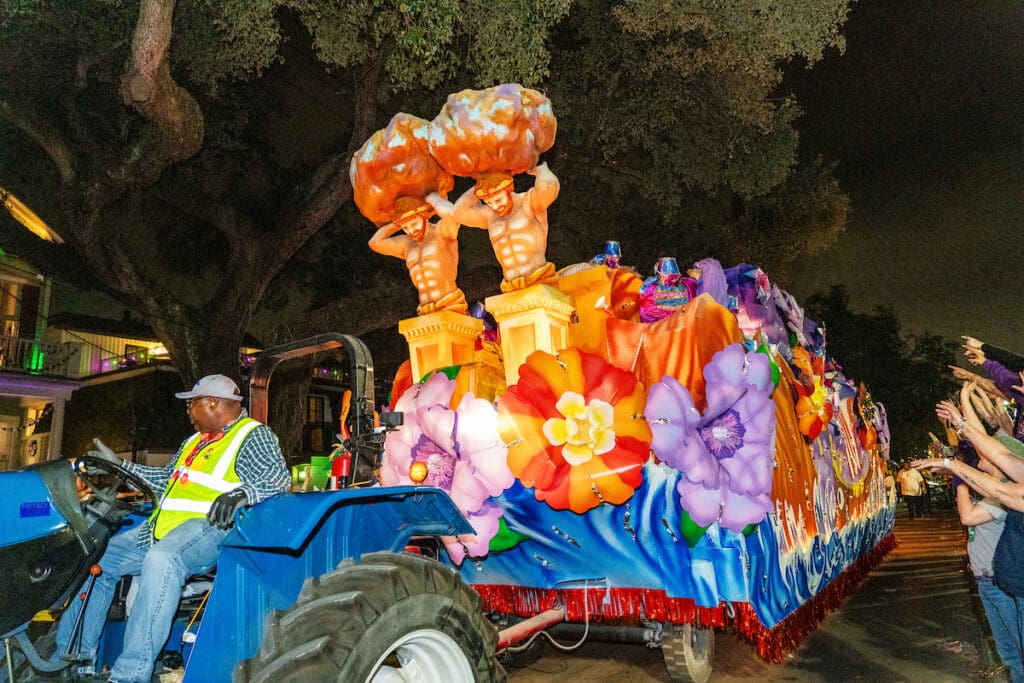
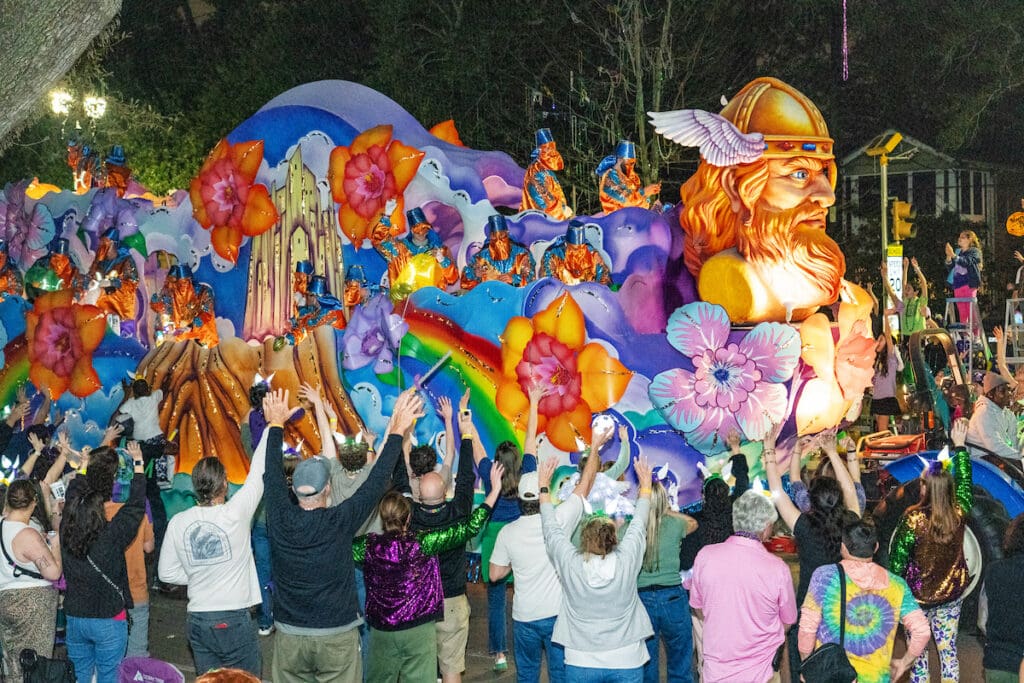
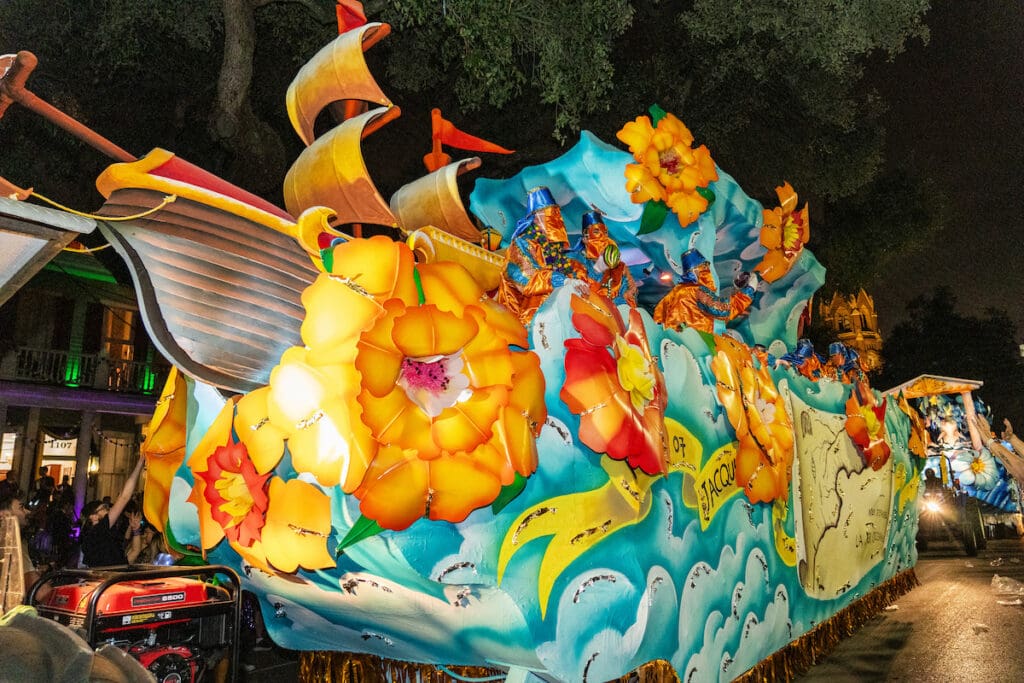
Founded in 1937, Hermes holds the distinction of parading longer than any other night-parading krewe in New Orleans. Each year, the krewe takes to the streets at 5:30 p.m. on the Friday before Fat Tuesday, and that sense of ritual is woven deeply into its identity. For 2026, Hermes invited revelers on a journey to “Fabled Lands of Myth and Legend,” a theme that existed entirely within the worlds of fictional literature and imagination. From the first float to the last, the parade unfolded like a storybook brought to life.
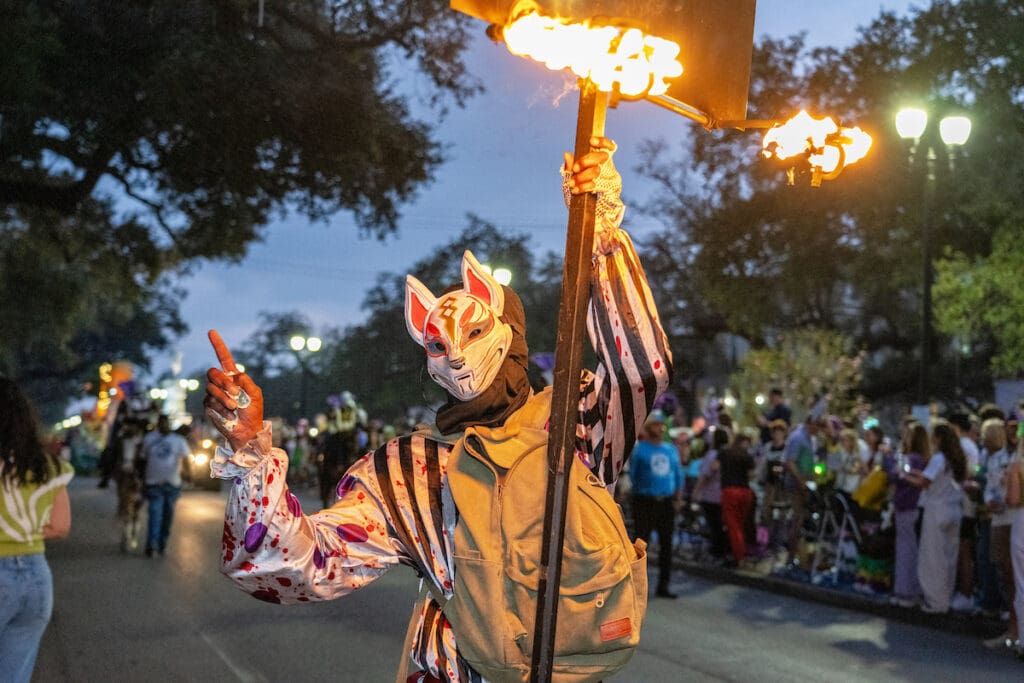
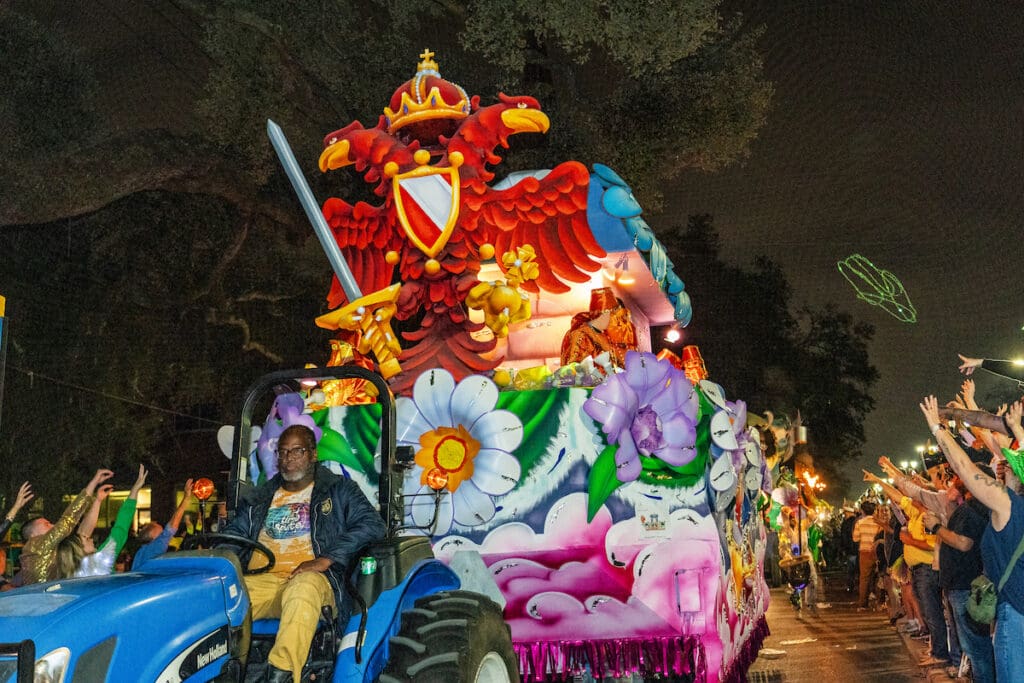
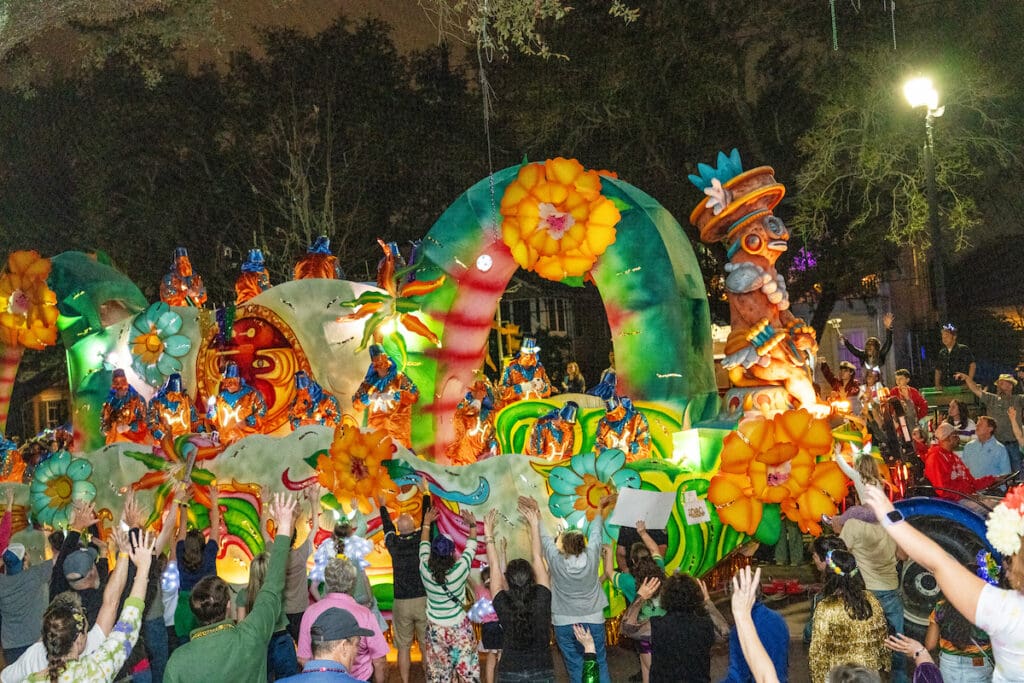
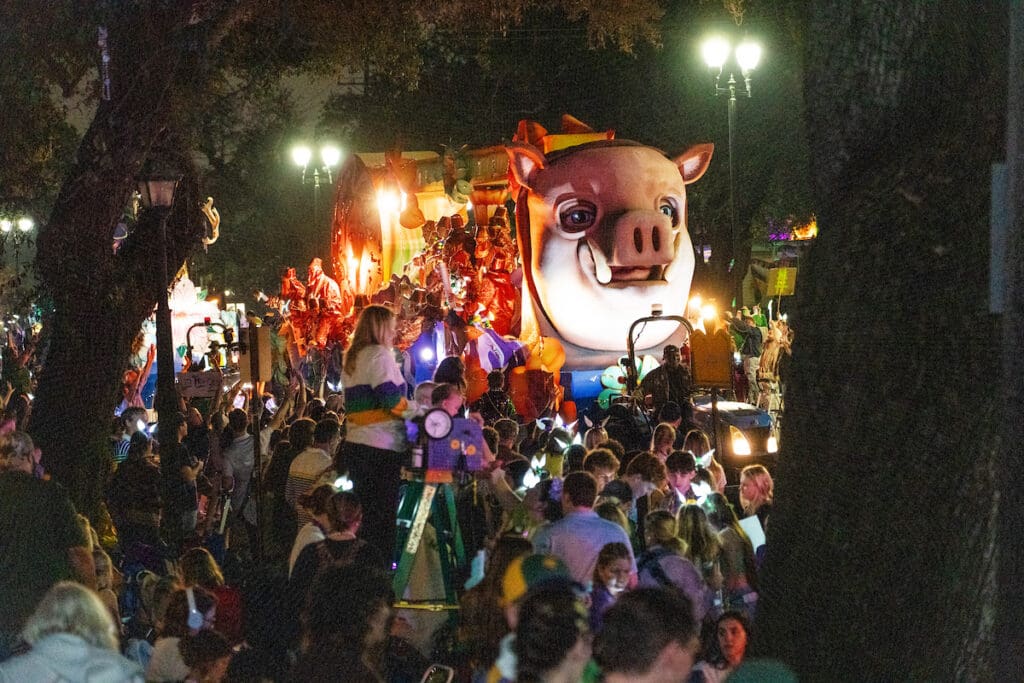
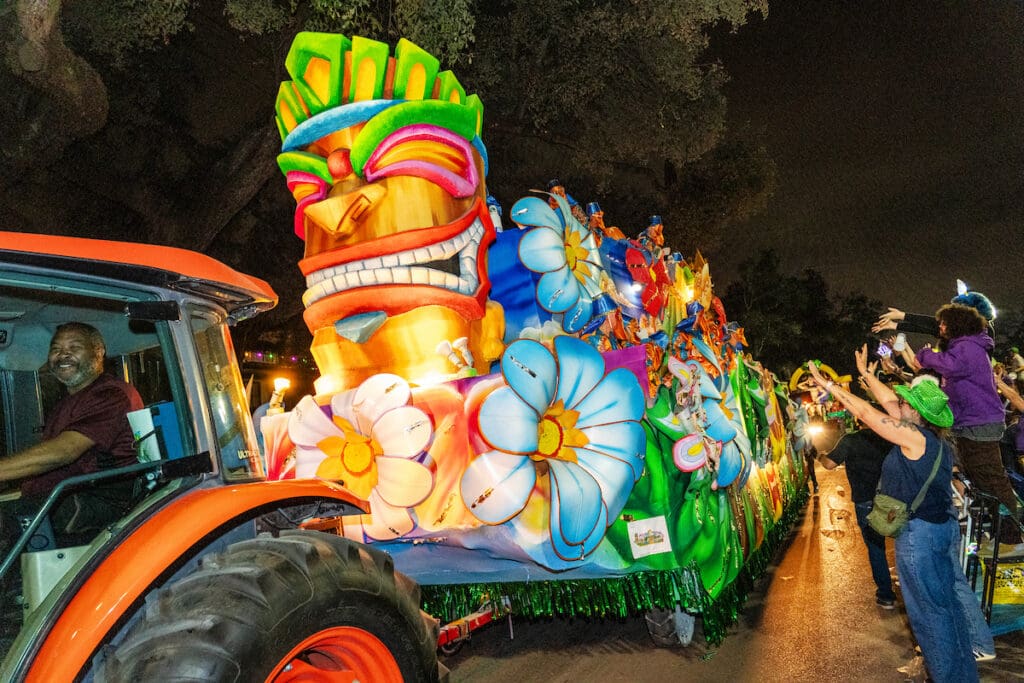
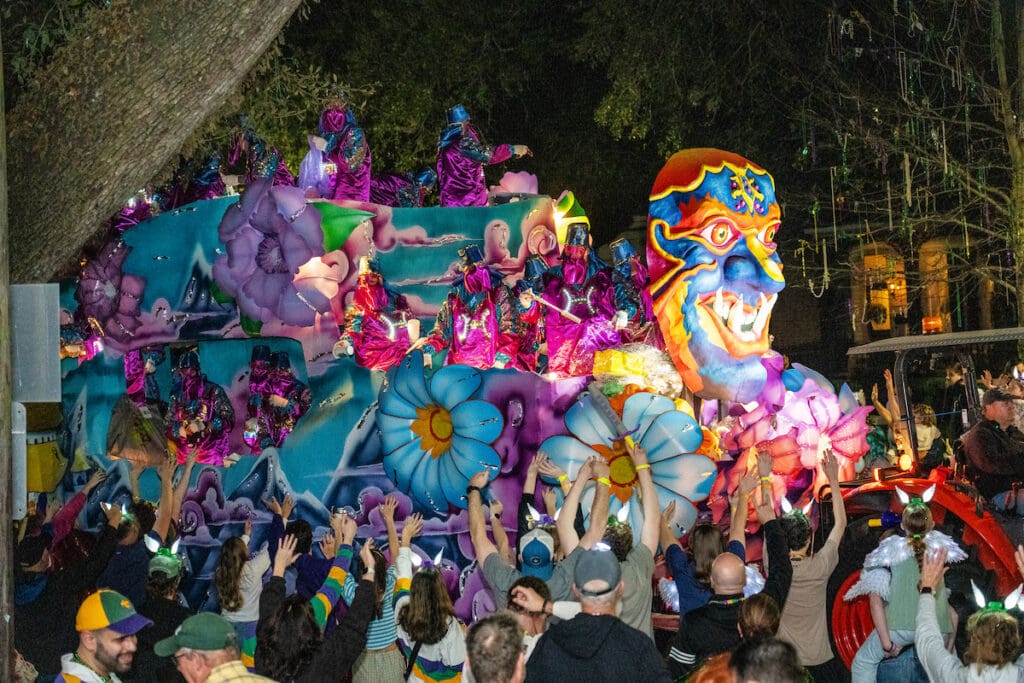
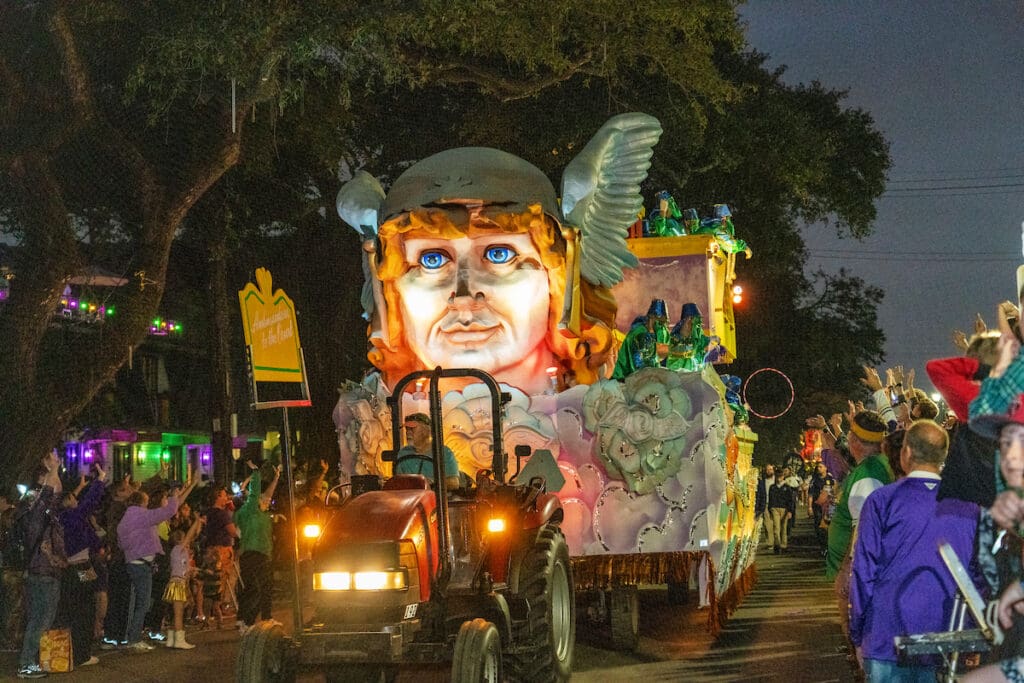
Hermes has long been known for its dedication to craftsmanship, detail, and narrative—values rooted in its earliest days. While many modern parades rely on spectacle alone, Hermes continues to emphasize artistry and storytelling. Each float felt like a chapter in an epic tale, filled with mythic references, fantastical settings, and characters that seemed to step straight out of legend. That attention to detail reminded spectators that these floats are not created overnight—they are the result of months of work by artists and builders inside the Hermes den, where preparations for the next season begin almost as soon as the last parade ends.
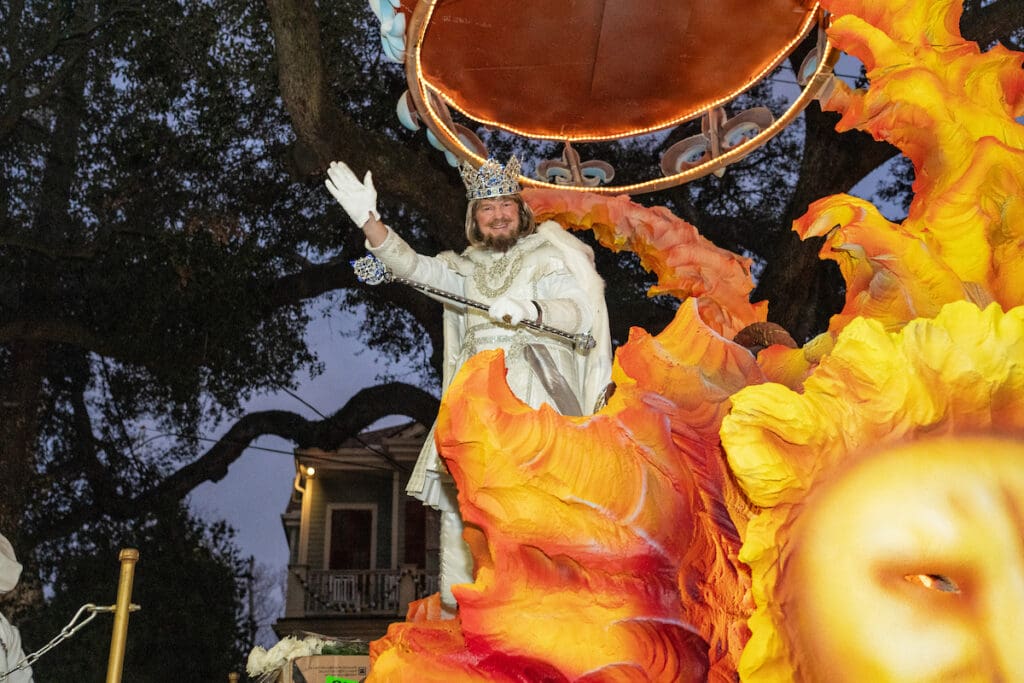
Leading the royal court this year was Queen Miss Ada Schoen Holmes, daughter of Mr. and Mrs. John Walet Holmes. Her presence added grace and tradition to a parade steeped in ceremony. While the queen is publicly known, the identity of the king—true to Hermes tradition—remains a closely guarded secret. That mystery is part of the krewe’s enduring appeal, heightened each year by the Hermes Grand Ball, held the night before the parade. At the ball, the King and his court are presented in an elaborate ceremony, followed by a lively Supper Dance that marks the krewe’s final celebration before rolling.
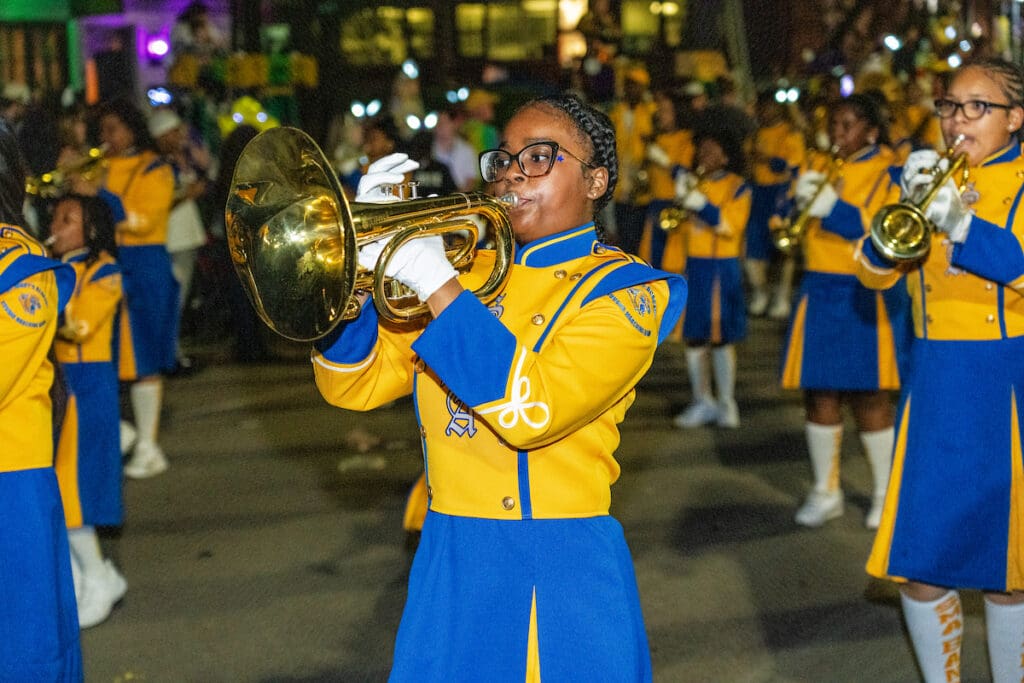
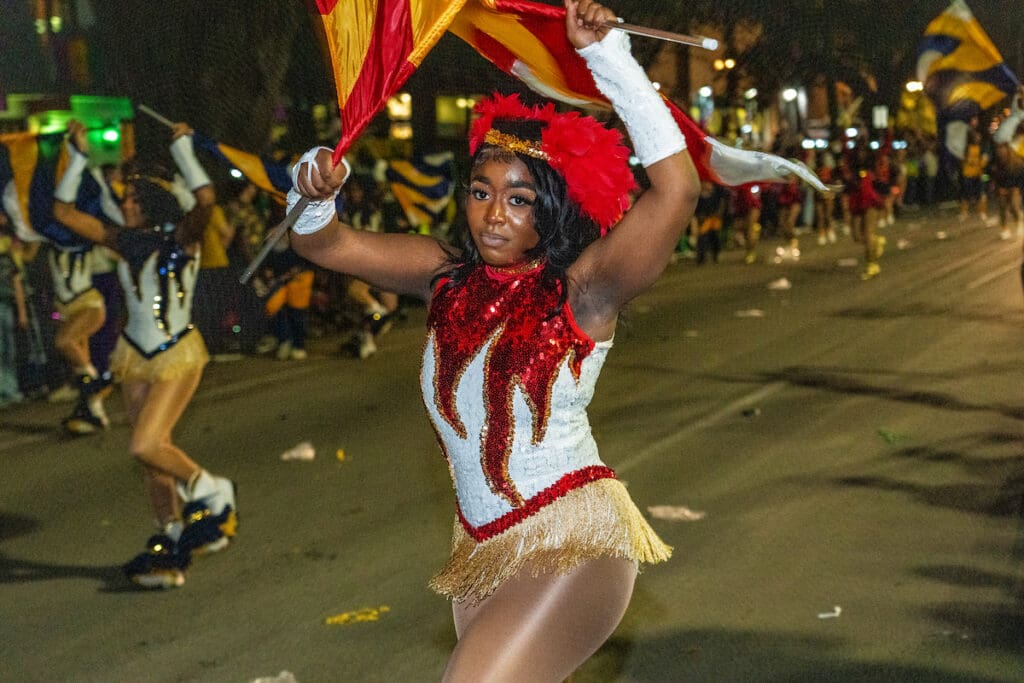
The Uptown route was alive with sound as marching bands and performers filled the spaces between floats. The Alcorn State Marching Band brought powerhouse energy to the streets, delivering precision, rhythm, and crowd-pleasing performances that kept spirits high throughout the route. Their music echoed down St. Charles Avenue, turning the parade into a moving celebration as much about sound as spectacle.
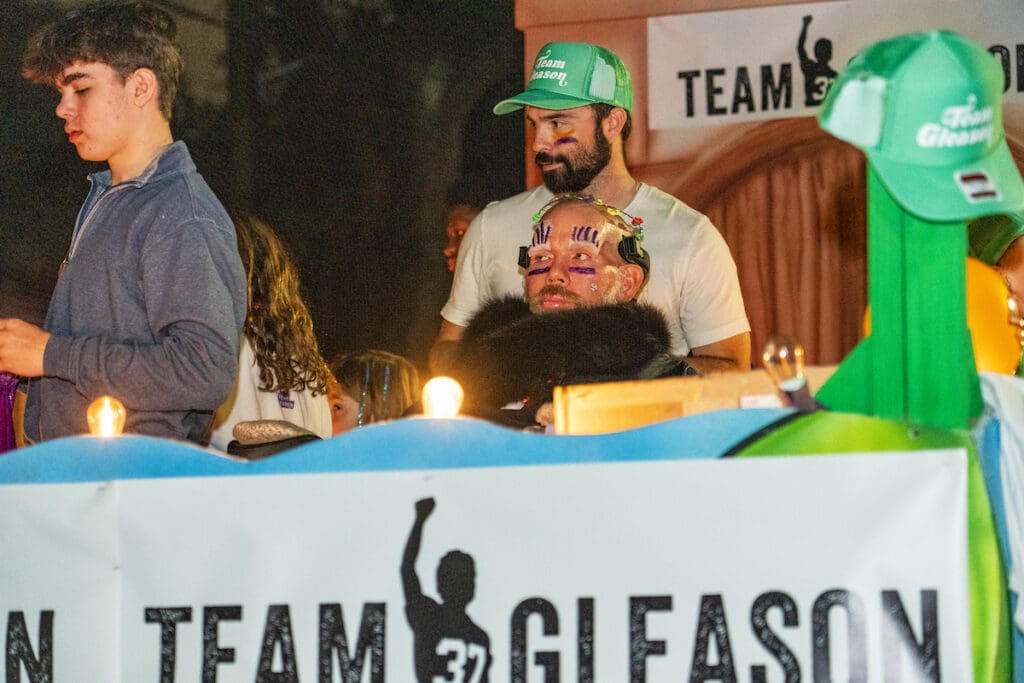
One of the most meaningful moments of the night came with the appearance of Steve Gleason, a New Orleans icon and former Saints player. Gleason rode in the parade aboard the Team Gleason float, drawing cheers and applause from crowds who know his story well. Through Team Gleason, his organization has raised more than $65 million for ALS research, advocacy, and support for patients and families. Amid the fantasy and pageantry of the parade, his presence grounded the night in something deeply real—resilience, community, and the power of collective action.
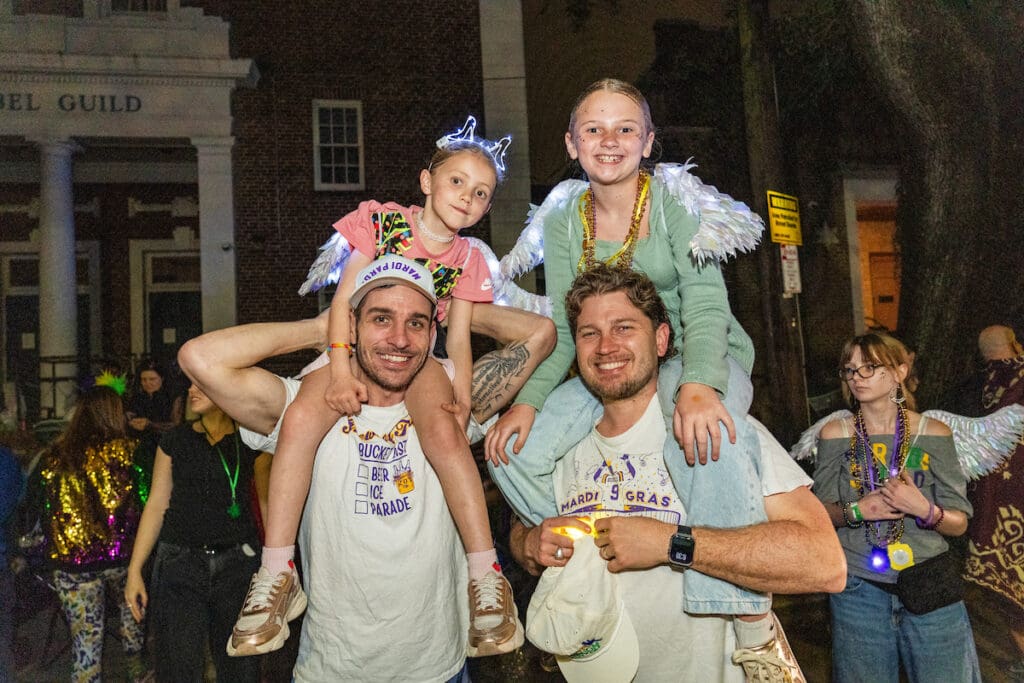
The crowds along the Uptown route reflected the wide appeal of Hermes. Families gathered early, longtime parade-goers shared space with first-time visitors, and neighbors greeted one another as floats rolled past. Perfect weather only amplified the atmosphere, allowing spectators to linger, laugh, and fully immerse themselves in the experience without distraction.
What sets Hermes apart is not just its longevity, but its commitment to continuity. This parade is the culmination of an entire season of work and celebration, intensified during the final week of Carnival. From the Grand Ball to the last float rolling past, Hermes feels less like a single event and more like a living tradition—one that honors its past while continuing to captivate new generations.
As the final float disappeared down the Uptown route and bands packed up their instruments, the Krewe of Hermes once again proved why it remains a cornerstone of Mardi Gras. With “Fabled Lands of Myth and Legend,” the krewe delivered an evening where imagination ruled, craftsmanship mattered, and tradition held strong—reminding New Orleans that some stories are worth telling year after year.