


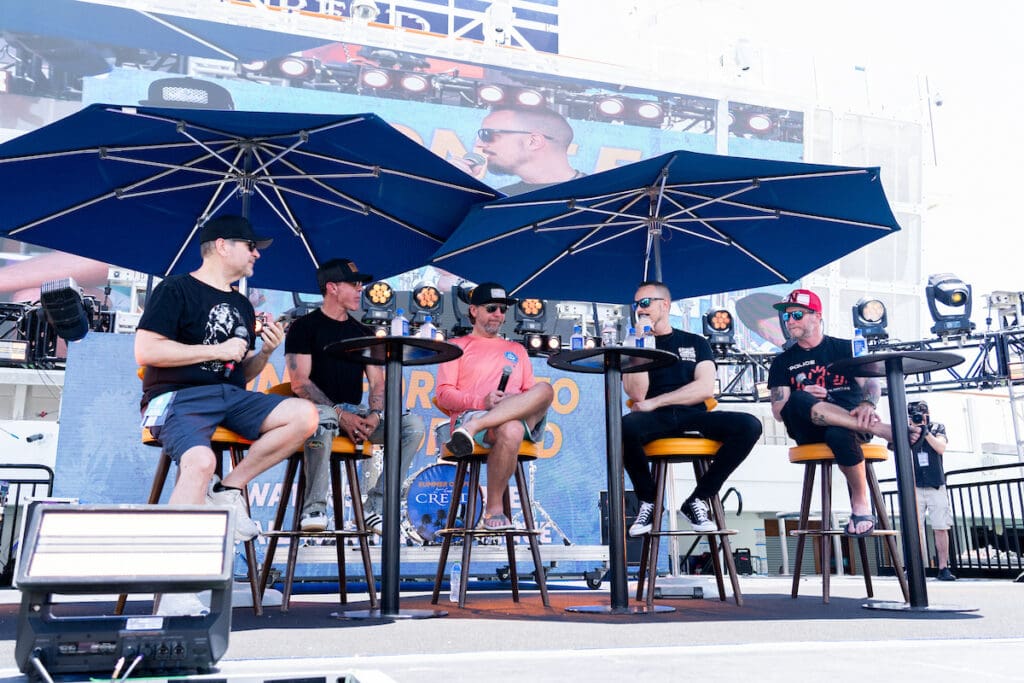
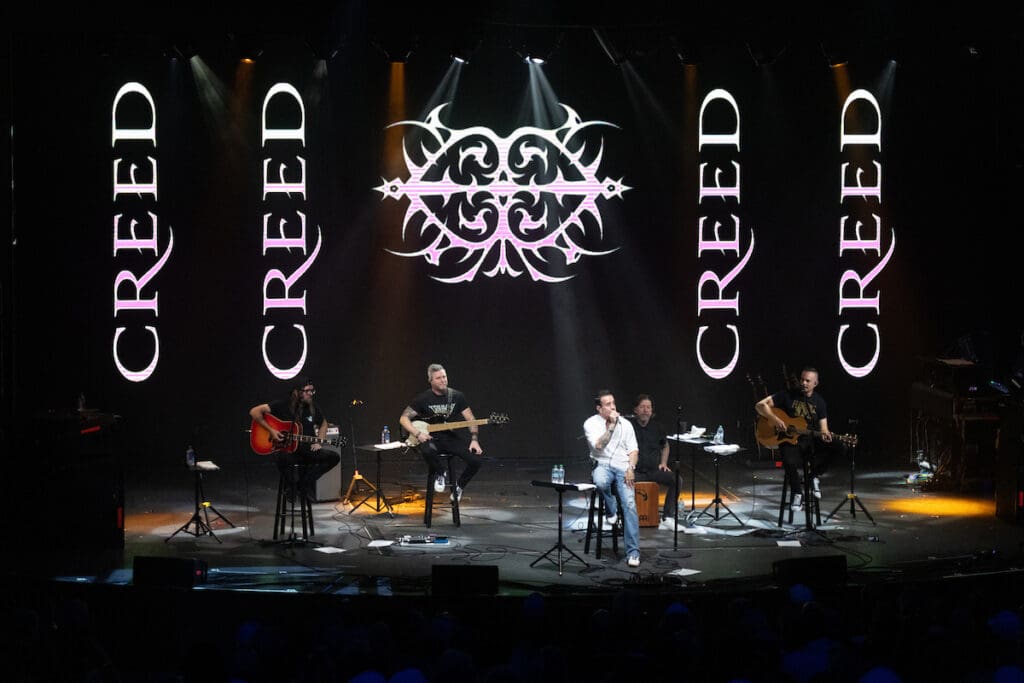
The final afternoon of the Summer of ’99 and Beyond Cruise felt less like a wind-down and more like a slow cruise back to reality on land without your favorite rockstars—literally and figuratively. With the Caribbean stretching endlessly beyond the pool deck, fans gathered for a rare, candid Q&A hosted by Eddie Trunk alongside all four members of Creed—Scott Stapp, Mark Tremonti, Brian Marshall, and Scott Phillips.
The conversation centered around the fan-selected “Night 2” setlist—a heavier, deeper-cut-driven performance that ultimately won out over Night 1 in a cruise-wide vote. What unfolded wasn’t just a breakdown of songs, but a revealing look at the band’s creative process, personal evolution, and the enduring connection between their music and the fans who’ve carried it across generations.
A Setlist Shaped by Experience
Unlike the early days—when, as Trunk pointed out, setlists often fell to the lead singer—Creed now approaches their shows as a collaborative effort. “Back in the day,” Stapp admitted, he might have had more control, but today the band operates with a looser, more democratic energy.
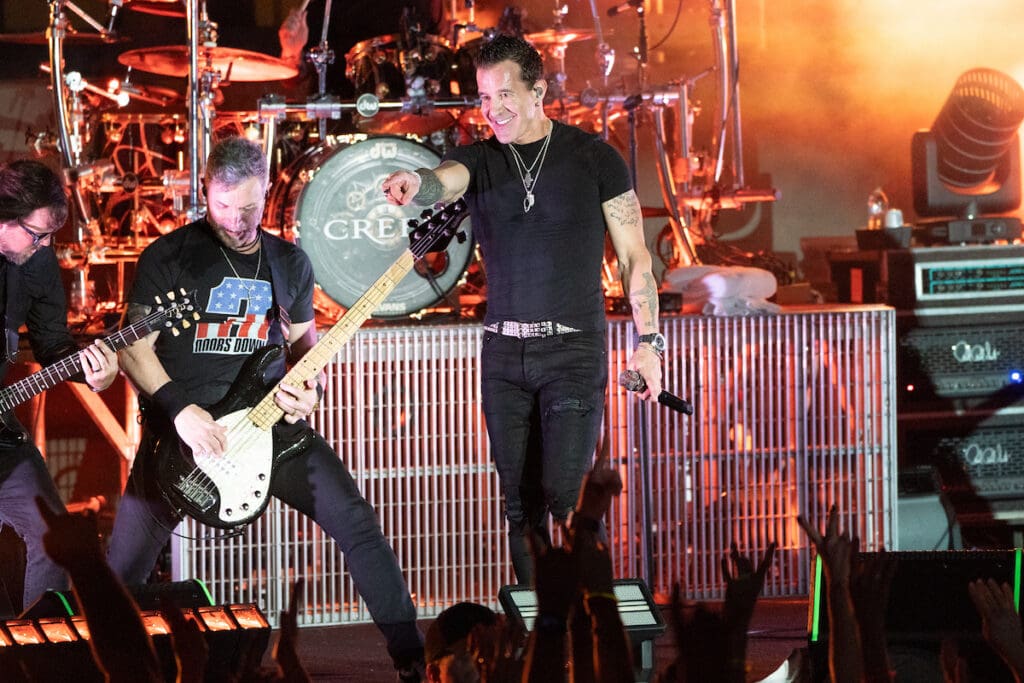
That looseness was evident in moments like the inclusion of “On My Sleeve,” a track the band hadn’t performed live in over 15 years. With no formal rehearsal on the ship, the decision to bring it back was equal parts instinct and trust. “We just go up and do it live,” Tremonti explained—an approach that underscores how seasoned the band has become.
Revisiting the Heavier Side of Creed
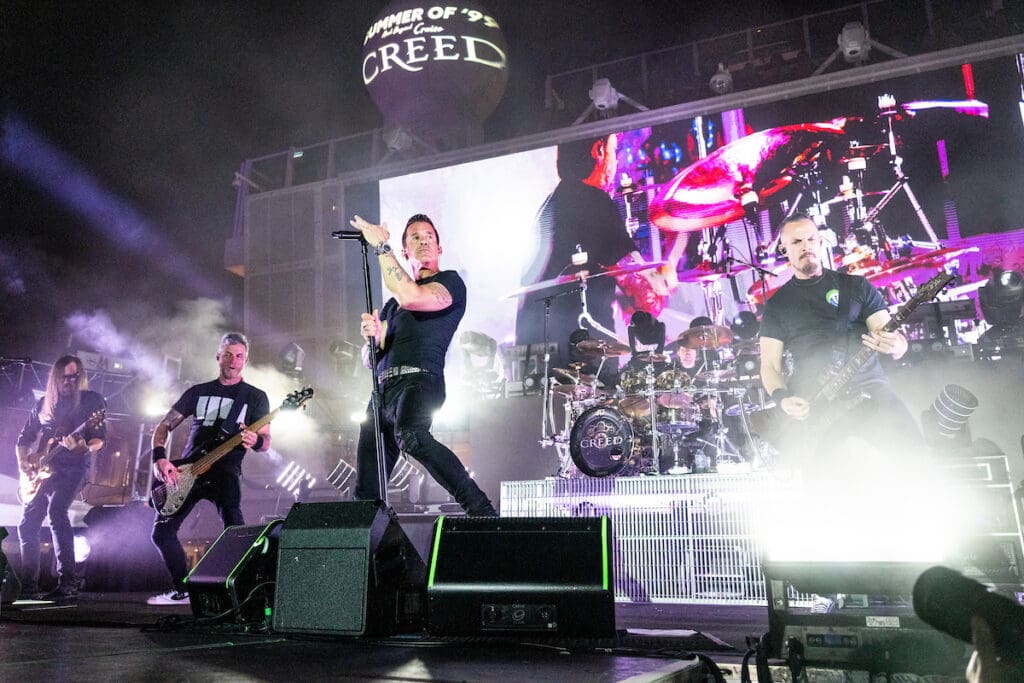
Opening the Night 2 set with “Unforgiven” set the tone for a performance rooted in the band’s heavier origins. Written in the mid-’90s, the track reflected Tremonti’s early desire to push the band into more aggressive territory—something he jokingly tied to his love of bands like Slayer.
For Stapp, the song carried deeper emotional weight. He described it as a direct conversation with God, born from a period of confusion and frustration. “I thought something had turned its back on me,” he shared, before reflecting on the realization that followed: “All I had to do was turn around.”
That blend of intensity—both musical and emotional—carried into “Freedom Fighter” and “Bullets,” songs shaped by the band’s response to criticism and mischaracterization during their rise to fame. Without social media to respond in real time, Stapp channeled those frustrations into lyrics, using the music itself as a form of rebuttal.
The Stories Behind the Songs
As the Q&A moved through the setlist, each track revealed a different layer of the band’s history.
“Beautiful,” for example, came from a personal relationship—one the band joked produced multiple songs and a few hard-learned financial lessons along the way. Meanwhile, “Torn” had a more spontaneous origin, with Tremonti recalling how the song came to him during a business calculus class at Florida State. Racing home to record the idea before it slipped away, he captured what would become one of the band’s defining early tracks.
“My Own Prison,” another cornerstone of the set, brought the conversation back to the band’s humble beginnings. Stapp recalled the thrill of hearing the song played on local radio for the first time—and the shock of arriving at a venue to find a line wrapped around the building. It was a turning point that transformed Creed from a local act into something much bigger almost overnight.
Collaboration, Evolution, and Unexpected Moments
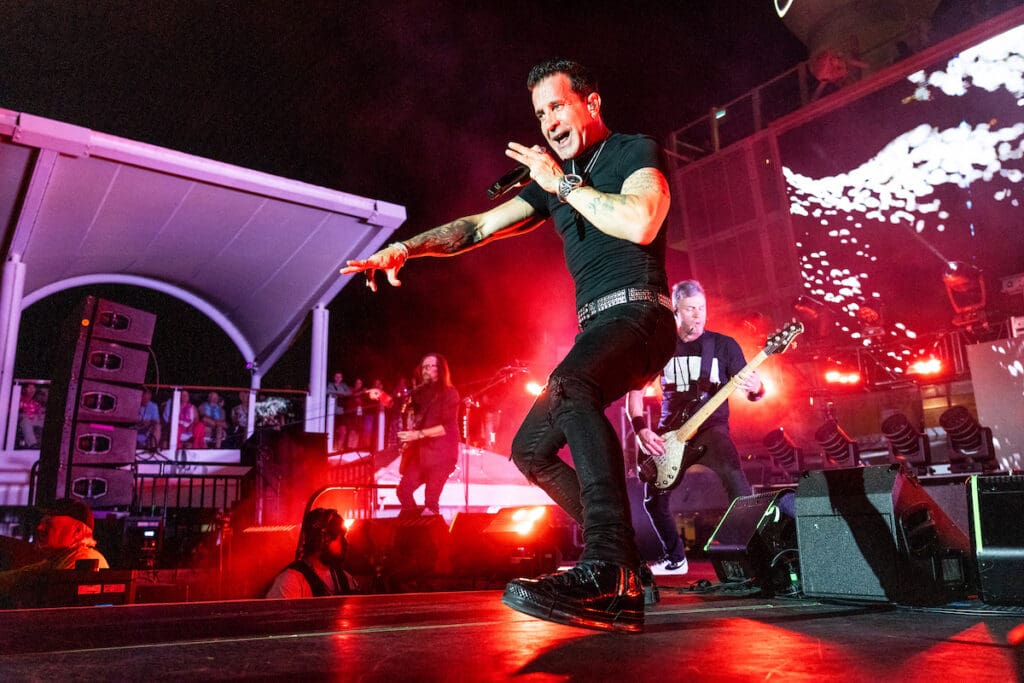
One of the standout moments of the Night 2 performance was “What If,” performed with Chris Daughtry—a collaboration that traced back to Daughtry’s own history with the song on American Idol. The track itself, featured on the Scream 3 soundtrack, marked one of the band’s earliest high-profile crossovers into pop culture.
Then there was “On My Sleeve,” whose return to the setlist symbolized a broader willingness to revisit the Full Circle era. Written during sessions in Nashville and recorded in Los Angeles, the song had largely been absent from live shows for over a decade. Its reappearance felt like a bridge between the band’s past and present—one that fans clearly appreciated.
Songs That Almost Didn’t Make It
Perhaps one of the more surprising revelations came during the discussion of “One.” Despite becoming a fan favorite, the band admitted they initially had doubts about including it on the album. At the time, they worried it sounded too “poppy”—a stark contrast to the heavier direction they were pursuing.
Ultimately, label pressure led to its inclusion, with the band reworking parts of the track to better align with their sound. In hindsight, it’s a reminder that even the most iconic songs can have uncertain beginnings.
The Craft Behind the Sound
From a musical standpoint, the Q&A offered insight into the technical side of Creed’s songwriting. Tracks like “Hide” and “Faceless Man” highlighted Tremonti’s experimentation with alternate tunings—elements that helped define the band’s signature sound.
“Faceless Man,” in particular, marked a key moment in the development of that sound, introducing a tuning that would later shape songs like “My Sacrifice.” That track, written with arena-sized audiences in mind, stood as one of the band’s most enduring anthems—a song designed from the outset to be experienced collectively.
A New Generation Finds Creed
As the conversation turned to “One Last Breath,” the band reflected on the song’s unexpected resurgence among younger listeners. What was once a major hit has taken on new life in recent years, becoming an anthem for a generation that wasn’t even born when it was first released.
“It’s mind-blowing,” Phillips admitted, a sentiment shared across the band. The same could be said for “With Arms Wide Open,” which Stapp described as having evolved into a generational song—one passed down from parents to children, and now even to grandchildren.
He shared a personal story about learning he was going to be a father just hours before performing the song live—an experience that left him visibly emotional onstage. It’s moments like that that continue to deepen the meaning of the music, both for the band and for the audience.
The Spontaneity of “Higher”
Closing out the set, “Higher” brought the conversation full circle. What began as an impromptu crowd interaction during the band’s early days evolved into one of their biggest hits. Stapp revealed that while the chorus felt spontaneous in the moment, it was actually drawn from a larger body of lyrics he had been refining over time—a testament to the discipline behind the band’s creativity.
Looking Ahead While Honoring the Past
As the Q&A wrapped, when asked if the band would rework or change any song today, the band expressed a collective reluctance to revisit or “fix” their past recordings. For Creed, each song represents a snapshot of a specific moment in time—imperfections included.
Instead, they’ve chosen to evolve those songs onstage, allowing them to grow organically through performance. It’s an approach that respects both the original recordings and the fans who’ve lived with them for decades.
More than anything, the session reinforced what has made this cruise—and this band—so enduring: authenticity. Whether they’re revisiting deep cuts, sharing stories from the road, or simply thanking fans for their continued support, Creed’s connection with their audience remains as strong as ever.
And as the ship made its way back toward Miami, one thing was clear: this wasn’t just a retrospective. It was a living, breathing continuation of a story that’s still being written—one song, one show, and one shared moment at a time.