


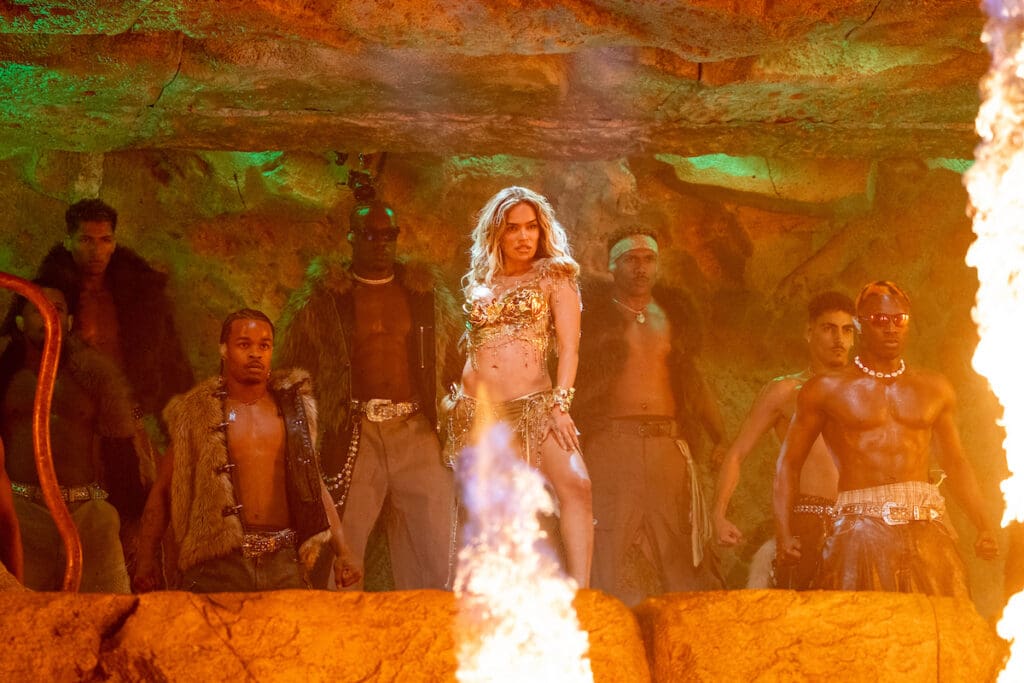
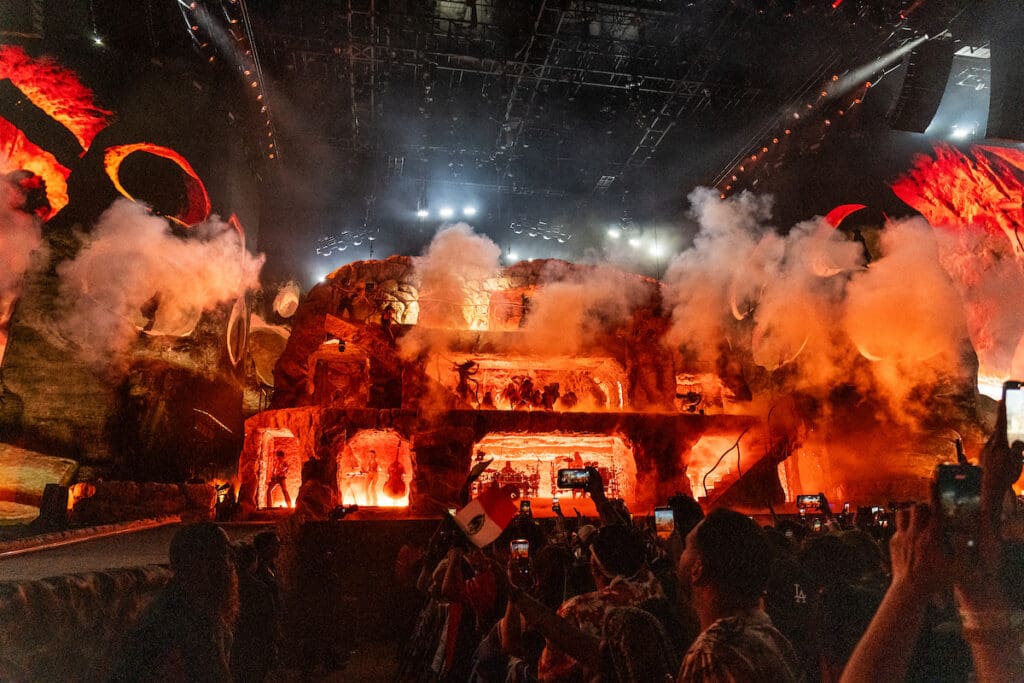
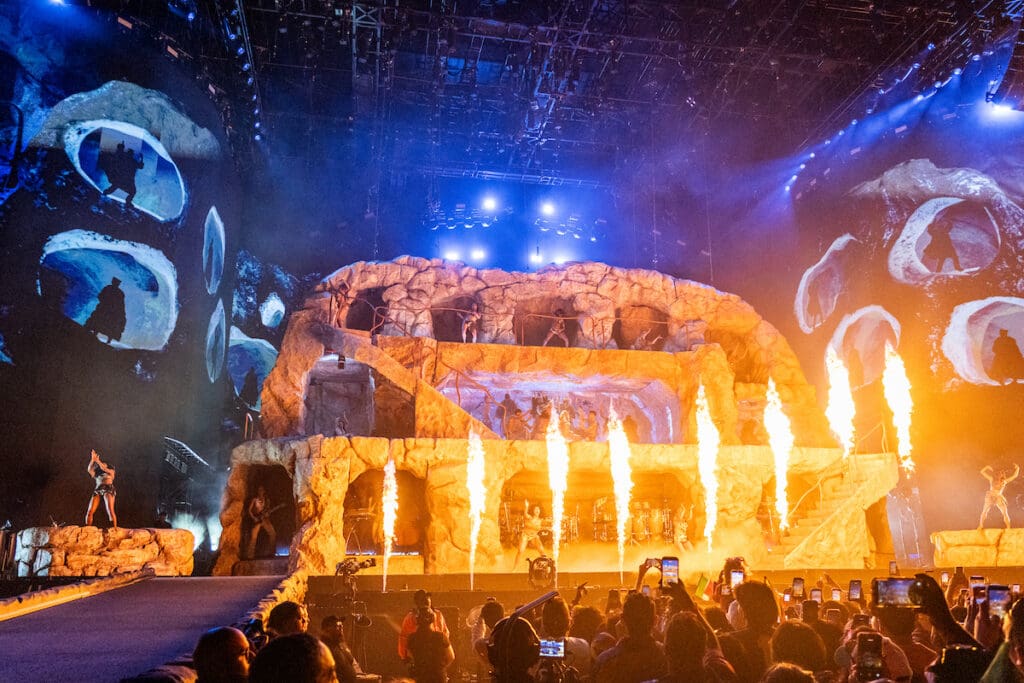
Sunday night at Coachella delivered one of the most defining performances in the festival’s history, as KAROL G took the stage as the first Latina artist to headline the iconic event. What unfolded wasn’t just a concert—it was a statement, a celebration, and a moment that felt long overdue. The concert began about 30 minutes late as the production crew put the finishing touches on building her massive set for the headline performance. It was one of the biggest physical sets I have seen in my 10 years covering the festival.
From the moment she stepped on stage, the energy was undeniable. The crowd, packed deep into the desert night, responded with a level of enthusiasm that rarely lets up at Coachella’s closing sets. But beyond the scale and spectacle, this performance carried something more: intention. Karol G didn’t just run through a catalog of hits—she crafted a narrative that felt deeply personal while resonating on a global level.
Early in the set, she paused to address the crowd in a moment that grounded the entire performance. Introducing herself as Carolina from Medellín, she acknowledged the significance of the night—not just for her, but for the broader Latino community. She spoke candidly about the weight of being the first Latina to headline in the festival’s decades-long history, calling it both an honor and something that felt overdue. It was a reminder that this wasn’t just a milestone for her career—it was a cultural moment.
A Performance Built on Storytelling and Transformation
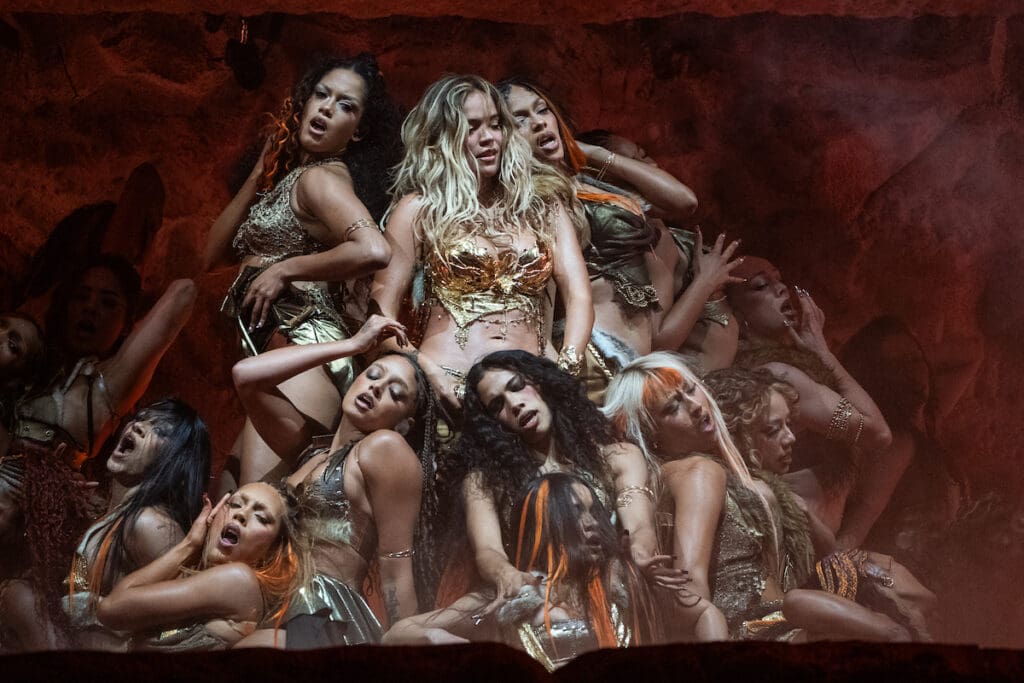
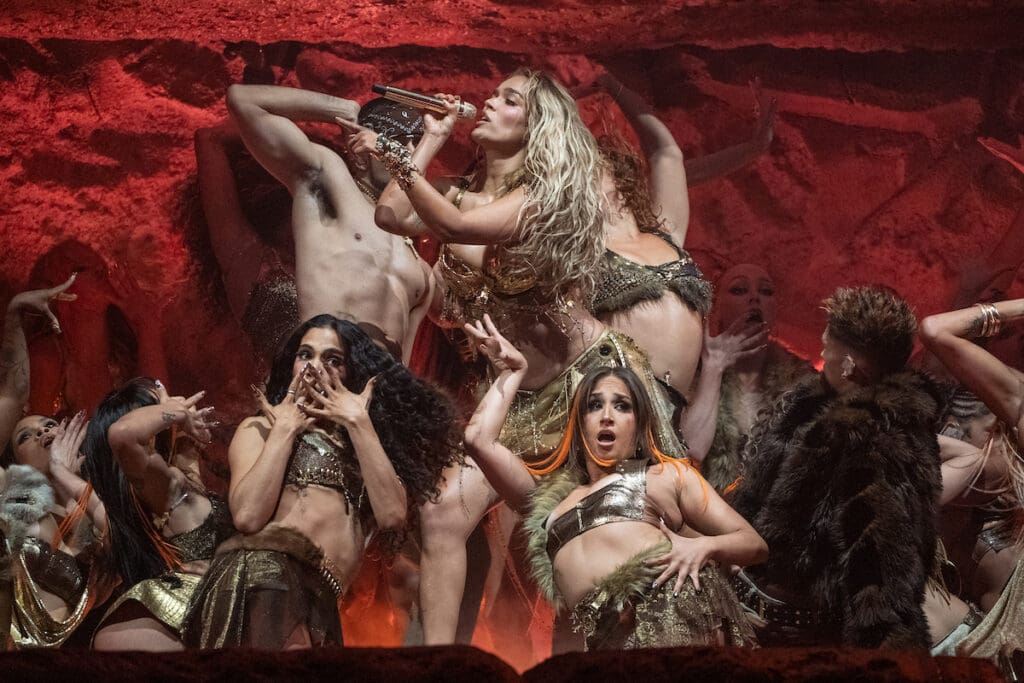
Rather than a traditional festival set, Karol G approached the night as a journey. The show was structured around themes of transformation, identity, and feminine strength, unfolding in chapters that blended music, choreography, and visual storytelling.
Her setlist moved seamlessly between high-energy reggaeton anthems and more introspective moments, allowing the emotional arc of the show to breathe. Songs that have defined her rise felt recontextualized within this larger narrative—less like standalone hits and more like pieces of a story about growth, resilience, and self-discovery.
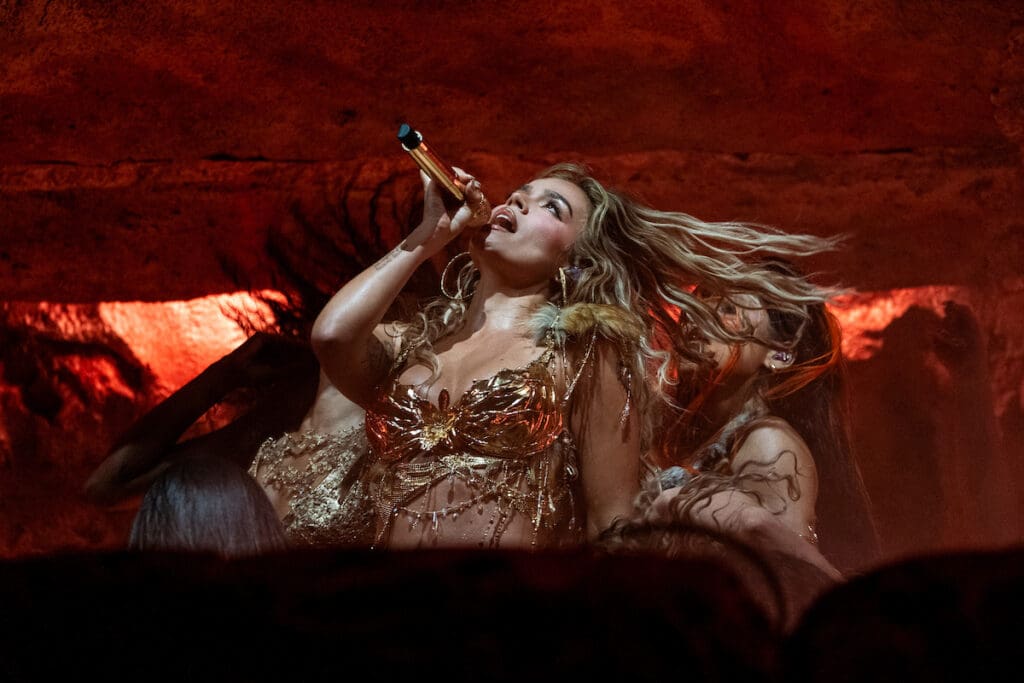
There was a clear sense of intention behind every transition. Nothing felt rushed, even within the time constraints of a festival headline slot. Instead, the performance built steadily, pulling the audience deeper into her world. Visually, the production matched the ambition of the performance. The stage design, led by Parris Goebel and a team of high-level creatives, transformed the Coachella main stage into a symbolic landscape.
The show opened in a world of towering rock formations—raw, grounded, and elemental—setting the tone for a story rooted in origin and strength. As the performance evolved, so did the environment. The most striking moment came with the reveal of a glowing, oasis-like pool carved into the stage, illuminated like quartz. It was both visually stunning and thematically aligned, representing healing, energy, and transformation.
A Celebration of Latin Music Across Generations
The night also leaned into collaboration, bringing together artists from across Latin music’s spectrum. Wisin delivered a high-energy medley that tapped into the genre’s roots, while Becky G joined Karol G for “MAMIII,” one of the most anticipated moments of the set. Mariah Angeliq added another dynamic layer with “EL MAKINON.”
One of the more unexpected highlights came from Arturo Sandoval, whose live performance brought a level of musicality and depth that elevated the show beyond a typical festival set. There was also a quieter, more intimate moment when Greg Gonzalez appeared on guitar for the debut of an unreleased track, offering a glimpse into Karol G’s evolving sound.
More Than a Headline Set
By the time the final moments of the show played out, it was clear this wasn’t just another Coachella headliner—it was a defining performance. Karol G managed to balance spectacle with substance, delivering a show that felt both massive in scale and deeply personal.
In a festival known for its global reach, her set underscored the continued rise and influence of Latin music on the world stage. More importantly, it highlighted what happens when an artist leads with authenticity and purpose.
Karol G didn’t just headline Coachella—she reshaped what that moment could look like.