


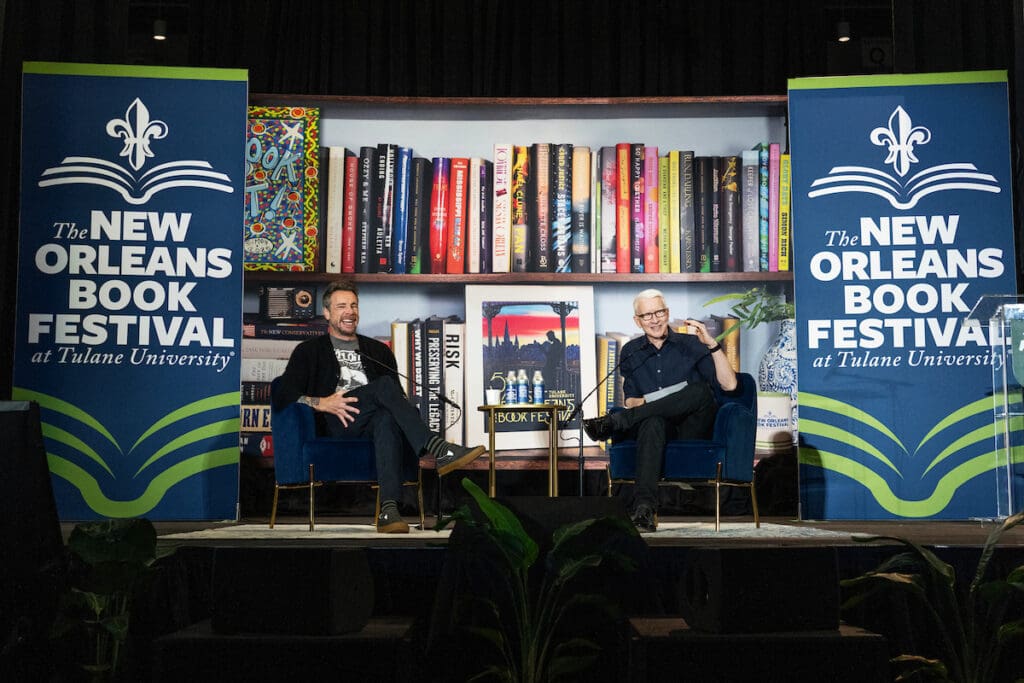
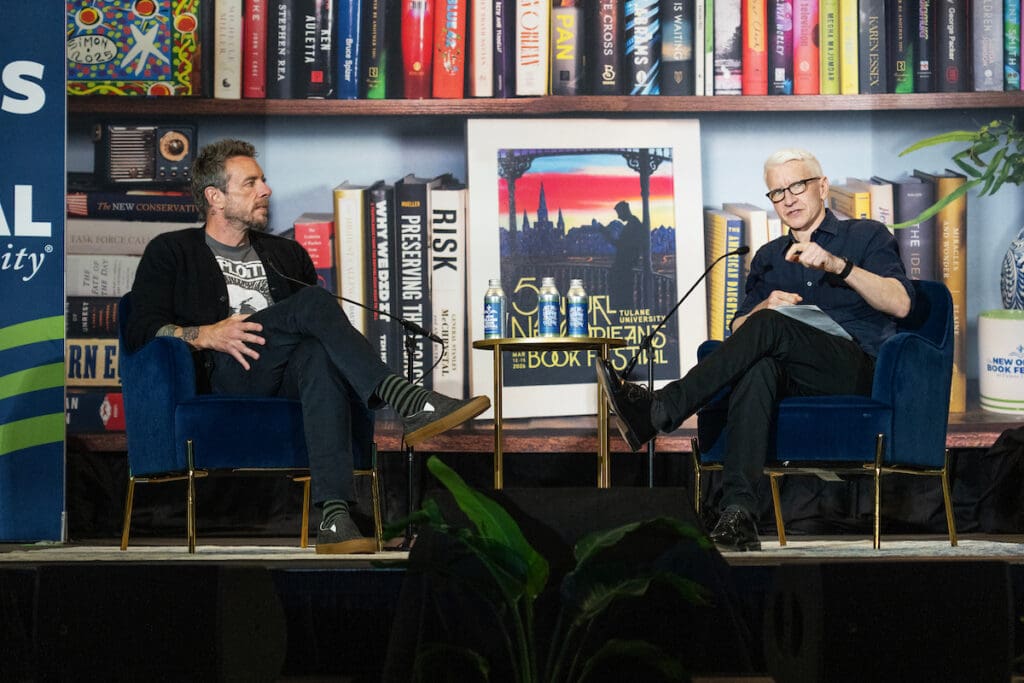
At the New Orleans Book Festival at Tulane University last Saturday, one of the most emotionally resonant conversations unfolded inside the Avron B. Fogelman Arena at Devlin Fieldhouse. Before a packed audience, Anderson Cooper and Dax Shepard took the stage for a deeply personal discussion on grief—how it shapes us, surprises us, and ultimately connects us.
The conversation promised a balance of humor and humanity, and it delivered. What emerged was not just a discussion, but a shared experience—one that moved seamlessly between laughter, vulnerability, and quiet reflection.
Grief as a Living Relationship
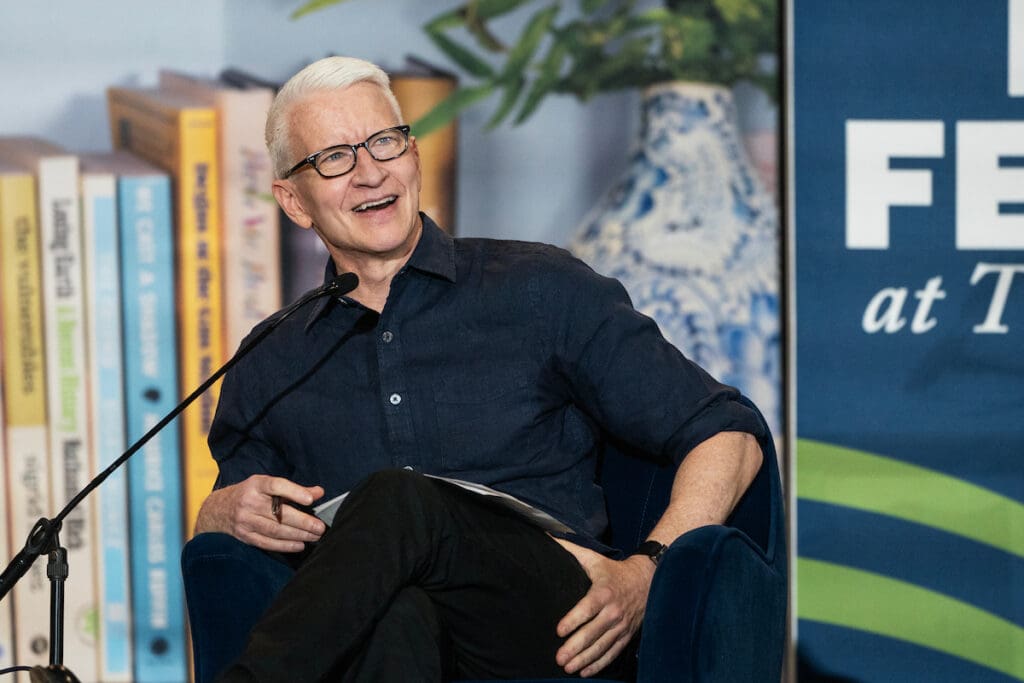
For Anderson Cooper, grief is something that has evolved over time. Having lost his father at the age of 10 and later experiencing the devastating loss of his brother, Cooper spoke candidly about how he spent much of his life suppressing emotion. Growing up quickly, working as a model at 12, and navigating a uniquely public life, he learned early on to compartmentalize. But that has changed.
Now a father, Cooper shared that he has come to understand grief not as something to “get over,” but as something you continue to live alongside. In a particularly emotional moment, he described how his relationship with his father feels stronger now than it did when he was alive. “I feel him inside me,” he said, his voice breaking.
That realization has shaped how he raises his own children. Cooper emphasized the importance of allowing them to see his emotions—his grief, his sadness—so they understand that vulnerability is not weakness, but a fundamental part of being human.
The Weight—and Gift—of Late Understanding
Dax Shepard’s reflections on grief were equally raw and deeply personal. He spoke about his complicated relationship with his father, marked by distance during childhood due to divorce and his father’s struggles with alcoholism. Yet, in an unexpected turn, Shepard became his father’s caregiver during the final months of his life after a cancer diagnosis. Those last three months, he said, changed everything.
“A lot was resolved,” Shepard shared, recalling how proximity and responsibility opened the door to understanding. What once felt like abandonment began to look different through the lens of adulthood—especially after becoming a parent himself. Today, Shepard sees his father less as someone who failed him and more as someone who missed out. “He adored me,” Shepard said, acknowledging a truth he didn’t fully grasp until it was too late.
When Cooper read an excerpt Shepard had written about his father, the moment visibly shook him. Shepard admitted that writing about the experience unlocked waves of grief he hadn’t fully processed before—proof that storytelling itself can be a powerful conduit for healing.

Finding Meaning in Unexpected Moments
The conversation also revealed how grief often lives in small, unexpected moments. Shepard shared a story about his wife, Kristen Bell, who once surprised him during a particularly overwhelming time by flying to Michigan unannounced while he was caring for his father. Pregnant at the time, she met him quietly, offering presence rather than solutions. Shepard recalled his father resting his hand on her stomach for over an hour—a grounding, almost timeless moment that connected him to something larger than his immediate pain. That idea—of connection stretching across time—became a recurring theme throughout the conversation.
Friendship, Loss, and Redefining Strength
Shepard also reflected on an unlikely friendship with Eric Dane, whom he met during recovery. Their relationship didn’t start easily—Shepard admitted he initially disliked Dane, even describing a near confrontation outside the meeting. But over time, mutual vulnerability replaced judgment.
Dane’s own story of loss—growing up without a father after a traumatic death—created a bond between them. The two became close, supporting one another through life’s challenges. Shepard described caregiving and emotional openness not as weaknesses, but as the most profound expressions of strength. “The most masculine thing I’ve ever done,” he reflected, “is show up.”

Memory, Legacy, and the Unexpected Echoes of the Past
For Cooper, grief has also taken shape through memory—sometimes in ways that feel almost otherworldly.
He shared a story about recently receiving archival footage of his father, who had been a writer. In one clip, his father spoke about taking Cooper as a child to clear leaves from a stream in Central Park. Cooper had no recollection of it. And yet, without knowing why, he had recently begun taking his own children to a stream in Connecticut to do the exact same thing. Moments like that, he said, challenge the idea that grief is only about absence. Sometimes, it reveals presence in unexpected ways.
New Orleans: A City That Holds Memory
The setting for this conversation added another layer of meaning. Cooper reflected on his deep connection to New Orleans, recalling the six weeks he spent covering the aftermath of Hurricane Katrina. For him, the city has long been intertwined with grief, resilience, and humanity. It was a fitting backdrop for a conversation that asked the audience not to avoid grief, but to sit with it.
A Shared Humanity
What made this discussion so powerful wasn’t just the stories themselves—it was the honesty behind them. Both Cooper and Shepard challenged the idea that grief is something to hide or resolve neatly. Instead, they presented it as something ongoing, something that evolves as we do. They spoke about the ways grief can soften us, reshape us, and even deepen our capacity for connection. They showed that humor can coexist with heartbreak, and that storytelling can transform pain into something communal.
By the end of the conversation, one thing was clear: grief, in all its forms, is universal—but so is the ability to find meaning within it. At the New Orleans Book Festival, in a packed arena filled with strangers, two men shared their most personal truths—and in doing so, reminded everyone in the room that they were not alone.