


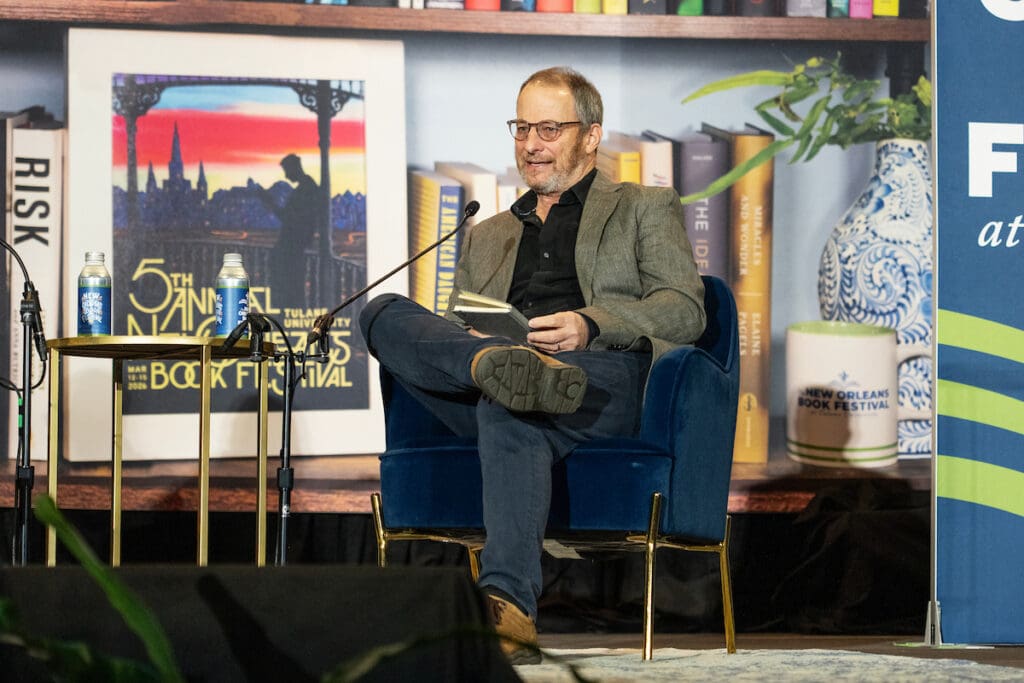
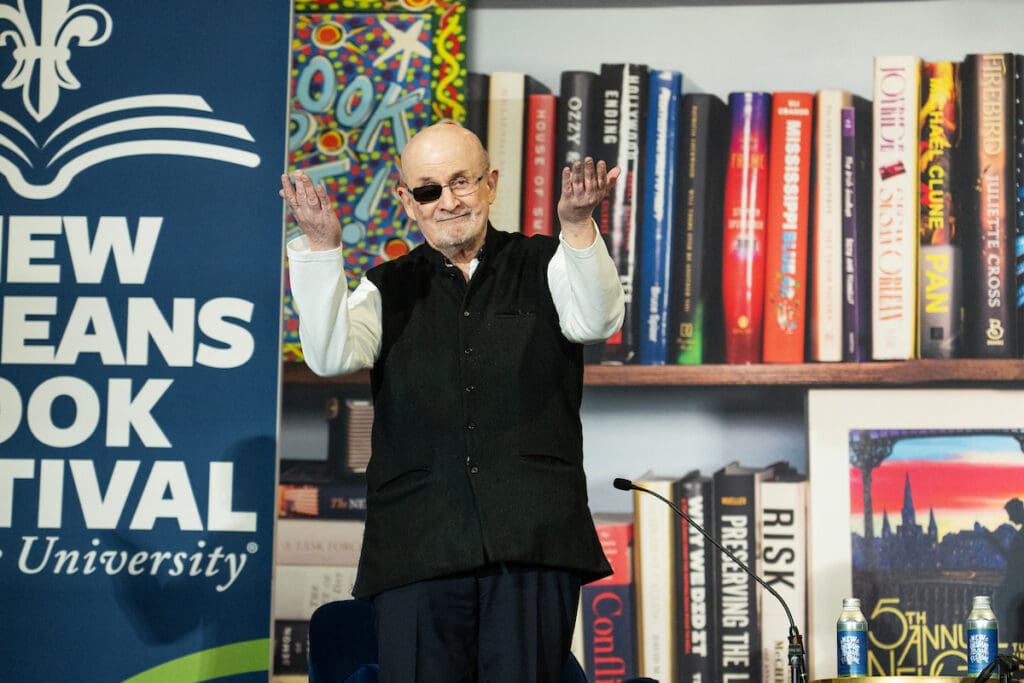
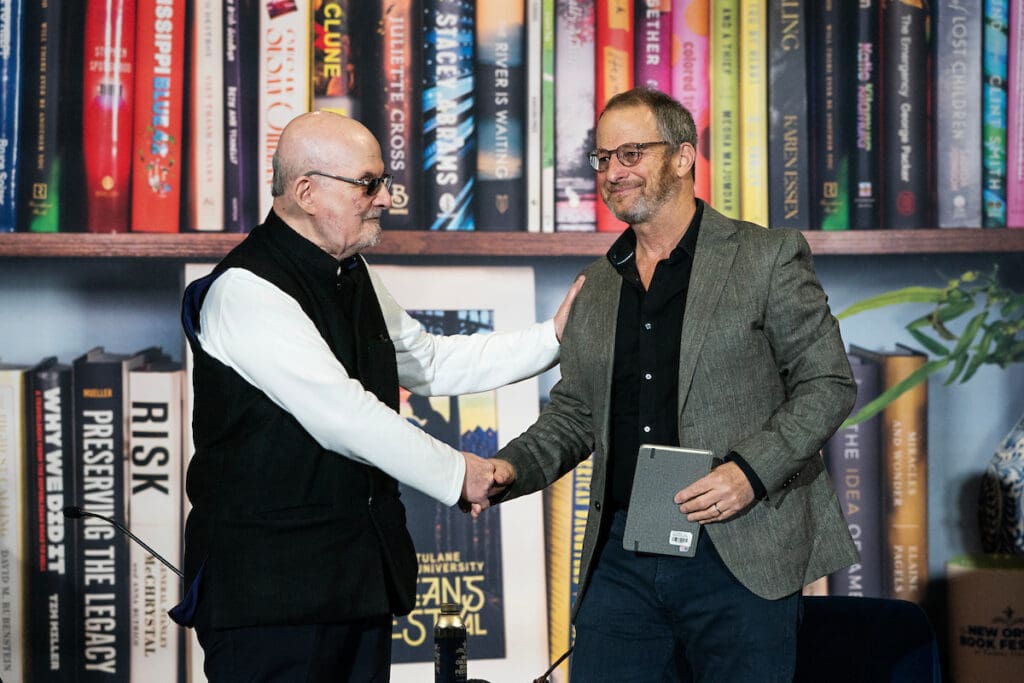
A packed crowd gathered at Avron B. Fogelman Arena at Devlin Fieldhouse at 10 a.m. for one of the most anticipated conversations of the weekend at the New Orleans Book Festival at Tulane University. The session, titled “The Eleventh Hour: A Conversation with Salman Rushdie,” featured the renowned novelist Salman Rushdie in discussion with writer George Packer of The Atlantic.
The conversation centered on Rushdie’s newest work, The Eleventh Hour: A Quintet of Stories, a collection that explores belonging, regret, and the consequences of choices made when time seems to be running out. Blending humor, philosophical reflection, and literary insight, the discussion ranged from the craft of fiction to the nature of free expression and the enduring role of storytelling.
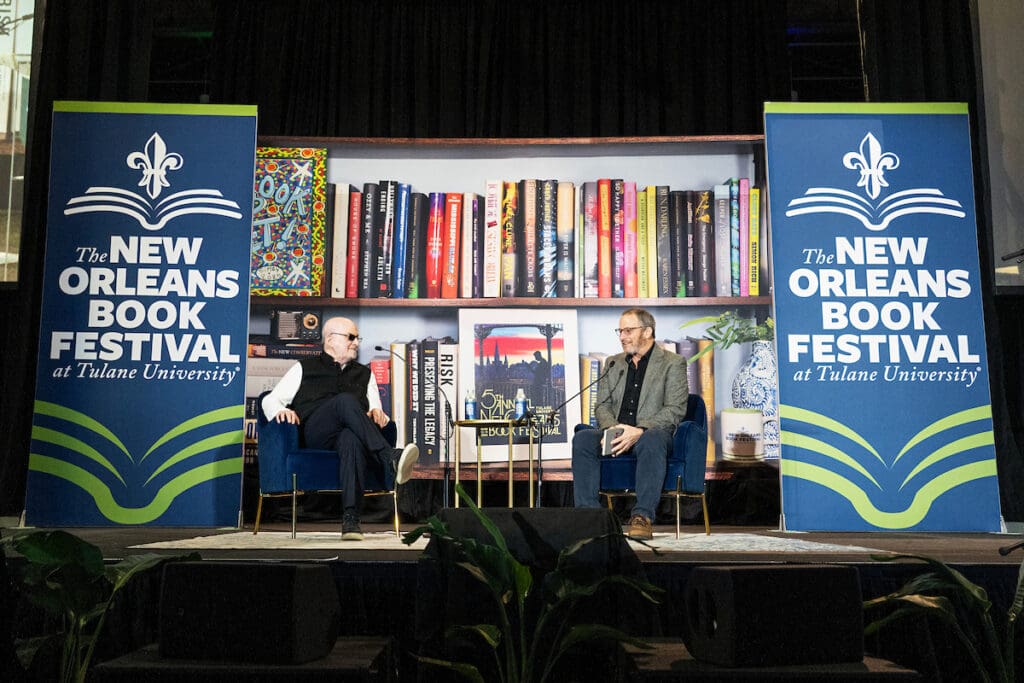
Returning to Fiction After Trauma
Rushdie began by speaking candidly about returning to fiction after completing his memoir Knife: Meditations After an Attempted Murder, which chronicles the 2022 attack that nearly took his life. After finishing the memoir, Rushdie admitted he wasn’t sure whether he would be able to write fiction again. “I was scared,” he said. “I thought maybe there was too much trauma.” But gradually, the stories began to come out.
When Packer asked where his ideas come from, Rushdie smiled and joked that writers all draw from the same mysterious source. “There’s a shop,” Rushdie said, laughing. “But I can’t tell you where it is.”
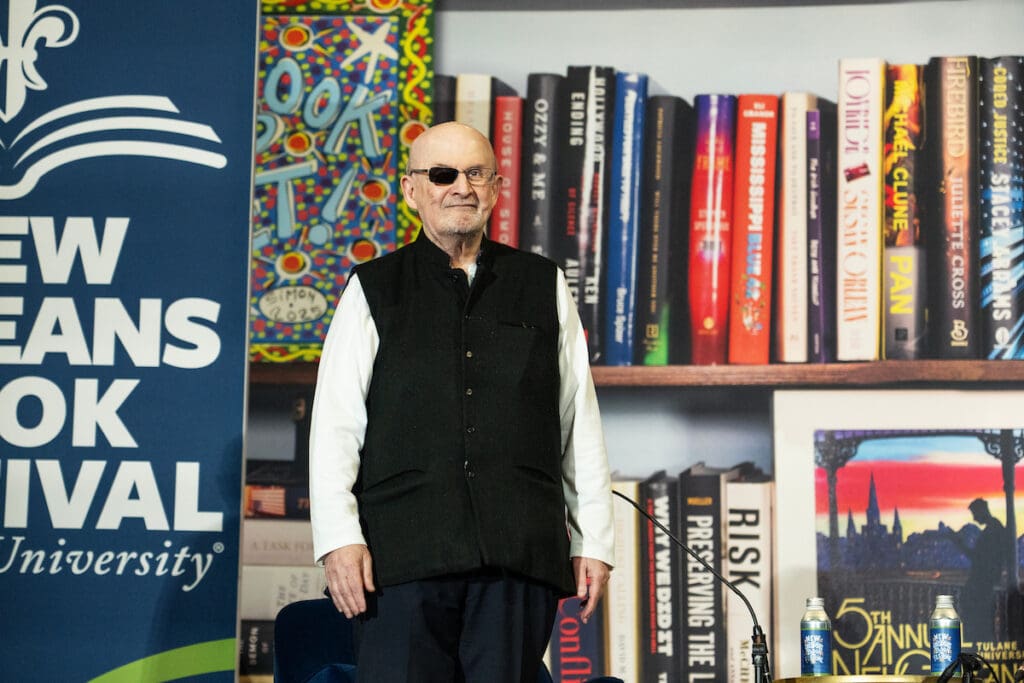
Kafka, Oklahoma, and Life Without an Ending
One story in The Eleventh Hour collection draws inspiration from the unfinished novel Amerika by Franz Kafka. Kafka never completed the novel, and its protagonist never reaches his intended destination in Oklahoma. Amerika, originally titled Der Vershollene (The Man Who Disappeared) and written between 1912-1914, is Franz Kafka’s first, unfinished novel, published posthumously in 1927 by Max Brod. Rushdie explained that Kafka once said he wished the character had reached Oklahoma to find happiness, but the story ended before that could happen. To Rushdie, that unfinished journey mirrors life itself. “Life is a story where we don’t know the ending,” he said.
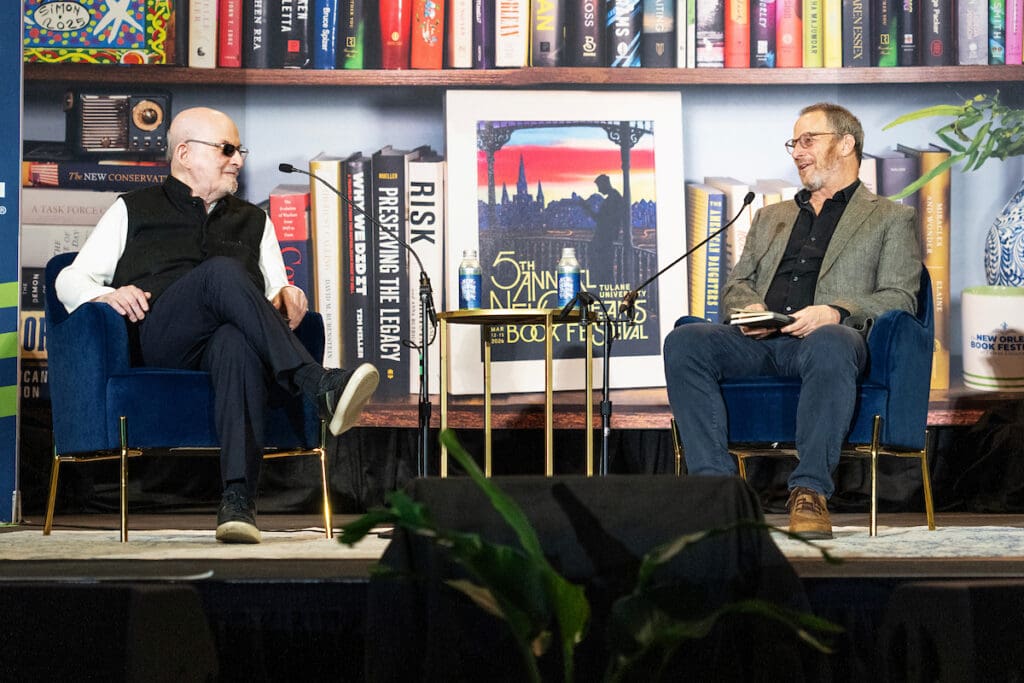
Reflections on College Life at Cambridge in the Late 1960’s
Rushdie also reflected on his own student days in the late 1960s at University of Cambridge, where he became immersed in literature and history. While studying there, he met E. M. Forster, the author of A Passage to India, and the hidden realities of life in England during that era. He also spoke about Alan Turing, the British mathematician who famously broke the German WW2 codes. Both men were persecuted for being gay. Homosexuality was decriminalized two years before Foster’s death, and many universities—including Cambridge—had only recently begun admitting women to colleges that were once exclusively male.
These historical contradictions and hidden stories, Rushdie noted, continue to shape how writers approach fiction.
Ghosts, Revenge, and the Supernatural
Several stories in The Eleventh Hour incorporate supernatural elements, including ghosts and revenge narratives. One tale, Late centers on a young Indian woman admitted to an elite college, where a cruel incident leads to a haunting. Rushdie summarized the spirit of the story with a line from the book: “I know what a ghost is. It’s someone with unfinished business.”
Despite these supernatural themes, Rushdie described himself as a firm atheist—even after his near-death experience. “I had a hard look at the end,” he said. “There was no tunnel, no light. None of that.”
Yet fiction, he explained, often becomes more compelling when it bends reality. Growing up in India, he was surrounded by fantastical storytelling traditions filled with talking animals, magical events, and unpredictable endings. Unlike many Western fables, which often reward virtue, Indian stories can be far more cynical. “In our fables,” Rushdie joked, “the bad guys are bad and the good guys are stupid—just like the current state of affairs in the world.”
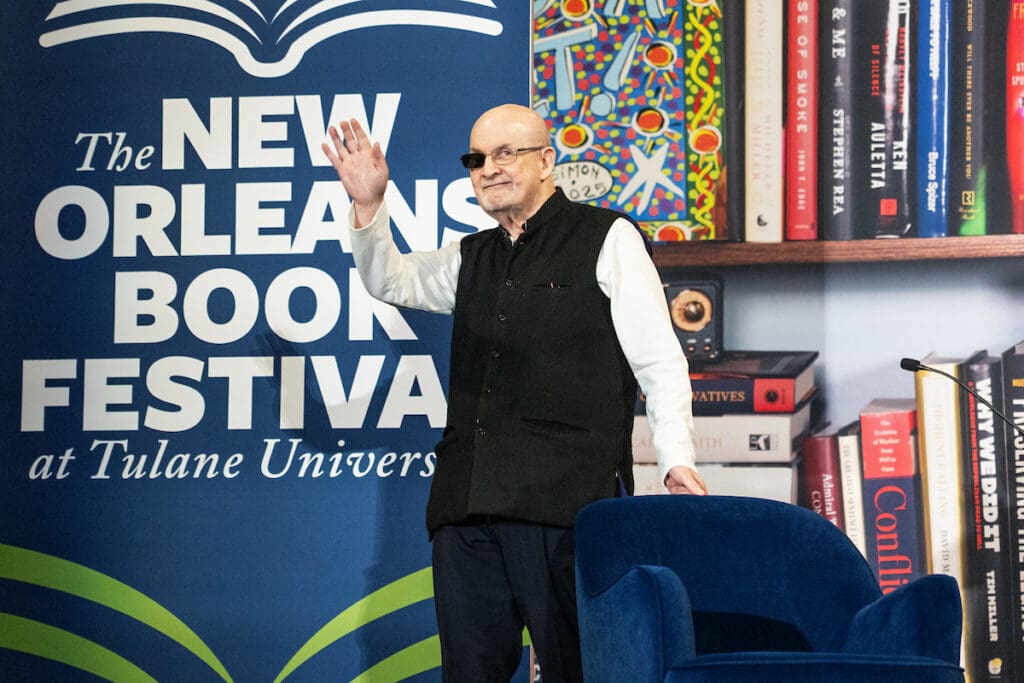
Literary Influences
Rushdie’s reading life has always been expansive, drawing from literature across continents. As a student, he became obsessed with The Lord of the Rings by J. R. R. Tolkien, though he joked that Tolkien struggled with writing convincing dialogue—except for the hobbits.
His other major influences include The Master and Margarita by Mikhail Bulgakov, works by Carlos Fuentes, and the magical realism of Gabriel García Márquez. Rushdie never met Márquez but once spoke with him briefly while Márquez was visiting Fidel Castro in Cuba over the phone through Fuentes, despite the language barrier.
Rushdie also praised Charles Dickens for his remarkable gift for character creation and vivid cityscapes. Dickens’s crowded urban settings reminded him of modern Indian cities—chaotic, energetic, and full of intersecting stories. “India is a crowd,” Rushdie said. “And Dickens knew how to write a crowd.” He inspired Rushdie on how to portray life in the crowded cities.
Writing Through Pain
The conversation also returned to Rushdie’s memoir Knife, which Packer described as almost unbearably intense to read. Rushdie admitted that writing it was difficult at first—but eventually became necessary. “At first it was unbearable,” he said. “Then it became unbearable not to write.”The process forced him to confront the attack directly. Gradually, he began to see the book as a triangle built around three points: art, love, and death.
Despite its violent origins, Rushdie said the memoir ultimately became something unexpected. “It’s a love story,” he said, surprising many readers. Rushdie also rejected the idea of portraying himself primarily as a victim. “Language was my knife,” he said. “Writing was a way to take back ownership of the narrative.”
Free Speech and the Writer’s Responsibility
Given Rushdie’s long history with censorship and threats, the discussion inevitably turned to free expression. Rushdie argued that attacks on free speech have historically come from powerful institutions—governments, the rich and powerful, and organized religion. But he believes a new challenge has emerged in recent years.
“Now there’s self-censorship,” he said, particularly among younger writers who worry about what subjects they are allowed to explore. “You shouldn’t only be able to write about what you are,” he said. Social media, he added, has intensified these pressures by creating constant public scrutiny. “The best thing I did recently,” Rushdie joked, “was delete the Twitter app.”
The Birth of the Author
Even after more than 50 years of writing, Rushdie remains deeply engaged with new ideas. When Packer asked what he was currently working on, Rushdie revealed a project inspired by a remarkable historical figure: a woman who lived in ancient Sumer more than 4,000 years ago. She was a princess, a high priestess, and a poet—and the first known writer to sign her name to her work. “Everyone talks about the death of the author,” Rushdie said. “I’m interested in the birth of the author.”
The conversation offered festivalgoers a rare opportunity to hear one of the world’s most influential writers reflect not only on literature but on survival, imagination, and the enduring power of stories.
At a festival known as “Mardi Gras for the Mind,” few events embodied that spirit more fully than an hour spent inside Fogelman Arena listening to Salman Rushdie talk about why, even in the most difficult moments, storytelling still matters.