


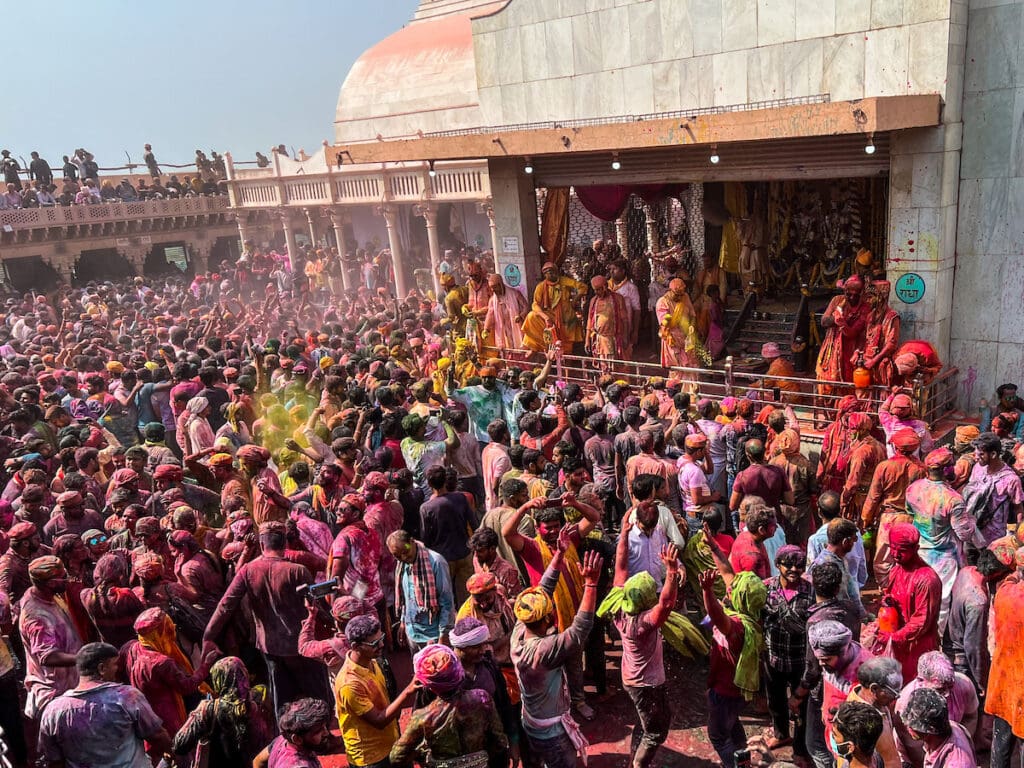
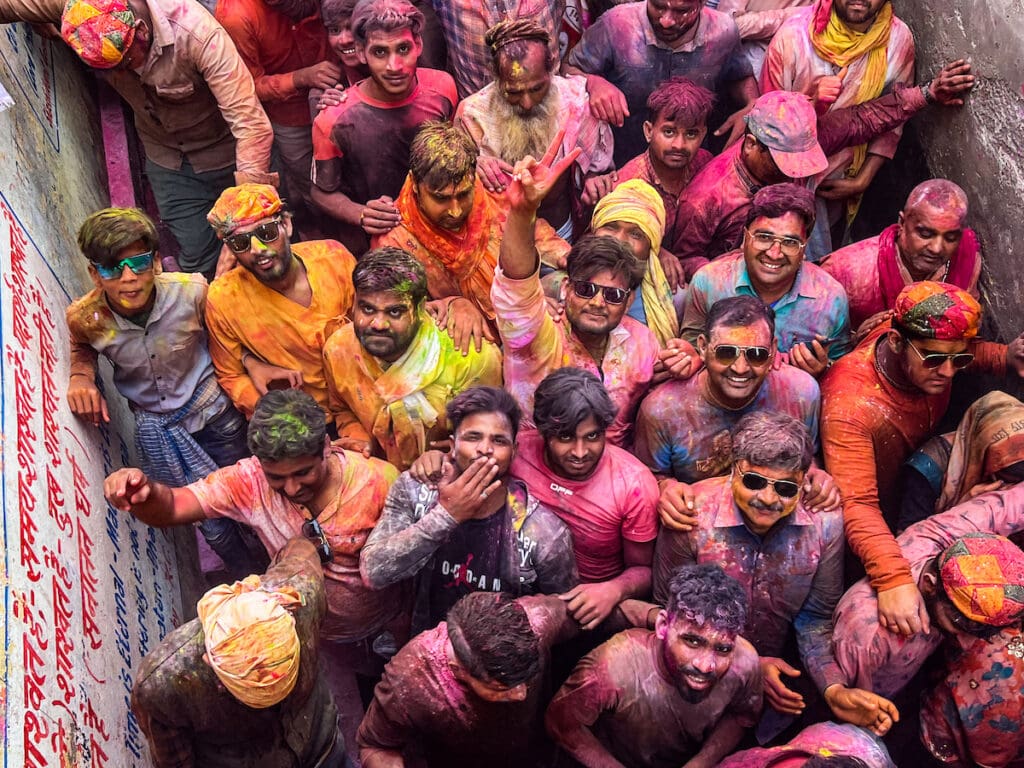
Last Wednesday marked the last full moon of the Hindu lunisolar calendar month of Phalguna, also known as the festival of colors, Holi. The tradition of this Hindu holiday traces back to Hindu mythology and local lore. During the festival, participants throw colored powders at each other in celebration of spring and the victory of good over evil. A few years ago, I took a trip to India with Photo Quest Adventures and I had the honor of being a part of Holi and all of the love and colors that came with it.
The Mythology Behind Holi
Hindu mythology says the demon King Hiranyakashipu claimed to be a God but his son, Prahlada, refused to worship him. Instead, Prahlada worshiped the principal Hindu deity, Vishnu. The King and his sister Holika — after which Holi is named — plotted to kill Prahlada due to his refusal to worship his father. Holika and the King lured him onto a pyre to burn him to death. Holika, having the advantage of being granted immunity to fire, burned away to ashes while Prahlada survived by the protection of Vishnu.
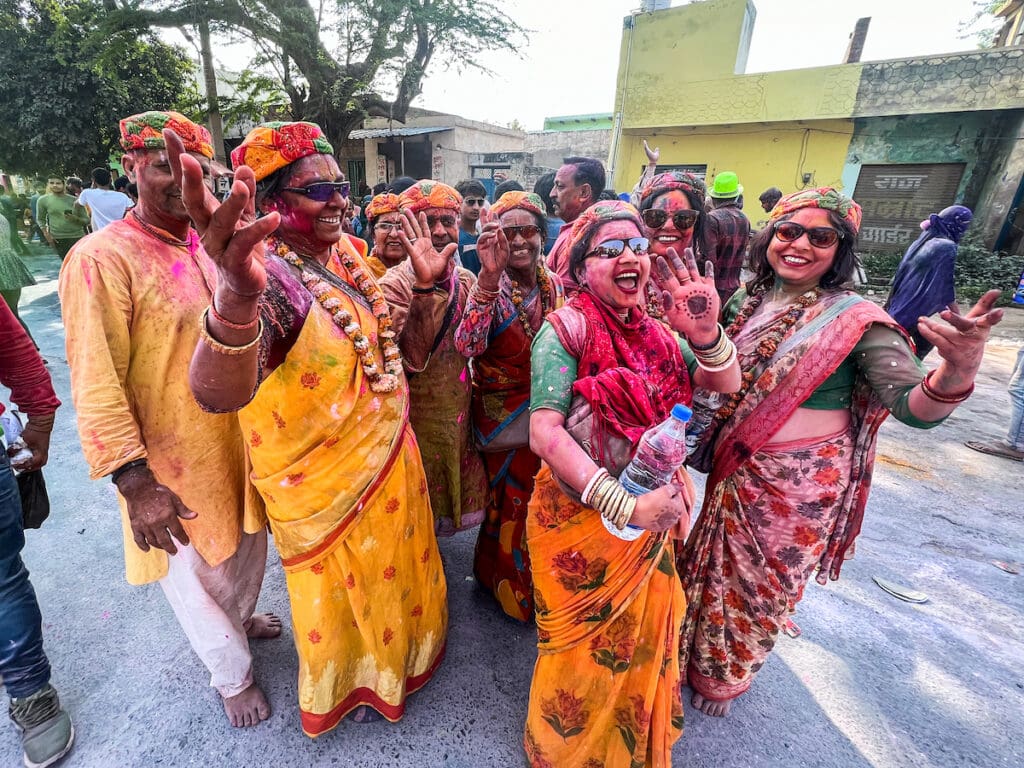
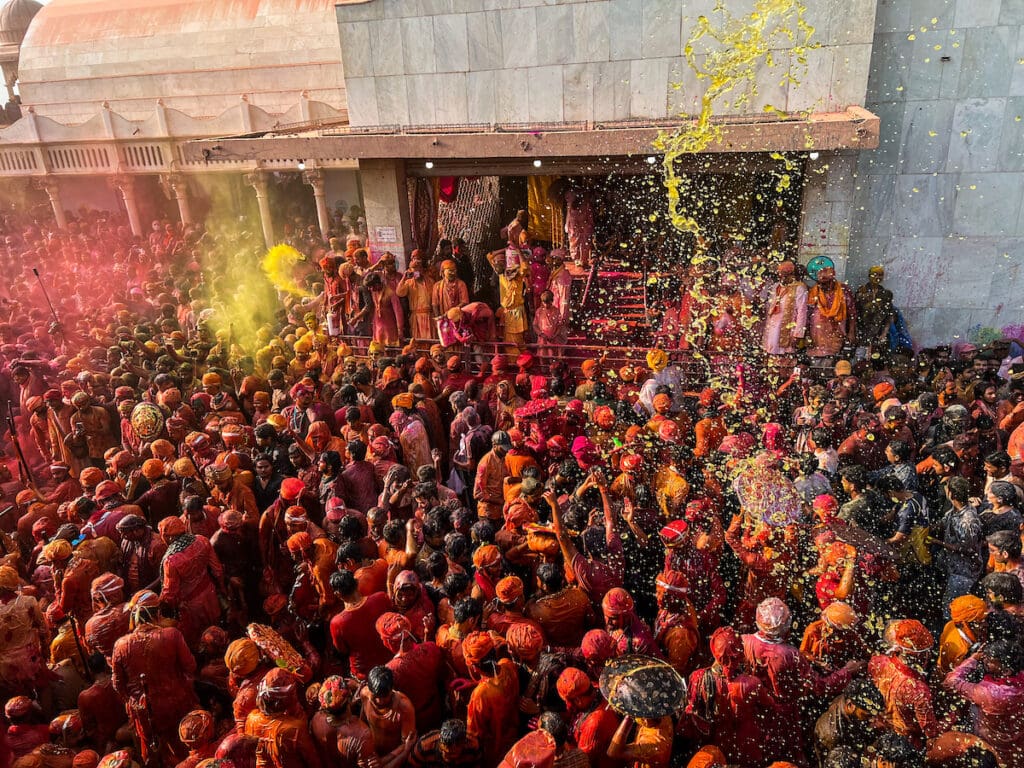
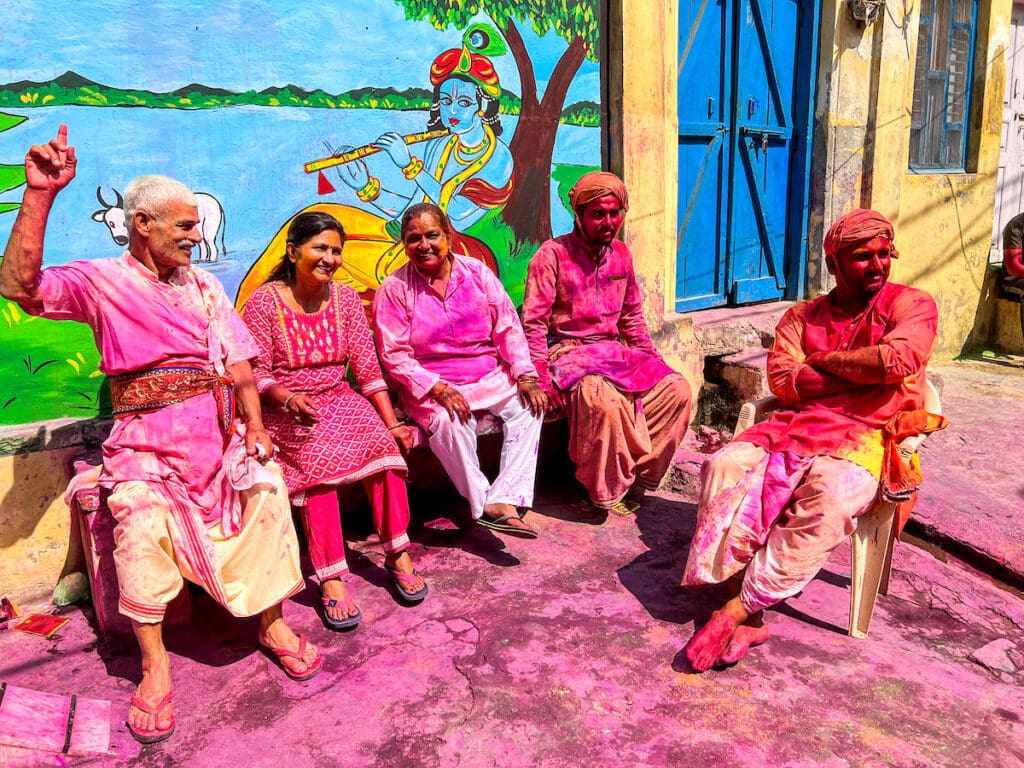
Some Hindus also believe that Holi is based on the mythological love story between Lord Krishna and Radha. Lord Krishna who was well-known for his mischievous nature, and often complained to his mother about his blue skin tone in contrast to Radha’s complexion. In response, his mother suggested that he color Radha’s face with colored powders to match his. This act became tradition, symbolizing love, friendship, and the beginning of spring.
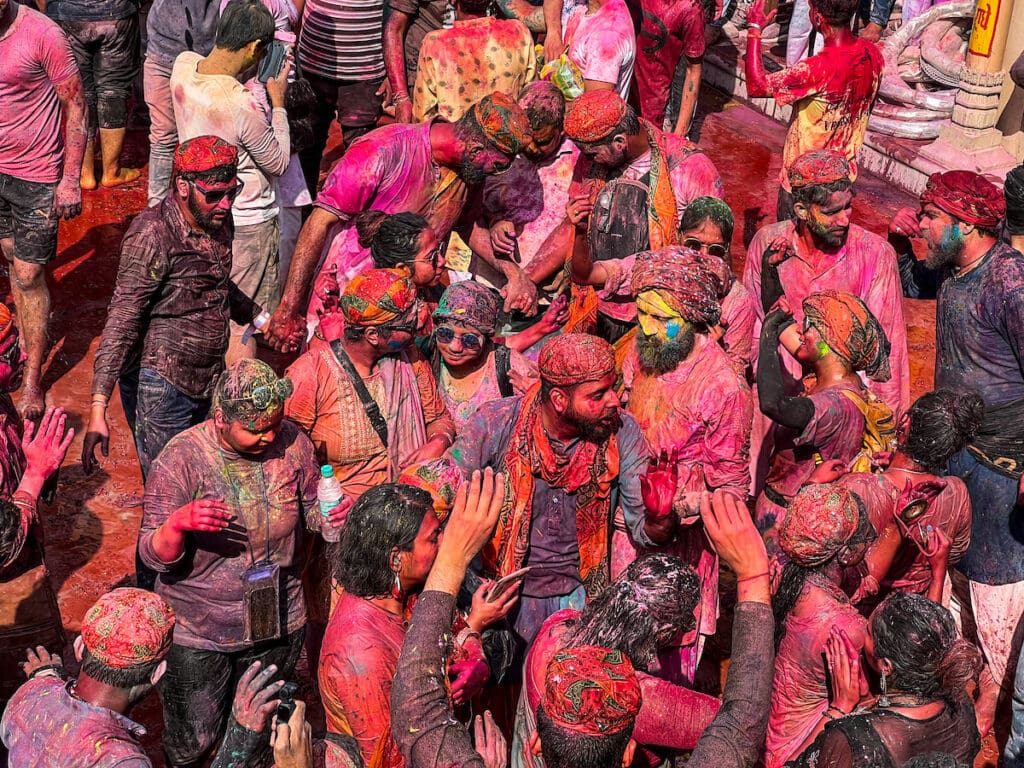
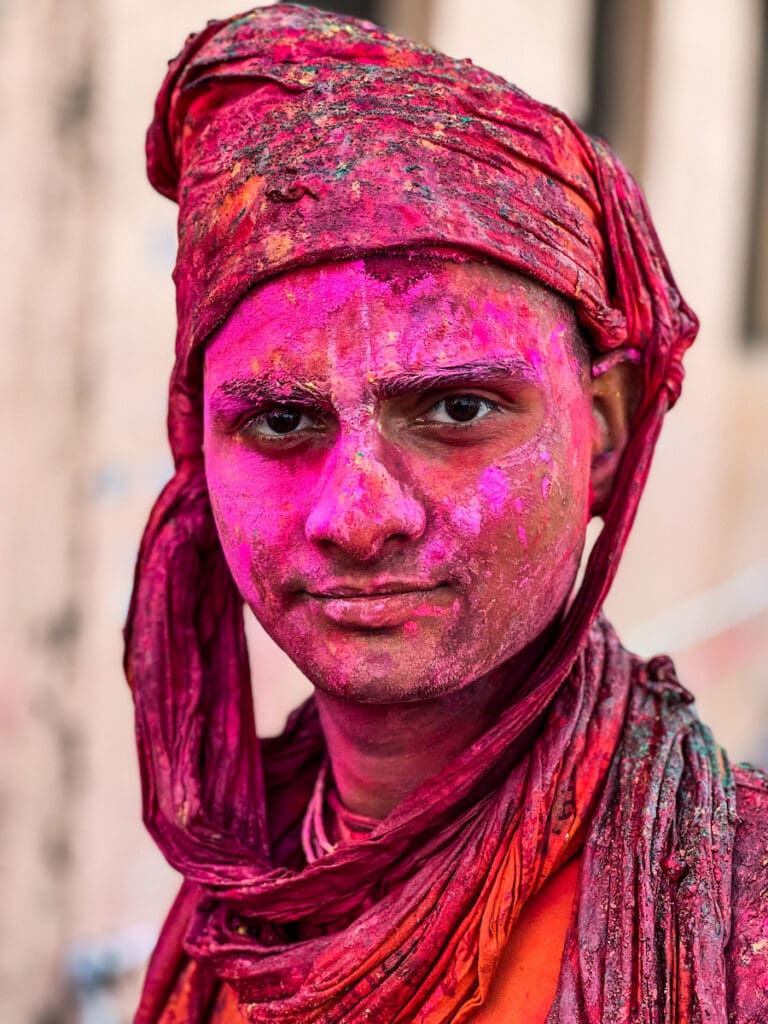
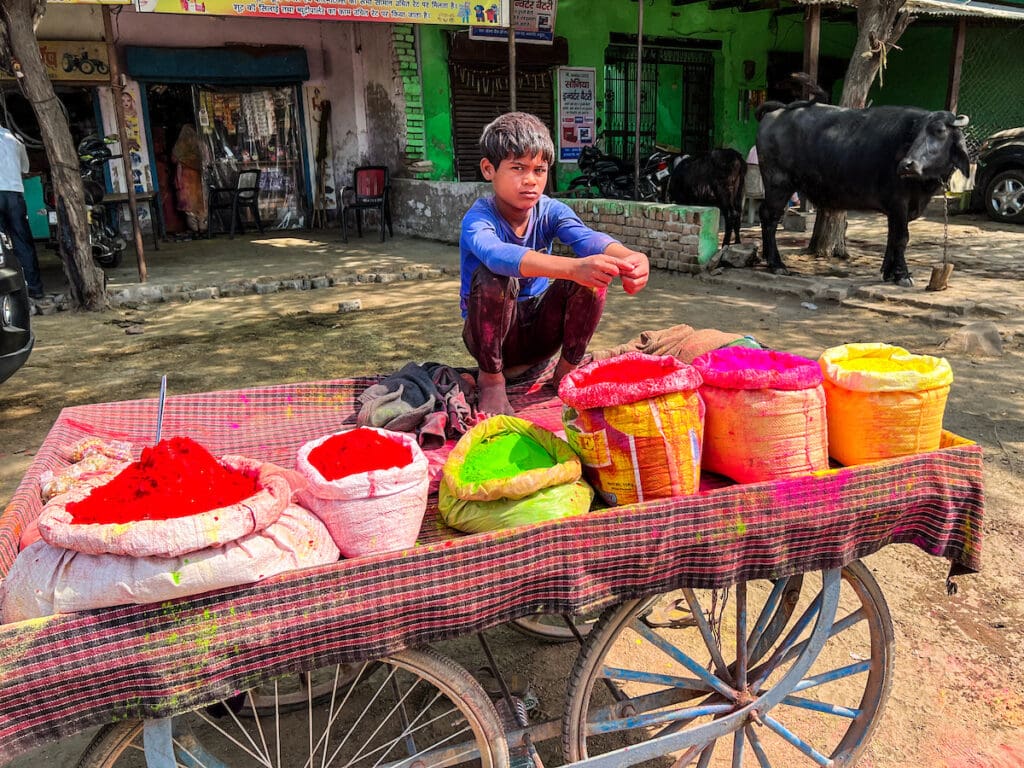
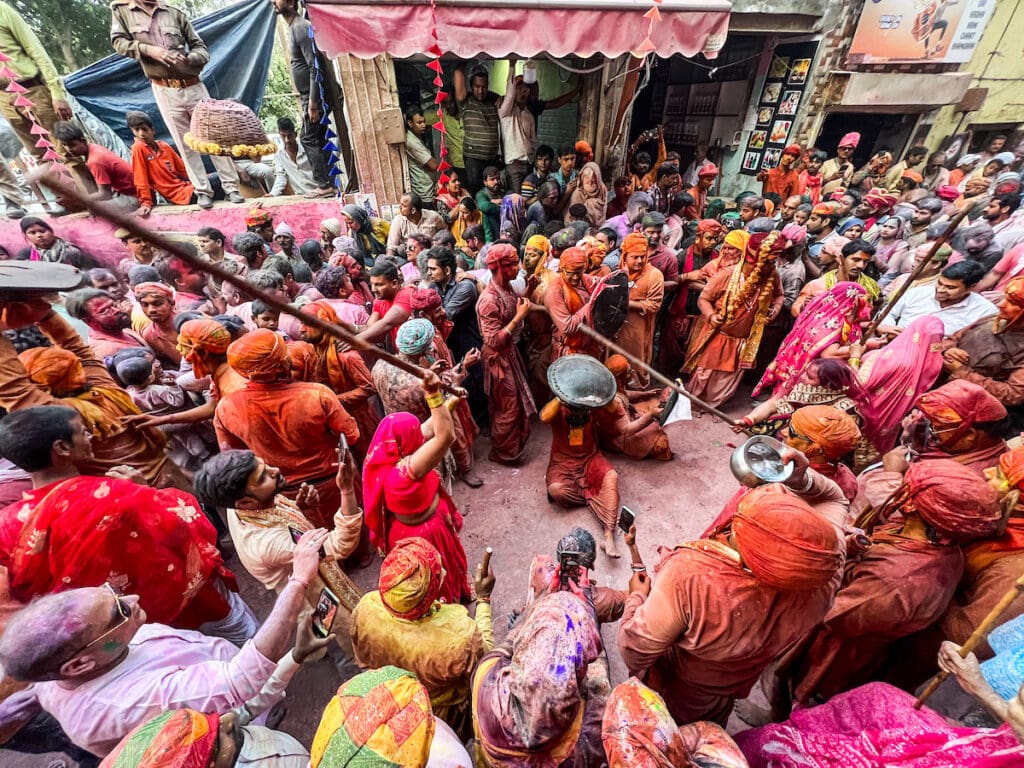
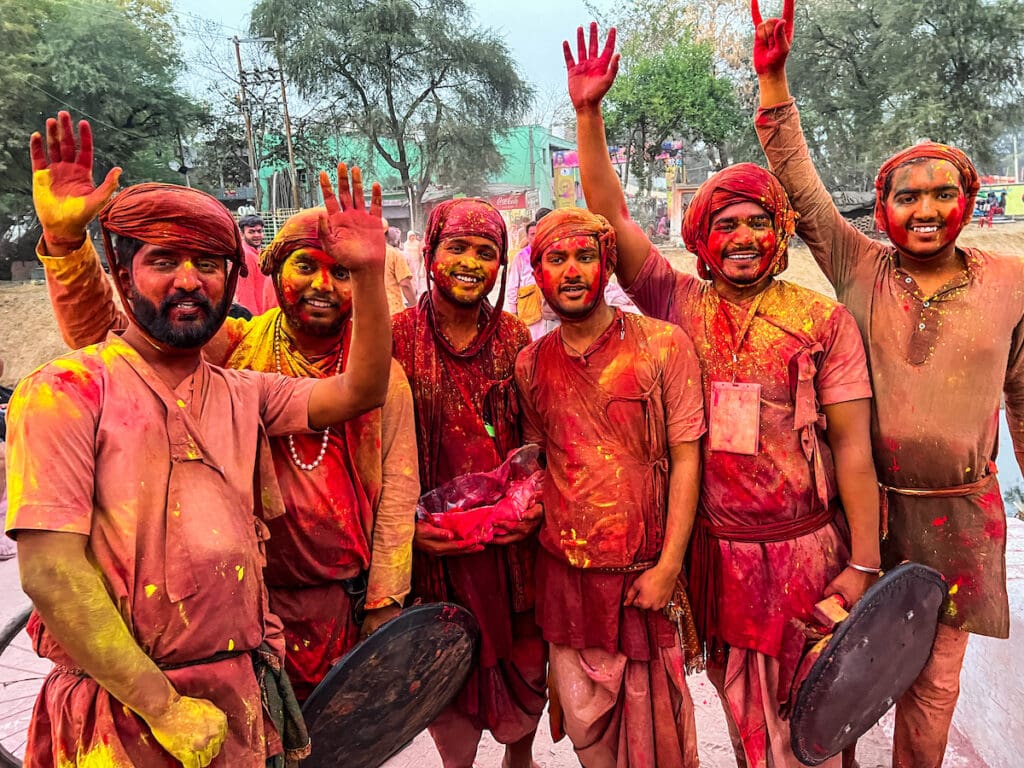
Mythology also suggests that Lord Krishna along with his friends visited Barsana, Radha’s village to tease her and other girls by throwing colored water on them. In retaliation, the girls chased him and his friends and hit them with sticks. This tradition still stands today, with men singing provocative songs to women that are in return beaten with sticks while holding shields and splashed with colored water. The colored powders used during Holi, called gulal, were traditionally made of natural items like plants, flowers, leaves and berries. Today, gulal is mostly synthetic.
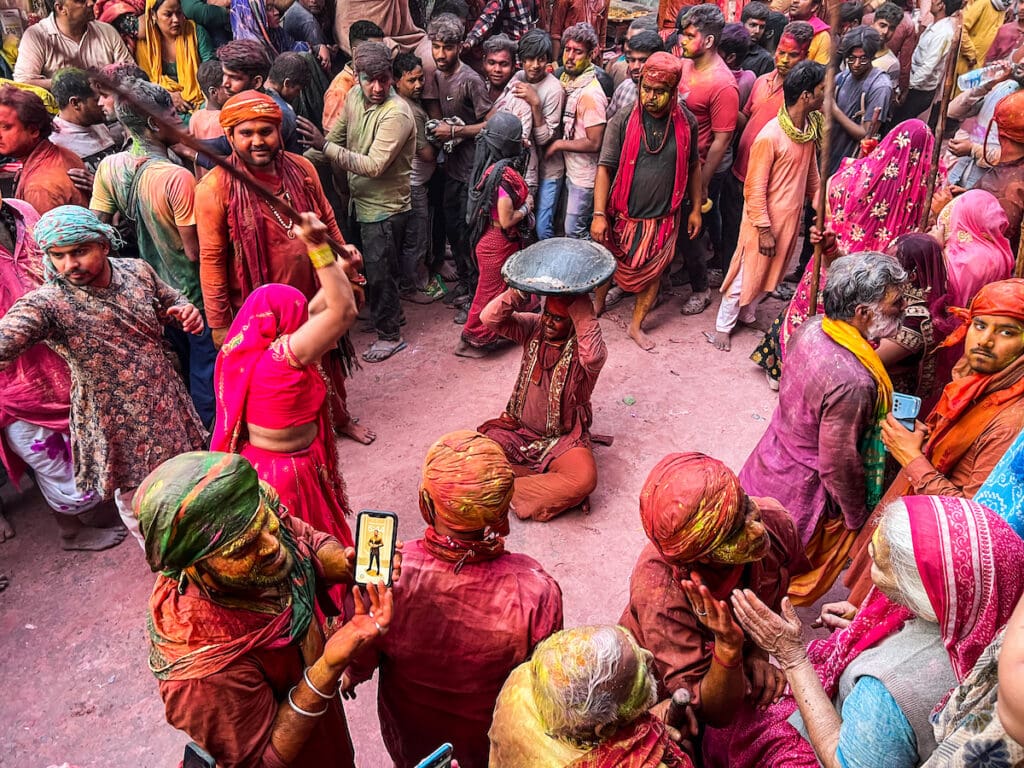
Thousands of people from across India came together in the city of Mathura and nearby villages where the festival of colors is celebrated. The festival began with Lathmar Holi in Barsana and Nandgaon, both small villages in Mathura. During the Lathmar Holi celebrations, women from the Barsana village wait with wooden sticks to beat the men who come from Nandgaon, the hometown of Lord Krishna.
Holika Dahan
The day before Holi and throughout the celebrations in the surrounding days, Holika Dahan is celebrated, which entails the burning of large bonfires to signify the death of Holika and salvation of Prahlada as well as the victory of good over evil. All sorts of items are thrown into the fires, like wood, leaves, food and other offerings in a symbolic purge of evil. Pyres for the bonfires are created days or weeks in advance and set ablaze in a cacophony of hymns and prayers. In many instances, an effigy of Holika is placed atop the pyre.
Widow’s Holi Ceremony
I was also able to attend a Widow Ceremony, an unconventional Holi celebration for women who have lost their husband’s and are now shunned by their friends and family. Widows wear only the color white, the Hindu coloring of mourning, and many are abandoned in the city of Vrindavan where they are told Lord Krishna will take care of them.
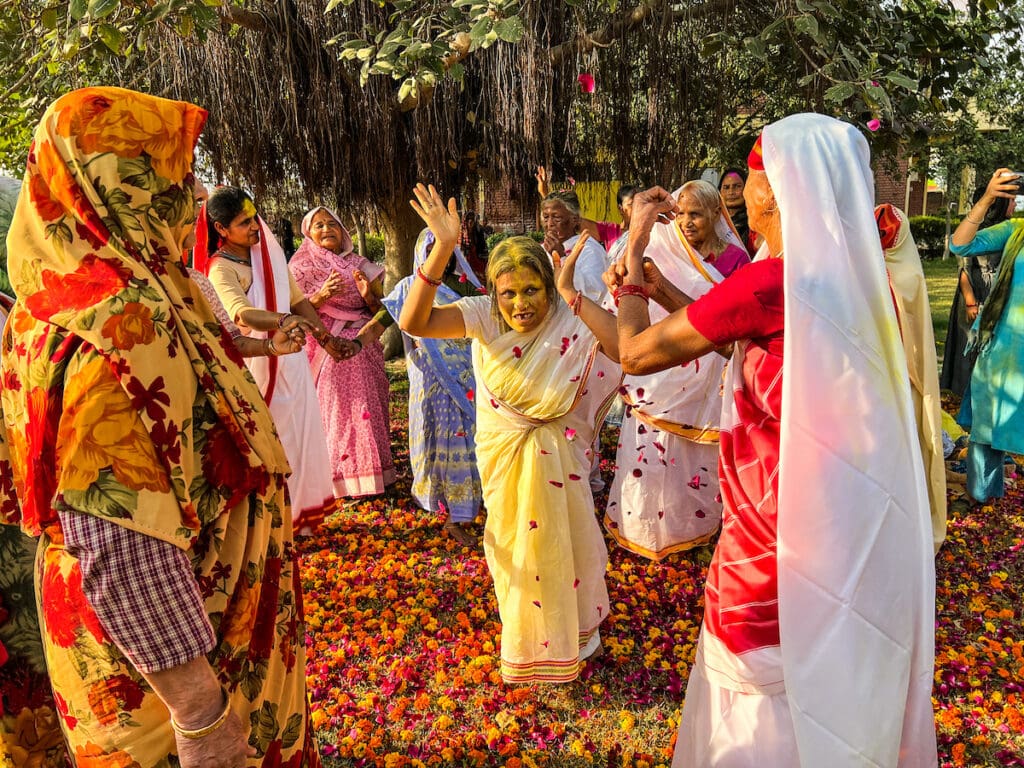
Traditionally, widows are barred from partaking in festivities, but Holi is a special opportunity to skew from the societal caste system in place, allowing everyone to participate. Tons of gulal and flower petals are shipped out to the widowed women, allowing them to partake in the excitement. The women apply colors on themselves at the feet of a Lord Krishna statue. They shower each other in flower petals and sing Rasiya, the traditional Holi song of Brij. This is the one time a year these women can feel included and seen by their community.
Holi Feast
When not throwing around gulal, friends, families and neighbors partake in a feast of traditional Indian dishes and beverages. A staple food is gujiya, a sweet dumpling-like fried pastry filled with dried fruits and nuts. Another staple is dahi vada, a deep-fried lentil fritter served drenched in creamy yogurt. To drink, many festival goers have kanji, a traditional drink made by fermenting carrots in water and spices. They may also partake in drinking thandai, a cold drink made with almonds, fennel seeds, rose petals, poppy seeds, saffron, pepper, watermelon kernels, cardamom, milk and sugar. Thandai is often made with bhang, or leaves from the cannabis plant.
Holi Around the World
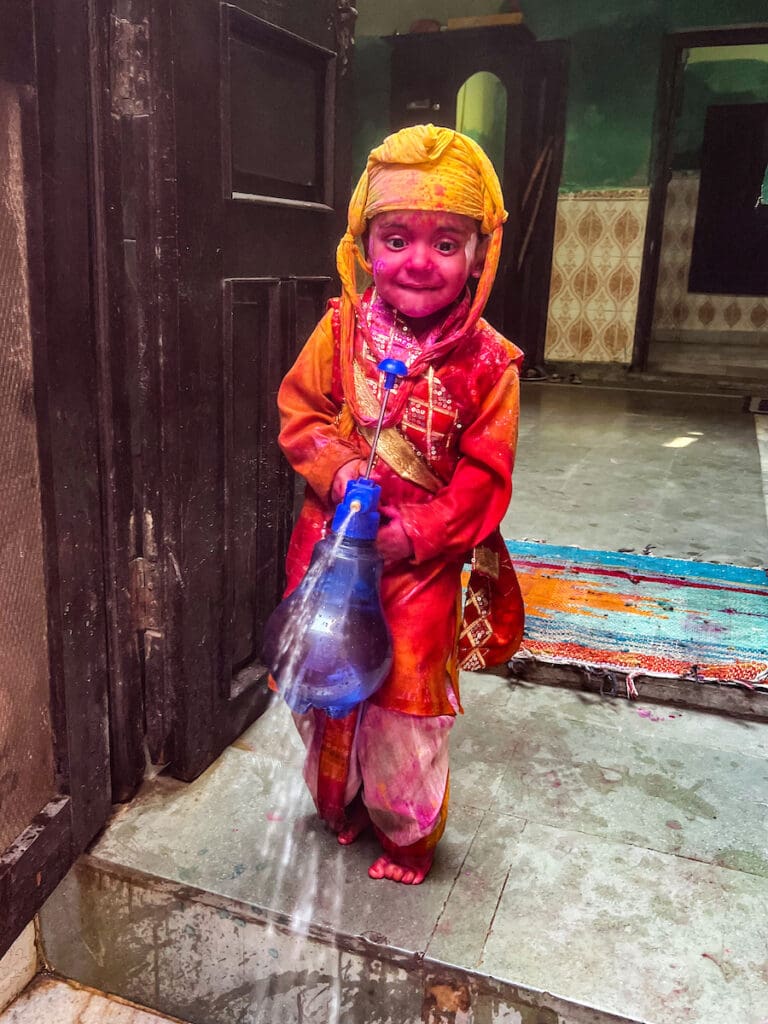
Even though the largest celebrations may occur in India, Holi is celebrated around the world by many people. About 4.4 million Indians reside in the US, bringing the festivities overseas for other cultures to partake in and enjoy. Different celebrations of Holi can be found in parts of Africa, Europe, and other South Asian countries. The colorful spirit and love of Holi spreads across the world with every handful of gulal thrown.
Holi Travel Tips
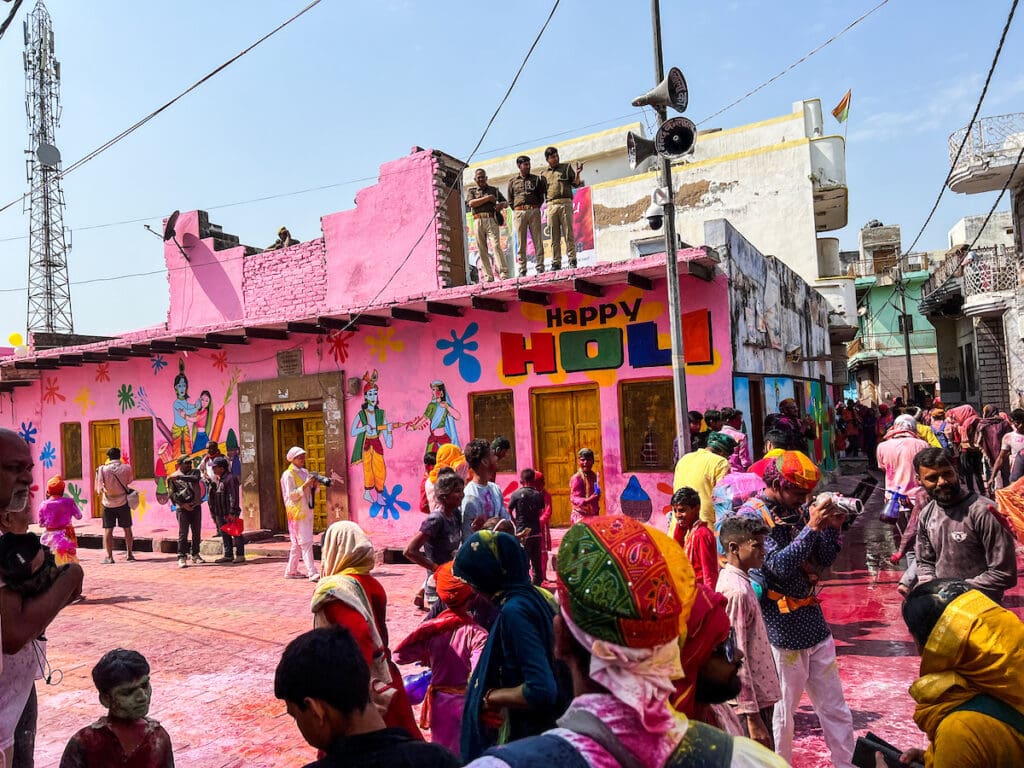
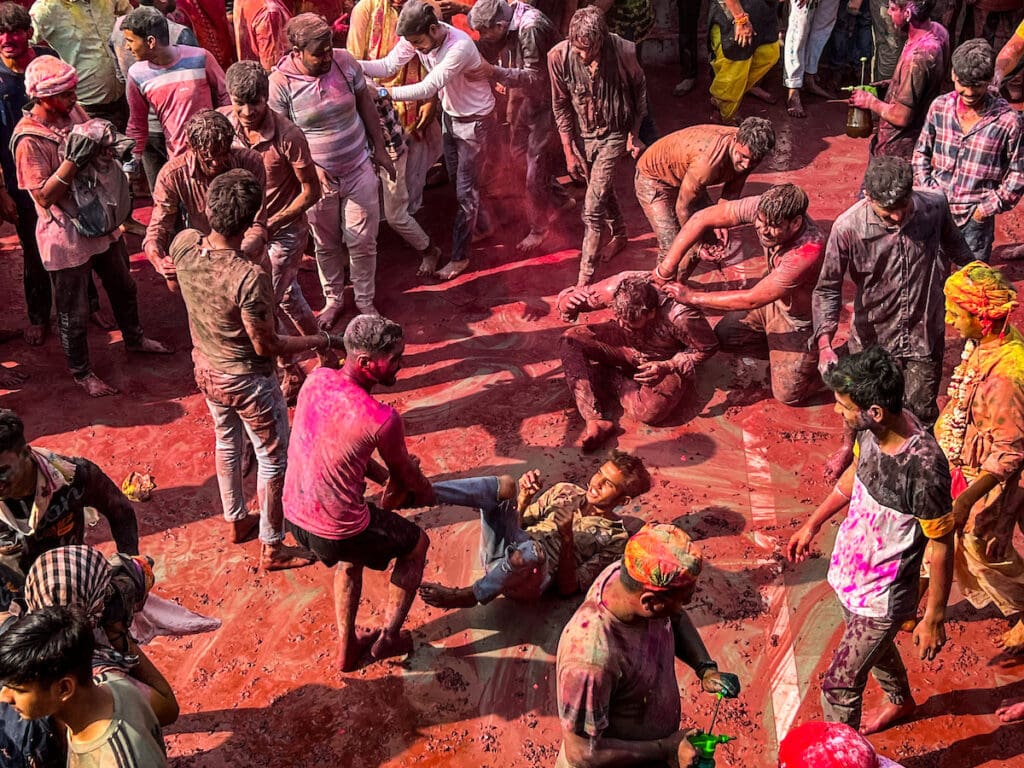
As a photographer and a foreigner, you often stand out in crowds during the Holi celebrations and can become targets for young people to bombard you with the colored powder. It is all in good fun for the most part, but still feels overwhelming at times. It is imperative that you fully cover camera gear because the colored powder can ruin lenses and camera bodies. I gave up on using my professional camera after Day 1 and simply used my iPhone to photograph the festivities. This allowed me to move with ease through the crowds and not risk ruining my gear.
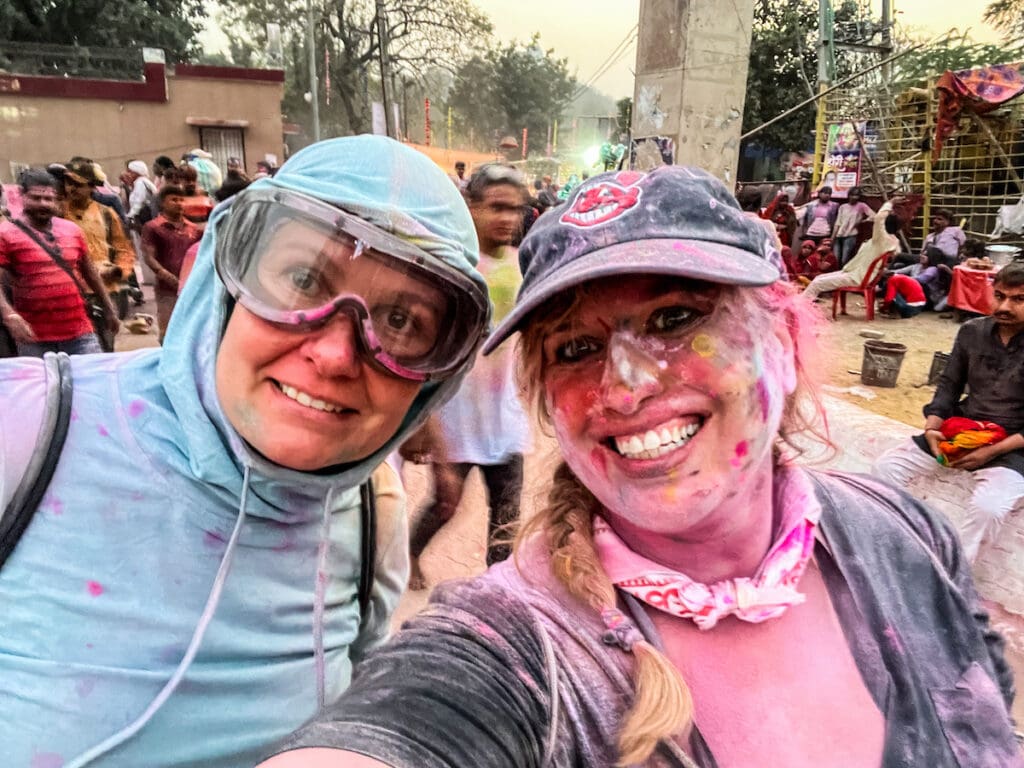
Keep your hair covered as much as possible, I ended up having pink hair for over a month after the festival. Indian women treat their hair with oils before the festival so that the powder does not die their hair. Most hotels also offer laundry service and somehow get the color out of your clothes. Upon returning home, I was unable to remove the die at home when I washed my clothes, but everything I had washed in India was completely clean. Needless to say wear clothes that are cool, modest and are able to be left behind after you fully experience the festival.
Beware of the large crowds as well. There were several instances where I felt unsafe in the heavily crowded streets. I feared being crushed and also pickpockets are rampant in the tight spaces. If you do not like crowds, this is not the event for you. We often found higher observation areas for viewing and photographing to avoid the heavy crowds below.