


Located just Southwest of the Hagia Sophia in Istanbul, Turkiye hides the heart of sixth century Constantinople just under your feet. The Basilica Cistern also known as “Yerebatan Sarayı” (Sunken Palace) functioned as a storage and distribution area for water. Built by Roman Emperor Justinian I in the year 532, the Basilica got its name from being built beneath the former site of the Stoa Basilica. The cistern allowed water to flow to the Great Palace, where the emperors resided, the surrounding buildings, and eventually to the surrounding city for hundreds of years.
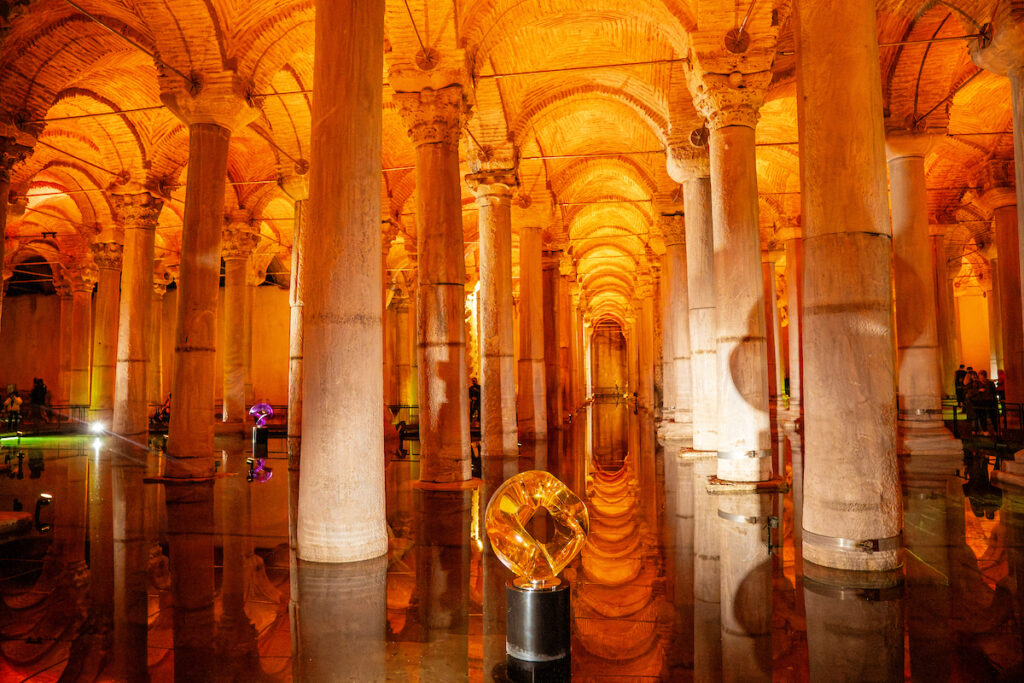
As you descend down fifty-two stone steps into the cistern, you’re surrounded by a 13 ft thick firebrick wall that is coated with waterproofing mortar. The large size of the Basilica is noticeable right away as its 336 marble and granite columns tower over you at 30 ft (9 meters) high, holding up the domed ceiling. The entire cistern is capable of holding 2,800,00 cu ft of water and is 453 ft (138 meters) by 213 ft (65 meters).
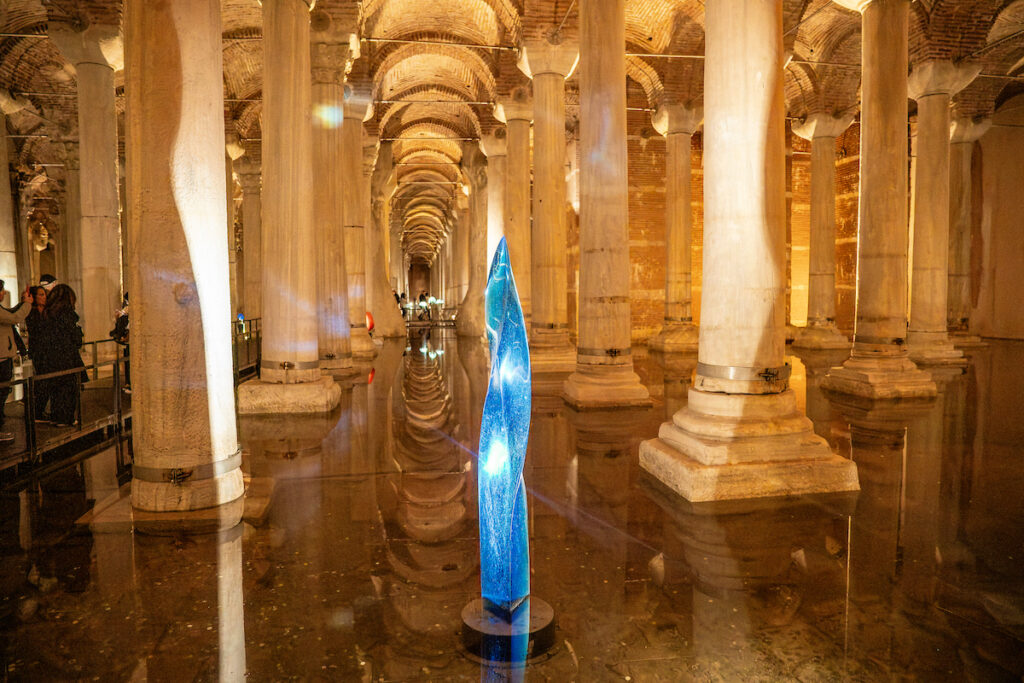
The stone columns are arranged in 12 rows of 28 columns each spaced 16 ft (5 meters) apart that creates a never-ending look to the large room. The majority of the columns appear to have been recycled from the ruins of older buildings. After multiple restorations, in 1987 the structure was finally opened to the public as a museum. Guests can walk over the pools of water still being held in the cistern and marvel at the amazing architecture and its history.
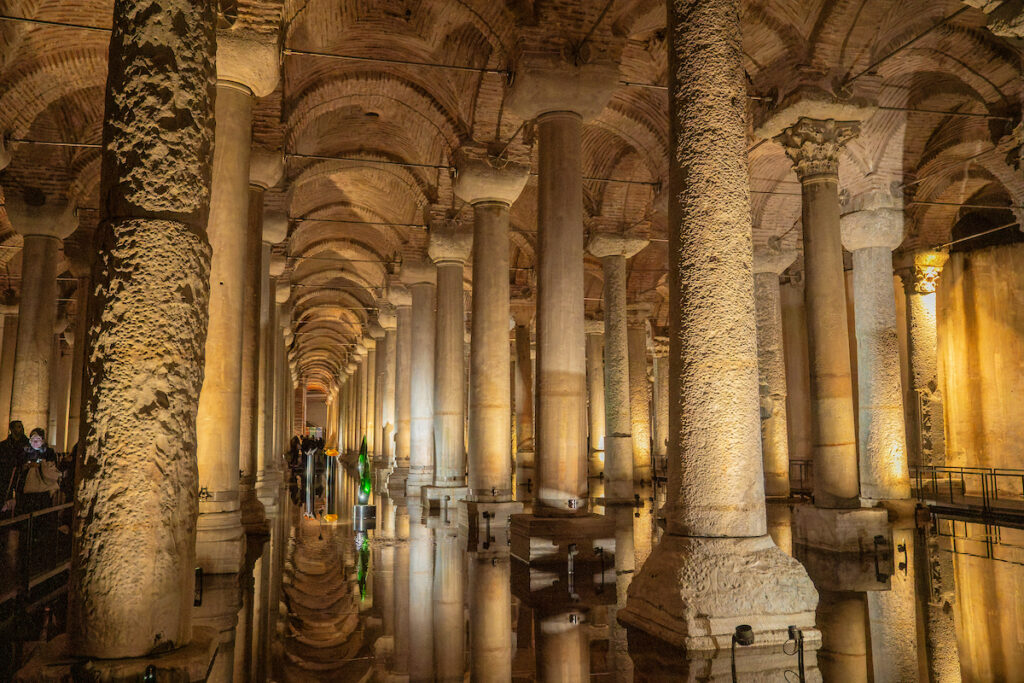
A special column has been dedicated to the 7,000 slaves who built the Basilica, many of them dying along the way. The pillar has been named the ‘Weeping Pillar’ and is covered in carved tear shapes, trees, branches, and peacocks on its surface. The water and columns through the entirety of the structure are lit-up with colored lights, creating a calming atmosphere as you admire the once water-filled space.
In the north-west corner of the cistern, two large stone Medusa heads rest as a base to two columns and are the topic of many rumors. One of the heads rests sideways at a column’s base, while the other is upside down. Some people speculate that the Medusa heads are remnants from the Forum of Constantine while others suggest they were just part of the rubble recycled. Another belief is that Christians purposefully turned pagan statues upside-down in an effort to cancel their power.
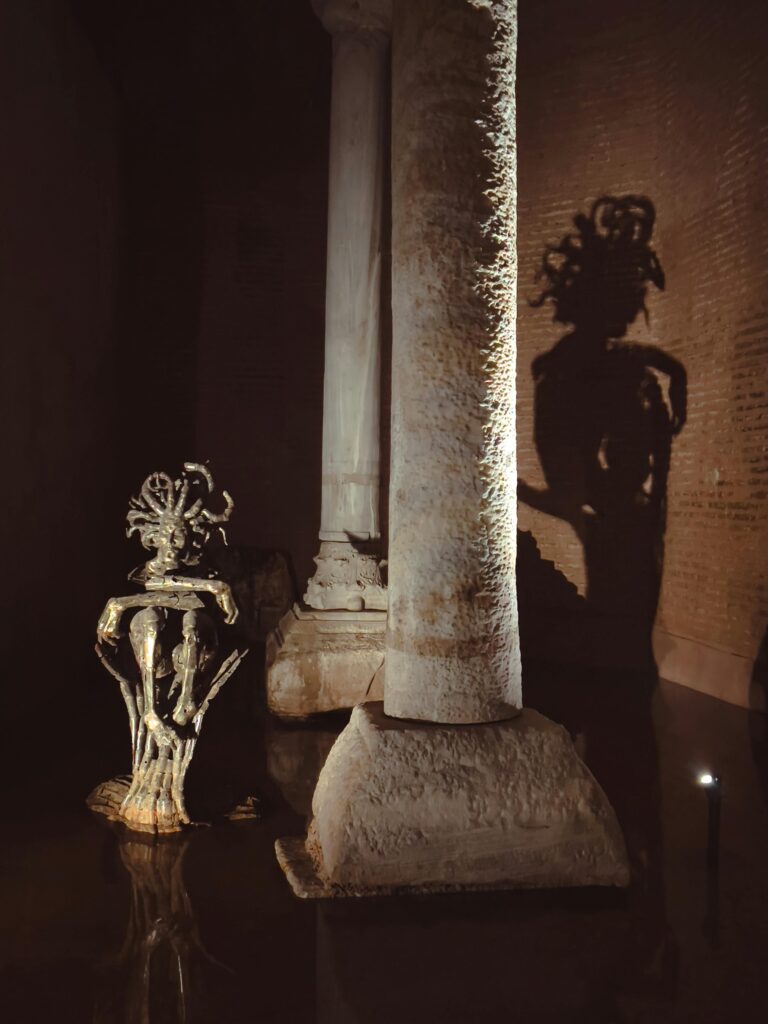
The Basilica Cistern is open from 9 a.m. to 11:50 p.m. daily. The Basilica frequently hosts temporary exhibitions, contemporary art shows, cultural and artistic events and concerts. Tickets are about $25.00 for foreign visitors and can be purchased on multiple online websites prior to your visit. The facility offers guided tours and self-guided tours that last roughly 30 to 40 minutes. Make sure to wear comfortable clothing for possibly chilly air and shoes for wet conditions. The humidity inside the cistern is 96%, causing water to drip from the ceiling and the floor to be wet.