


Few artists have traveled as many musical roads as Jim Lauderdale. A two-time Grammy Award winner, Nashville Songwriters Hall of Fame inductee and prolific singer-songwriter, Lauderdale has spent decades moving between country, bluegrass, folk, roots rock, soul and Americana. His songs have been recorded by artists including George Strait, George Jones, Patty Loveless, Vince Gill, The Chicks, Blake Shelton, Elvis Costello, Gary Allan and Lee Ann Womack. His songwriting credits include George Strait’s “The King of Broken Hearts,” “Where the Sidewalk Ends,” “We Really Shouldn’t Be Doing This” and “Twang,” as well as “You Don’t Seem to Miss Me,” recorded by Patty Loveless and George Jones.
As a recording artist, Lauderdale has released a remarkable catalog of albums beginning with his 1991 debut, Planet of Love. His work has continued across traditional country and bluegrass, including I Feel Like Singing Today with Ralph Stanley, Lost in the Lonesome Pines, The Bluegrass Diaries, Hope, The Long & Lonesome Letting Go and My Favorite Place. In 2026, Lauderdale continues that streak with Country Super Hits Volume 2 and The Birds Know, a bluegrass collection with The Po’ Ramblin’ Boys.
While at Bristol Rhythm & Roots Reunion in Bristol, Tennessee-Virginia, Lauderdale spoke with The Travel Addict about the magic of the historic Bristol Sessions, songwriting inspired by travel, his love of the mountains, his approach to collaboration, Tai Chi, discovering new cities on foot and why Americana remains such an important home for roots music.
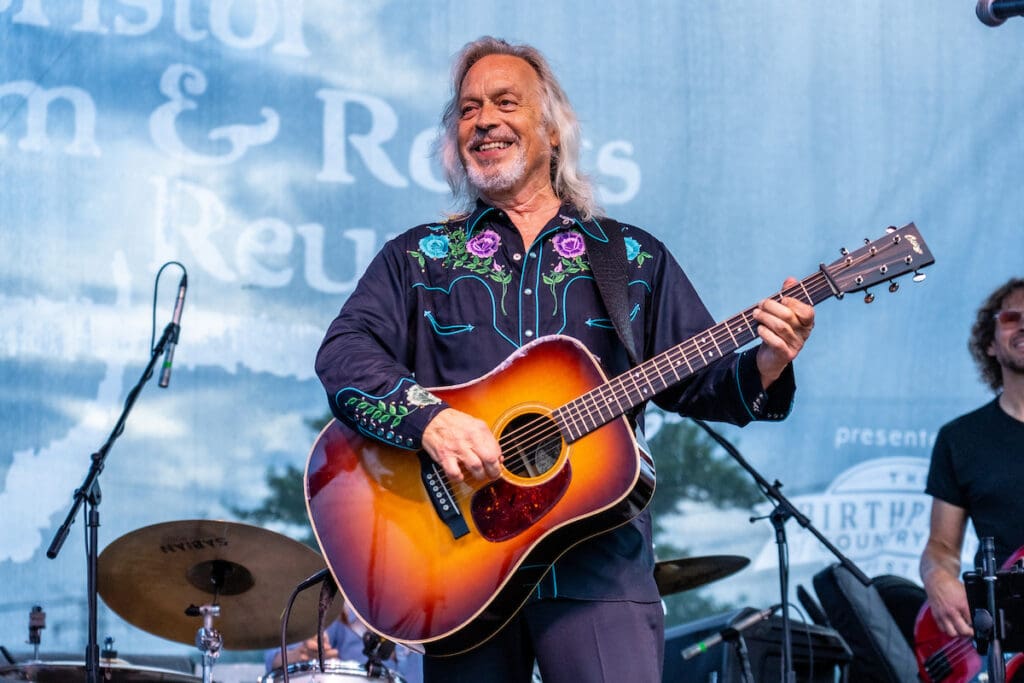
Do you have a favorite memory from the Bristol Rhythm & Roots Reunion?
Honestly, every time I come and perform, it’s a different kind of excitement. I remember the very first time I came here to Bristol to play Rhythm & Roots, and I just felt this magic walking down State Street and these side streets.
I still have this overwhelming feeling when I come to Bristol, but especially during Rhythm & Roots, because there’s so much extra energy with all the people here and musicians.
I’m a person who loves to record in old historic studios where people have recorded—some of my favorite people. I love to play in music venues that have this rich history. When I come here to Bristol, I feel the spirit of those people that recorded in 1927 here for the Bristol Sessions. It is just this very strong thing I get.
Music is an energy, and it’s got a spirit to it. These great musicians who were pioneers and were here for that important series of recordings—I feel like they’re here.
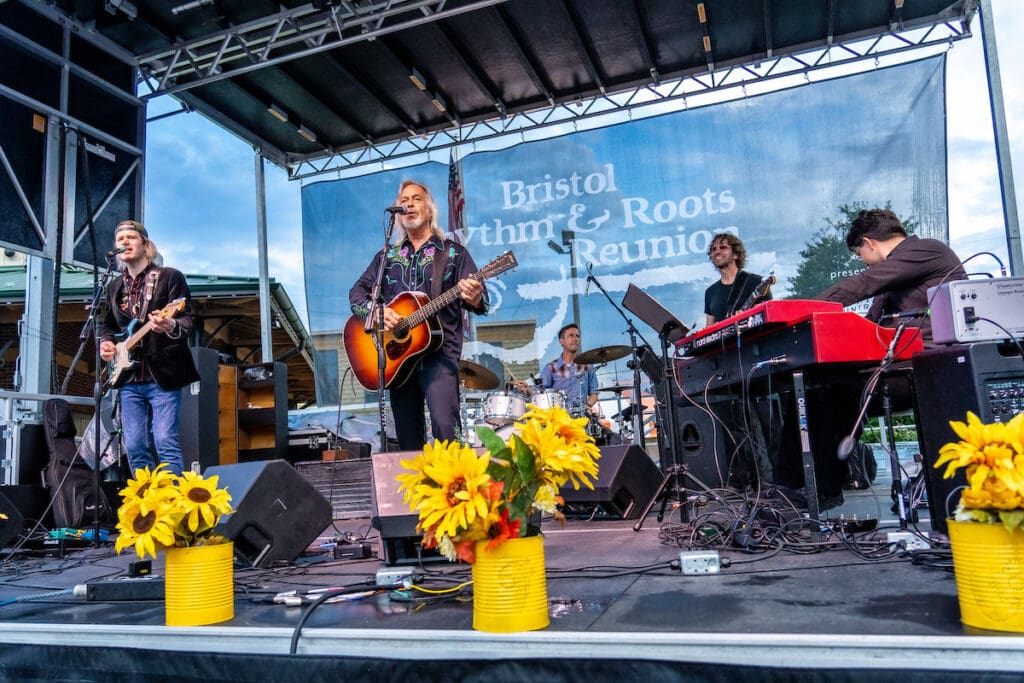
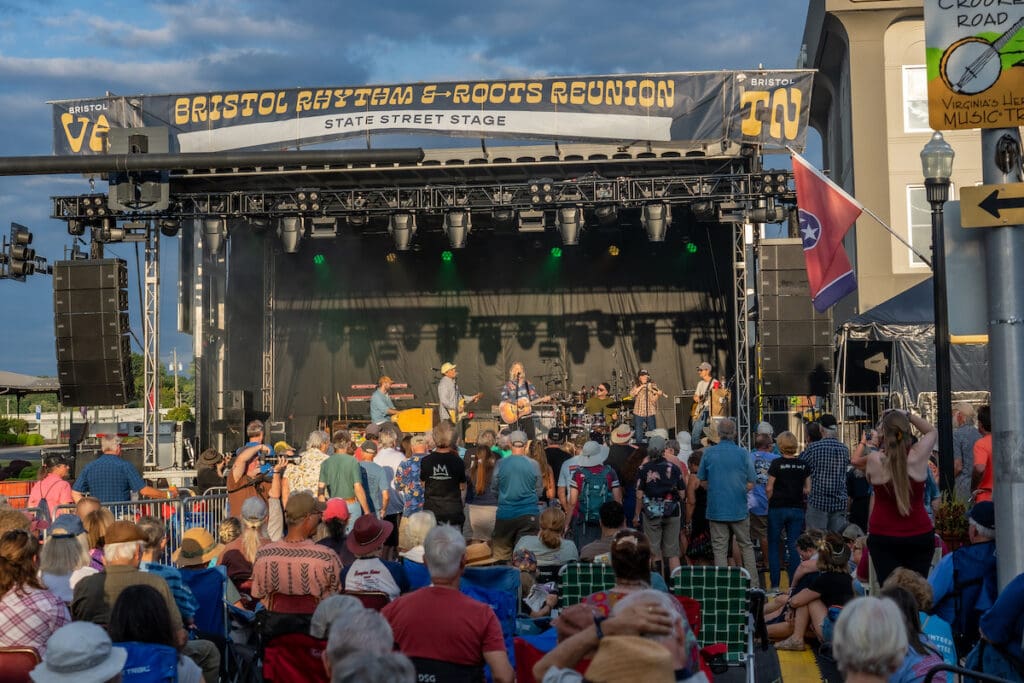
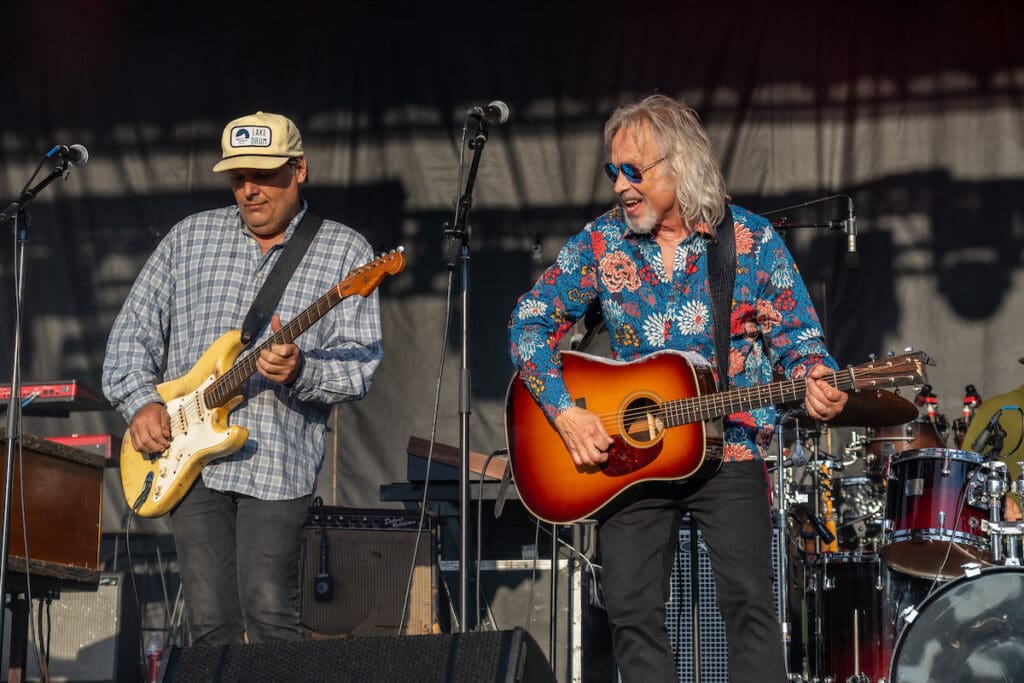
Last night, when I played with my friends Donna the Buffalo, we were on the State Street stage. When I looked to my left, that was the area where the building where they did the Bristol Sessions used to be. I got this otherworldly good feeling.
What is it about Bristol that creates that feeling?
It’s hard to explain. You can’t really put your finger on it. Most of the buildings here in downtown were there during that time of the 1927 recordings, and that history is still around you. There’s something about being in a place where so much important music happened. You can feel it.
What does your perfect day in Nashville look like for you?
My perfect day in Nashville is going to the recording studio and working on something I’m writing in the studio, or something that I’ve just written either by myself or with a co-writer.
And when I perform there, the Ryman is probably everybody’s favorite place to play in Nashville. I also play once a month at Skinny Dennis. It’s a great honky-tonk.
The other night I was at Third & Lindsley, which is a really good music room with great sound. They were having Harlan Howard’s 99th birthday bash. Harlan sadly passed away several years ago, but he used to have these birthday bashes where they’d invite several bands. We did Harlan Howard songs that night to honor him.
What’s inspiring you right now?
Getting to be here at this festival is inspiring me because I don’t get to hear much live music because I’m on the road so much. Unless I’m at a festival, I don’t get to hear a lot. And last night I got to hear The War and Treaty. They have such a dynamic show and are so incredible. That really inspired me. And I know that when I see Del McCoury this evening, that’s going to inspire me in a whole different genre of music.
I also really love the people here. I feel so welcomed at this festival, and I really love interacting with the people that are here. They’ve got a great bunch of volunteers who are the backbone of this festival.
If you could take a month off from touring, where would you go?
I would go someplace in the mountains. Maybe North Carolina, Virginia or Tennessee or Colorado. I love the mountains.
I just got back from a tour with Emmylou Harris, opening for her farewell European tour. I had been to some of these places before, but usually it’s get there, do the soundcheck, do the show and leave in the morning. This time I got to spend a couple of days in Oslo, Norway, and really loved that. I loved every place over there. I don’t get to go often enough, and it’s just nice to experience all the differences with these places.
I think it’s good for us to get a different perspective on the world. I really like the Scandinavian countries, and also Ireland, Scotland and the U.K.
Has a place ever inspired a song?
Yes. I’ve written songs here in Bristol. I’ve written a song that I’m going to put on an album that is taking me forever to finish. I’ve only recorded two songs, but I wrote it here in this complex of buildings. The place used to be a flour mill, right where the restaurant is now.
I wanted to, in some ways, give honor to the Bristol Sessions. I’m co-writing the songs with different artists, and I want to finish that. I’ve written the theme song for that, called “Both Sides of Bristol.” It’s an old-timey thing. I’ve started a ton of melodies and titles here that I haven’t finished. That happens to me during my writing process. Things just come out.
North Carolina has inspired songs, too. Sometimes it’s because of the beauty of the landscape. Sometimes I’m just in a hotel room. I wrote a song called “Artificial Intelligence” in a hotel room. It’s kind of a traditional country-sounding song, in some ways parodying artificial intelligence.
When I lived in Los Angeles, I used to go to the desert a lot, to the high desert out there, and I wrote a lot of songs out there. It’s nice to have those writers’ retreats.
Is there an artist you’ve always dreamed of collaborating with?
I don’t think it’s ever going to happen with Bob Dylan. Sadly, as I get older, so many of the people I wanted to collaborate with have passed on. I never got to write with John Prine. I wanted to record with Jerry Garcia. I wanted to write with him. I sang with George Jones, but I never got to do more. I wanted to do more with Merle Haggard. I wanted to do more with Ralph Stanley as well.
You’ve worked with such a huge range of artists. How do you approach writing with someone like George Strait differently than Ralph Stanley or Elvis Costello?
They’re all different. Their personalities are different as far as writing. They have different styles. There’s a real thread with all of them, though. Some songs can be changed. You could do them rock or country or bluegrass because of the artists.
Every time that’s happened, it’s just been like a dream. I never would have imagined when I was a kid listening to some of these older artists that I would get to work with them.
You’ve also worked across so many genres. What do you think bluegrass teaches young musicians?
I’m encouraged and happy and hopeful for the next generation of young musicians who started in bluegrass. I always thought this was my theory, but it turns out Bill Monroe had said it years before I did: If you start out in bluegrass, you can play anything. It’s just such a good training ground. There are numerous virtuosos of these young musicians, and that’s great.
What’s your favorite way to experience a new city?
Walking. Especially if you’re flying into someplace, especially overseas, try to get on their schedule. Don’t go to sleep right away. Stay up until the evening. I enjoy walking around the cities and just kind of getting some of the essence of the place.
What would your ideal Jim Lauderdale road trip look like and who would you take?
There’s just so much off the beaten path across America. I’d think I’d like to drive around Ireland and visit different cities. My companion would have to be somebody who could do the driving, because I would never drive in the places where the cars are on the other side of the road.
What does Americana mean to you today?
My definition of Americana is this umbrella label for folk, bluegrass, country, roots rock, soul, R&B, blues. It began as a radio format, really, and I think it’s such a blessing, even though everything’s changed since it started as far as the way we consume our music.
There wasn’t a place for Joe Ely and Guy Clark and Loretta Lynn after she wasn’t having country hits, or Merle Haggard or George Jones or Johnny Cash. There were different bands that were too rootsy for mainstream rock radio and not commercial enough for country radio, or just that there wasn’t a place where you could hear some of these people. I think it’s a really healthy and needed format and genre for people to discover these artists.
What is a must-visit destination for music lovers?
Nashville is an obvious one. But do your research. Robert’s Western World is my favorite place on Lower Broadway, but it’s very crowded. There’s a lot of noise and packed places where the bands are really loud, sometimes playing cover rock songs that aren’t even country.
I would definitely visit the Ryman for the historical reason and maybe catch a concert there. Go to the Station Inn, which is a bluegrass club. They’ve always got great people playing. If you can get into the Bluebird, that’s a good place to go. It’s small, and there’s also a place called the Listening Room now, which is kind of like a bigger version of the Bluebird.
Nashville musically is still one of the most concentrated places. Having lived in New York City and Los Angeles, which are two places I love, are they just not as concentrated for the music experience.
What’s your craziest travel story?
There have been many stories of canceled flights and missed planes and that kind of thing. One of the crazier ones happened when I was living in Los Angeles. Buddy Miller, who is now wildly successful, was my guitar player. The two of us had a manager who hired a driver to drive us all night from Los Angeles to a festival in New Mexico.
The driver was late to pick us up. We drove for a few hours and our job was to sleep because we had to play the next day. Then we stopped, and I asked the driver what was going on. He said, “I’ve got to sleep for a while. I was up all night the night before, and I can’t drive anymore right now.”
I was thinking, “We have to get there.” So Buddy and I ended up driving ourselves to the festival. I just laughed at the fact that sometimes the road can go from the ridiculous to the sublime. One day it’s a great hotel, the next day it’s something completely different.
You never know, really. You just have to roll with that as you travel. For frequent travelers, a lot of times things are out of your control.
You also practice Tai Chi. How did that become part of your life?
I was living in California and working on a record, and we unexpectedly had to take a week off. I happened to go by a newsstand and saw a magazine called Tai Chi Journal. I’d already had an interest in it, and there was a workshop in Oregon, so I went.
There was a Chinese master who lived in San Francisco who brought an older master over from China. I was so impressed by both of these men, especially by their fitness and their age. I started studying with this master. Then he would have camps in California, and eventually he started having trips to China where we would study with some of the best teachers. I’ve been seven times.
The way I look at it is that if there’s not enough time to teach, it takes weeks or months to learn a form—a choreographed series of movements. When I teach people, I like to give people some of the essence of the theory so they can pick up things they can apply to themselves for structure, posture and stretching. It’s just kind of my hobby.
What do you enjoy about the Chinese Tai Chi camps?
When I go to China and these camps are there, and in the U.S., they’re pretty rigorous and long. It’s kind of like an intense music camp. There’s so much information, but you pick up some really useful things.
I think it’s good for your brain and body to learn some new forms from time to time.
You’ve spent decades traveling for music. What has the road taught you?
You never know what you’re going to get. Sometimes it’s a great hotel. The next day it’s something completely different. You have to roll with it. A lot of things are out of your control—canceled flights, missed planes, all those things. But that’s part of traveling.
Rapid Fire Questions
Window or aisle?
Aisle.
What’s always in your suitcase?
Supplements.
If you could wake up anywhere in the world, where would it be?
In the forest.
What destination is still on your travel bucket list?
Bali.
What’s the craziest place you’ve ever slept?
Waking up on a floor.
Dinner with one person, living or legendary?
Jerry Garcia.
For Lauderdale, the road continues to be as much a part of the creative process as the recording studio. From the historic streets of Bristol to European concert halls, mountain landscapes and future road trip adventures, travel gives him another way to listen—to places, people and stories. And after decades of songwriting, recording and collaboration, he still approaches music with the curiosity of an artist who believes there are always more songs waiting around the next corner.