


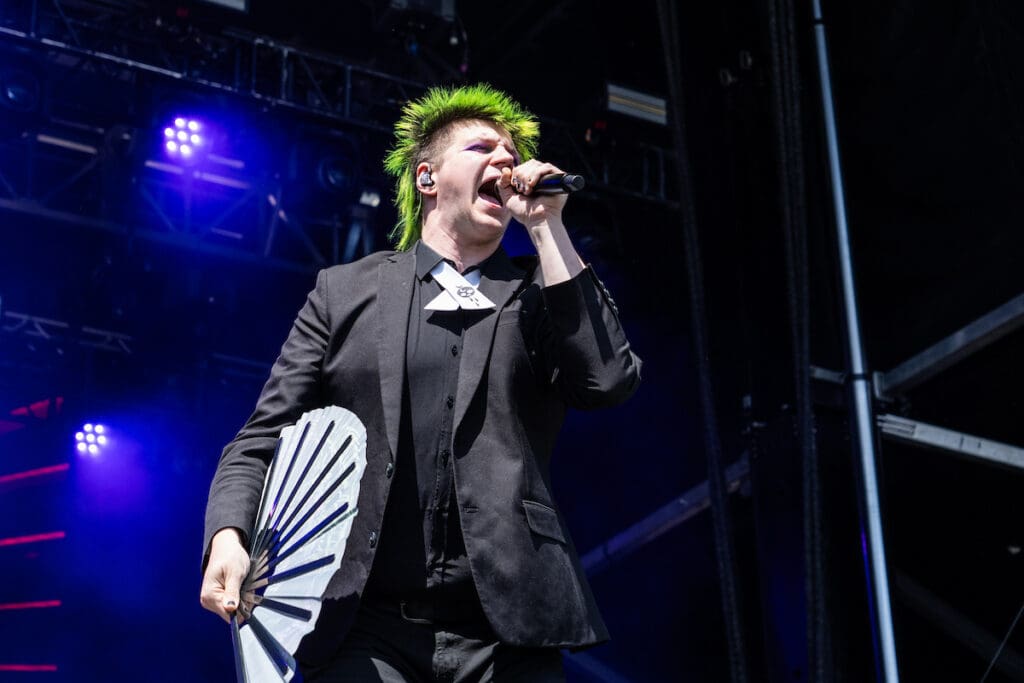
For The Funeral Portrait frontman Lee Jennings, travel isn’t just a byproduct of touring—it’s a creative catalyst. As the band gears up for its first-ever appearance on ShipRocked, Lee is embracing new destinations, deeper fan connections, and the kind of unforgettable experiences that only happen when music and travel collide. Whether it’s writing songs in New Orleans, chasing theme parks on off days, or hauling pillows and blankets across continents to guarantee good sleep, Lee approaches life on the road with intention and humor.
Ahead of the band’s busy touring schedule—which includes ShipRocked and a major run alongside I Prevail and Three Days Grace—we caught up with Lee to talk about community at sea, the city that inspired one of The Funeral Portrait’s most powerful songs, his perfect day in Atlanta, and why comfort is his number-one travel essential. From late-night Waffle House runs to near-disastrous tour bus breakdowns, Lee proves that the stories between shows are often just as meaningful as the performances themselves.
This will be your first ShipRocked. What are you most excited about?
Honestly, the community. None of us have ever been on a cruise before, so everything about ShipRocked is new to us—but what stands out most is the family aspect. I’ve never experienced it firsthand, but fans bring it up constantly at our shows. They talk about how ShipRocked feels like a reunion, how everyone supports each other, goes to shows together, and genuinely connects. Alternative music thrives on community, and I’m really excited to finally be part of that family.
You wrote “Voodoo Doll” in New Orleans. How did the city influence that song?
We actually spent most of January 2020 in New Orleans writing and demoing songs for the record. The atmosphere down there—it just seeps into everything. The history, the mysticism, the voodoo culture—it all played a role. “Voodoo Doll” is really about self-harm in a broader sense: addiction, destructive patterns, and how your actions affect the people around you.
The idea is that when you poke the doll, someone else feels it. That metaphor came directly from being immersed in New Orleans. It also influenced other songs like “Blood Mother.” Being there was incredibly relaxing and creatively freeing. I’d love to recreate that experience again someday.
Do you have any favorite New Orleans memories outside of writing music?
King cake—specifically Dong Phuong. We were there right as king cake season kicked off in January, and it became a core memory. We got a couple of different ones and ate them forever because they were so good. I’m low-carb now, which makes it painful to even talk about, but I still dream about that king cake.
You’re hitting the road soon with I Prevail and Three Days Grace. Any cities you’re especially excited to revisit?
Orlando is a big one—I’m a massive Disney and theme park fan. Milwaukee is always great, and we’re heading back to Hershey, Pennsylvania, which is wild because the last time we were there, we played Hersheypark Stadium. This time it’s an arena. Hopefully we’ll have an off day so I can check out Hershey World—though maybe not great for the carb count. I do take cheat days though.
Has travel ever directly inspired your songwriting beyond New Orleans?
New Orleans is definitely the biggest one. Growing up in the South and living in Atlanta also influenced songs like “Holy Water.” But New Orleans had a massive impact on the record as a whole. There was something about the pace and the vibe that helped us tap into a different creative headspace.
What’s the craziest travel story you’ve experienced on tour?
We blew a tire on our RV in the middle of the night on the way to Nashville—right before our first-ever arena show at Bridgestone Arena opening for Five Finger Death Punch. It was around 2 a.m., nothing was open, and the only service we could find didn’t answer for hours. When the guy finally called back, he said he’d been asleep. We limped to the shop, got the tire fixed, and made it just in time for load-in. It was unbelievably stressful.
What’s your perfect day in Atlanta for someone visiting for the first time?
I’d start in Little Five Points—Junkman’s Daughter, Criminal Records, all the cool shops. Lunch at The Vortex is a must; I usually get the Fat Elvis burger with peanut butter, plantains, and bacon. Then I’d take them to World of Coca-Cola and trick them into trying Beverly.
For dinner, Iron Age Korean BBQ—hands down the best Korean barbecue I’ve ever had. End the night with a show at The Masquerade or dessert at Sweet Hut. And honestly, you have to add the Clermont Lounge into the mix. After that? Waffle House. That’s the Atlanta experience.
What are your must-pack travel items?
Sleep is everything for me. I pack my own blanket, plushie, sometimes even pillows. I’m extremely particular about sleeping. If I could bring a mobile bed, I would. When we toured Europe, I fit my comforter and plushie into my suitcase. As long as I sleep well, I can handle anything else.
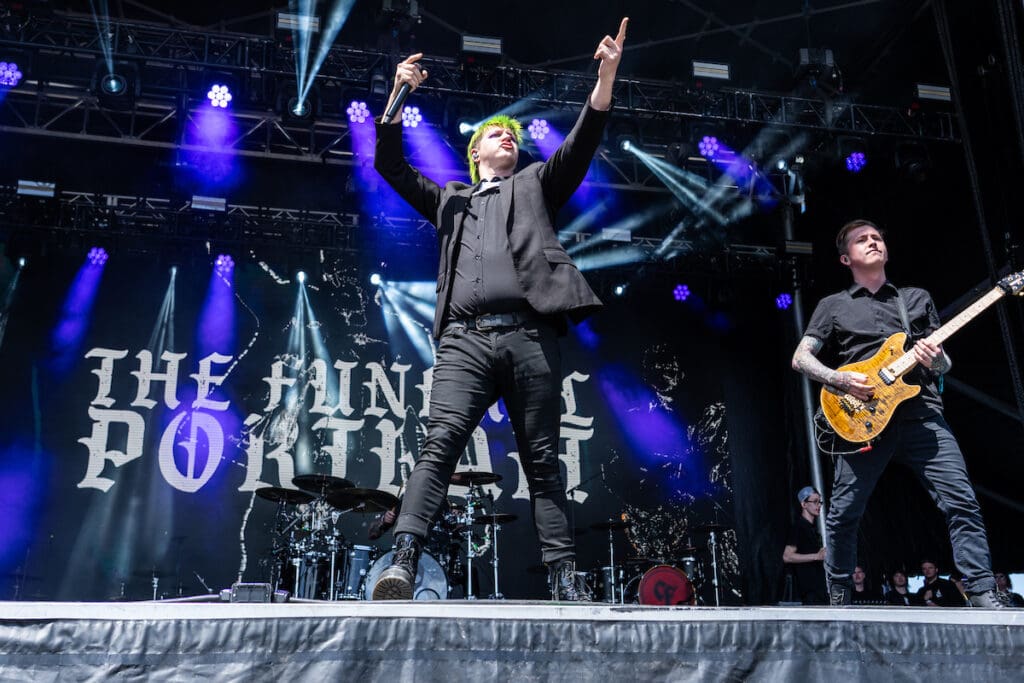
You recently worked with Ivan Moody on the latest album with “Holy Water.” Any dream collaborators you’d love to work with?
Danny Elfman. He’s at the top of my list. His work—both musically and cinematically—has influenced me so much. I watched his Coachella performance online and was completely blown away. I’m swinging for it this year.
The band recently had a lineup change with Caleb’s departure. With lineup changes recently, what can fans expect moving forward?
We’ve added a new live member, Gareth, who plays piano, guitar, and does vocals. Fans on ShipRocked will see the new lineup live. The transition has been seamless. Caleb joined right before COVID, so in reality, he only toured with us for about three years. He wants to focus on songwriting and family, and there’s nothing negative about that. We’re moving forward full speed. Last year, we toured nearly 290 days—that’s intense, but the momentum is real, and we’re not slowing down.
With a debut ShipRocked appearance on the horizon and a relentless touring schedule ahead, The Funeral Portrait is stepping into its biggest chapter yet. For Lee Jennings, the journey is about more than just stages and setlists—it’s about cities that inspire songs, communities that feel like family, and finding comfort wherever the road leads next.