


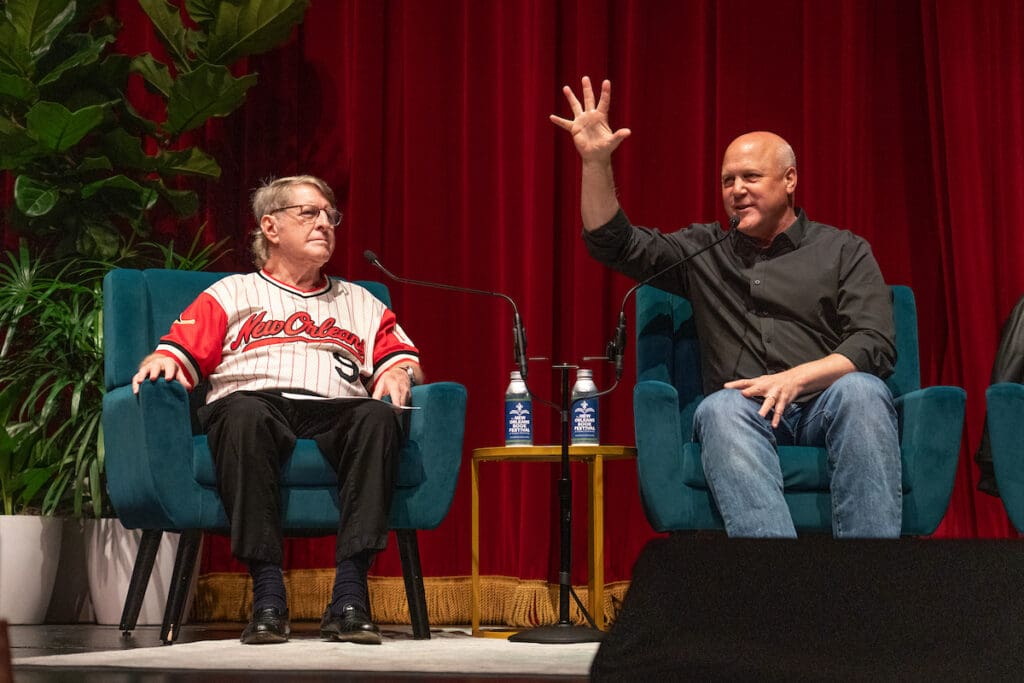
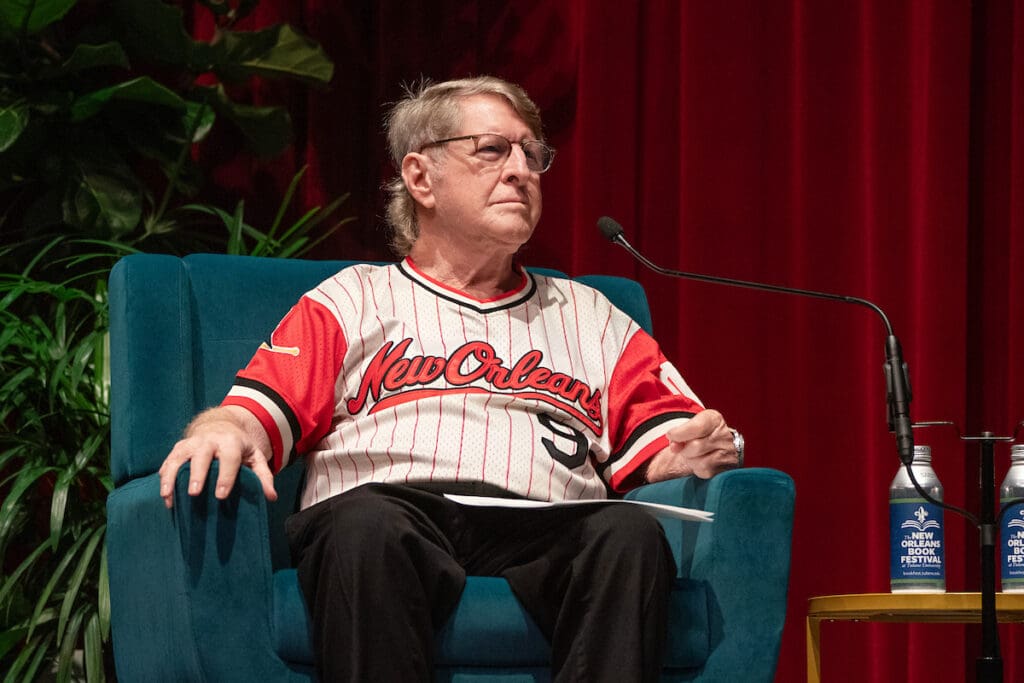
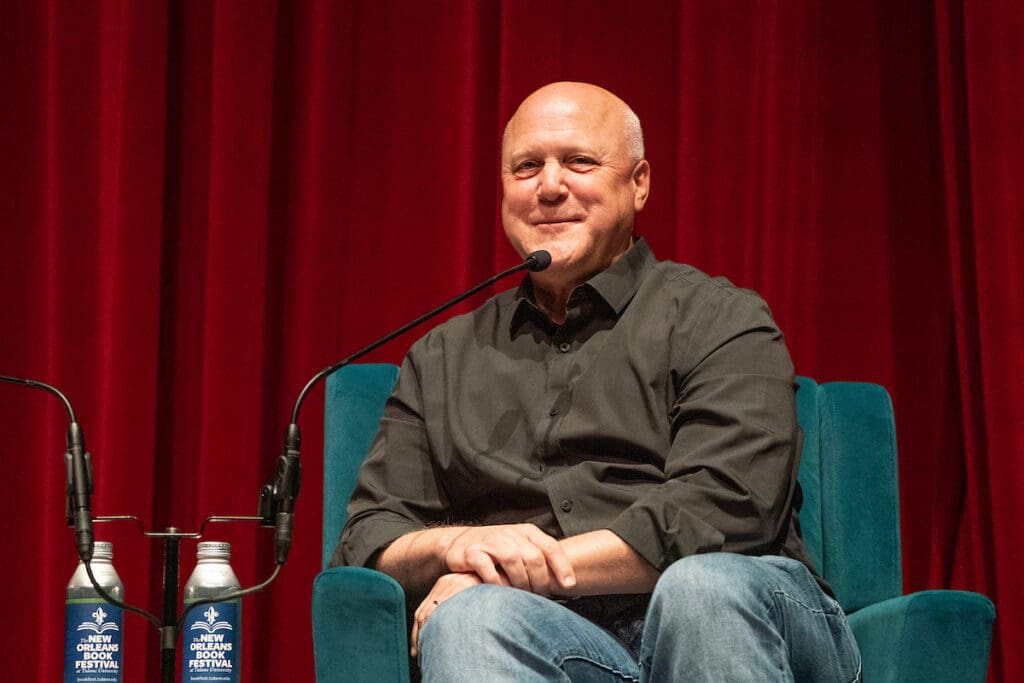
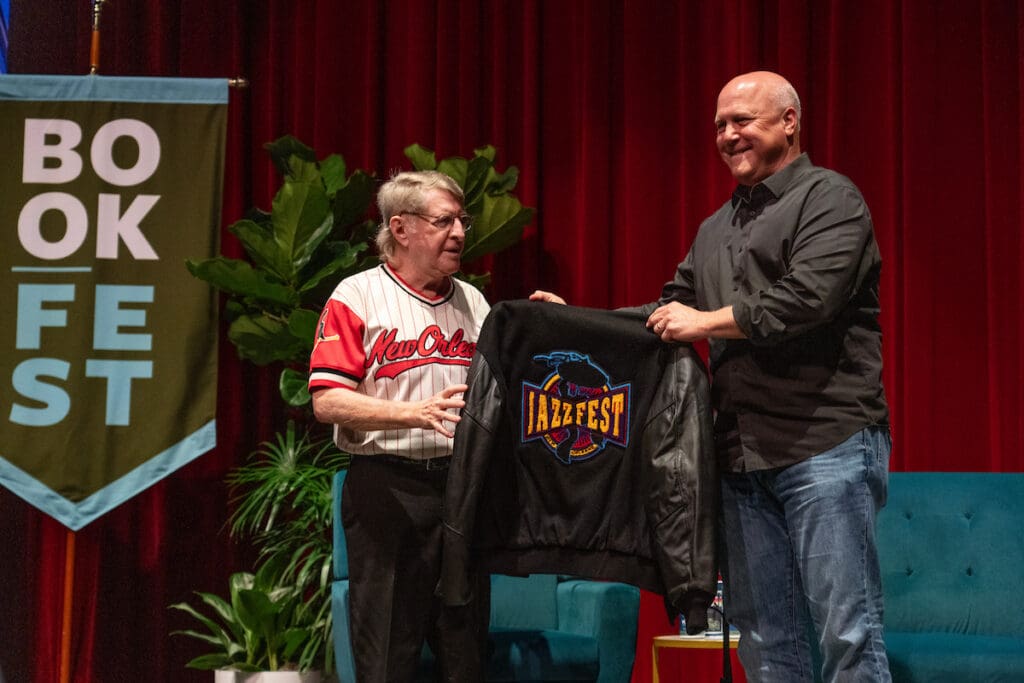
At 11 a.m. Friday March 13th, festival goers packed into Dixon Hall at Tulane University for a conversation that explored one of the city’s most beloved traditions. As part of the New Orleans Book Festival at Tulane University, “Making Jazz Fest: The Soul of New Orleans” brought together Quint Davis, producer and co-founder of the New Orleans Jazz & Heritage Festival, and former New Orleans mayor Mitch Landrieu for an inside look at how the iconic music festival grew from a modest local gathering into a global cultural institution.
For more than five decades, Jazz Fest has helped define the rhythm and identity of New Orleans, celebrating the city’s music, food, and culture while remaining deeply rooted in its community. During the hour-long conversation, Davis and Landrieu reflected on the festival’s origins, its challenges, and the moments that cemented its place in music history.
From Newport to New Orleans
Davis traced the festival’s roots back to George Wein, the legendary music promoter who launched the Newport Jazz Festival in 1954. Newport quickly became the most famous jazz festival in the world, and civic leaders in New Orleans soon approached Wein with the idea of creating a similar event in the birthplace of jazz.
The result was the first New Orleans Jazz & Heritage Festival in 1970. The inaugural event was small compared with the sprawling festival fans know today—just four stages and a modest gospel tent—but it carried a powerful mission: celebrate the music and cultural traditions that began in New Orleans.
Inspired in part by the Newport Folk Festival and folk icon Pete Seeger, the festival also incorporated the spirit of the Congo Square Festival, highlighting the cultural heritage of the city. By 1972, the festival moved to the Fair Grounds Race Course, where it remains today. While massive rock festivals were dominating the music scene at the time, Wein insisted on one guiding rule: no performer should be bigger than the festival itself. That philosophy helped keep the focus on the culture and community rather than celebrity headliners.
The early years also brought historic moments. Jazz Fest was the first time Mardi Gras Indians performed outside of Mardi Gras Day, introducing their traditions to a broader audience and cementing their place in the festival’s identity.
Weathering Katrina
Like the city itself, Jazz Fest has faced enormous challenges over the decades. One of the most critical moments came after Hurricane Katrina devastated New Orleans in 2005. Landrieu recalled the intense pressure from Federal Emergency Management Agency (FEMA) to use the Fair Grounds as a staging area for disaster relief. Blocking that proposal was crucial to preserving the site and allowing the festival to return.
In the difficult months that followed, Davis and his team faced another hurdle: how to finance the festival’s comeback. A partnership with AEG Live helped keep the event afloat, while Shell stepped in as the presenting sponsor, providing the financial bridge needed to bring Jazz Fest back to life.
Unforgettable Performances Through The Years
Throughout the conversation, Davis shared stories of the performances that defined Jazz Fest’s legacy.
One of his most memorable moments came at that first festival post Katrina when Paul Simon performed the classic “Bridge Over Troubled Water”, delivering a powerful moment that resonated deeply with the audience. Another unforgettable performance came that same year from Bruce Springsteen, who famously declared from the stage, “With these hands we will rebuild,” a message that struck a chord with a city recovering from catastrophe.
Davis also shared a behind-the-scenes story from the aftermath of the Deepwater Horizon oil spill in 2010. The oil spill happened in the days between the Jazz Fest weekends. With uncertainty swirling about the impact of oil in the Gulf, headliner Aretha Franklin abruptly canceled her appearance after becoming convinced the city might need to be evacuated like the people on rooftops in Katrina.
With little time to spare, Davis tracked down Earth, Wind & Fire in Los Angeles and chartered a plane to bring them to New Orleans as a replacement—an emergency solution that became another memorable chapter in festival history.
The Artists Who Built the Festival
Over the years, many artists have played key roles in shaping the festival’s identity. Davis spoke fondly of Jimmy Buffett, who frequently performed at Jazz Fest for half his usual fee, helping the event grow during its early years.
Another defining tradition was the closing performance by The Neville Brothers, whose Sunday appearances became a spiritual finale to the festival for decades. Today, that role has been carried forward by Trombone Shorty, a hometown star Davis described as someone who “embodies New Orleans.”
The One That Got Away
Even with Jazz Fest’s massive reputation, one major artist has remained elusive.
Davis and Landrieu joked about their long-running efforts to bring Paul McCartney to the festival stage. At one point, Landrieu even worked to secure direct international flights to New Orleans in hopes of making the trip easier for the former Beatle. Despite the effort, McCartney has never played Jazz Fest.
Davis suspects the real obstacle is logistical—McCartney’s large-scale production simply doesn’t fit within the festival’s existing stage setup. Landrieu, however, admitted he’s still a little disappointed.
A Festival That Reflects Its City
More than half a century after its founding, Jazz Fest has become far more than a music event. It is a gathering place where local culture, global artists, and community traditions intersect.
Listening to Davis recount the festival’s journey—from a modest four-stage event in 1970 to one of the world’s most celebrated music festivals—it became clear that the real story of Jazz Fest isn’t just about music.
It’s about resilience, collaboration, and the enduring spirit of New Orleans. And like the city itself, the festival continues to evolve while staying rooted in the traditions that made it special in the first place.