


A visit to the B.B. King Museum & Delta Interpretive Center in Indianola offers an intimate look at the life of a Mississippi music legend and the rich history of Delta blues.
When traveling through Mississippi, it is impossible to overlook the enormous influence music has had on the state. From gospel and blues to rock and roll, Mississippi has produced some of the most important sounds and musicians in American music history.
During our Mississippi River cruise aboard Viking Mississippi, we had the opportunity to explore that history with a visit to the B.B. King Museum & Delta Interpretive Center in Indianola. The museum not only celebrates the life and career of legendary blues musician B.B. King but also explores the people, places and social history that shaped the Mississippi Delta and its music.
The museum opened in 2008, with B.B. King himself performing at the opening gala.
From Mississippi Sharecropper to Blues Legend
Born Riley B. King, B.B. King became one of the most influential blues guitarists, singers, songwriters and producers of all time. King was born in Mississippi and often referred to Indianola as his hometown.
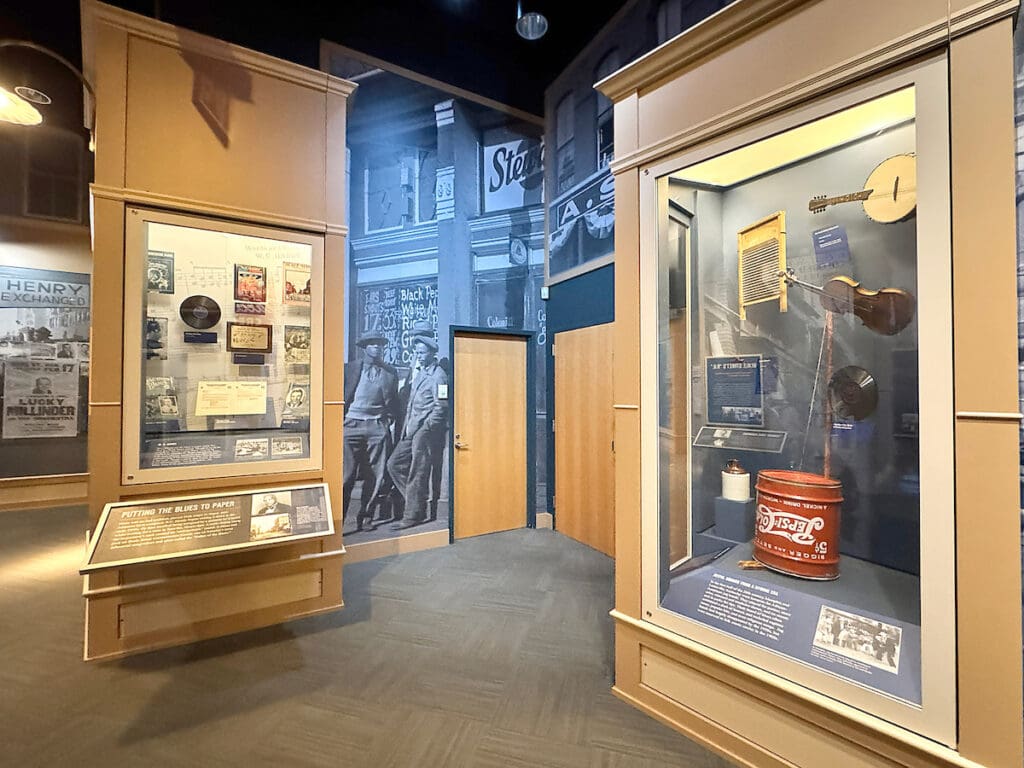
His musical journey began as a child, when he sang and listened to gospel music in church. That early influence is explored in the museum’s The Delta (1930s) gallery, which introduces visitors to King’s childhood and early working life.
Before becoming an international music star, King worked a variety of jobs, including as a brick cotton gin worker, tractor driver and sharecropper. Much of his story is told through King’s own words, giving the exhibits a personal quality and allowing visitors to hear about his early years directly from the man himself.
Finding His Voice in Memphis
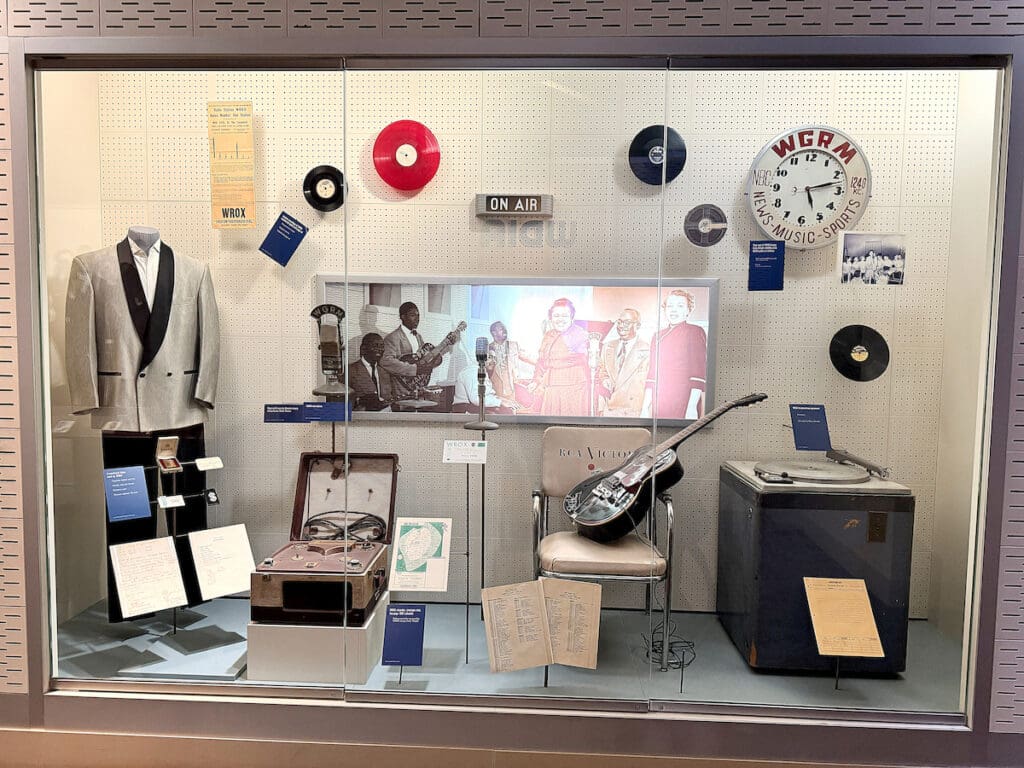
By the late 1940s and 1950s, King’s career began to take a different direction. He became a disc jockey at WDIA in Memphis, Tennessee, one of the most important radio stations in the history of African American music.
It was during this period that Riley King became known as B.B., a nickname associated with “Blues Boy” or “Beale Street Boy.” Memphis’ Beale Street would become another essential chapter in the development of blues and rock and roll.
At the museum, visitors can hear firsthand accounts of King’s rise in the music business and learn how his radio career helped launch the next chapter of his life.
From the Chitlin’ Circuit to the World Stage
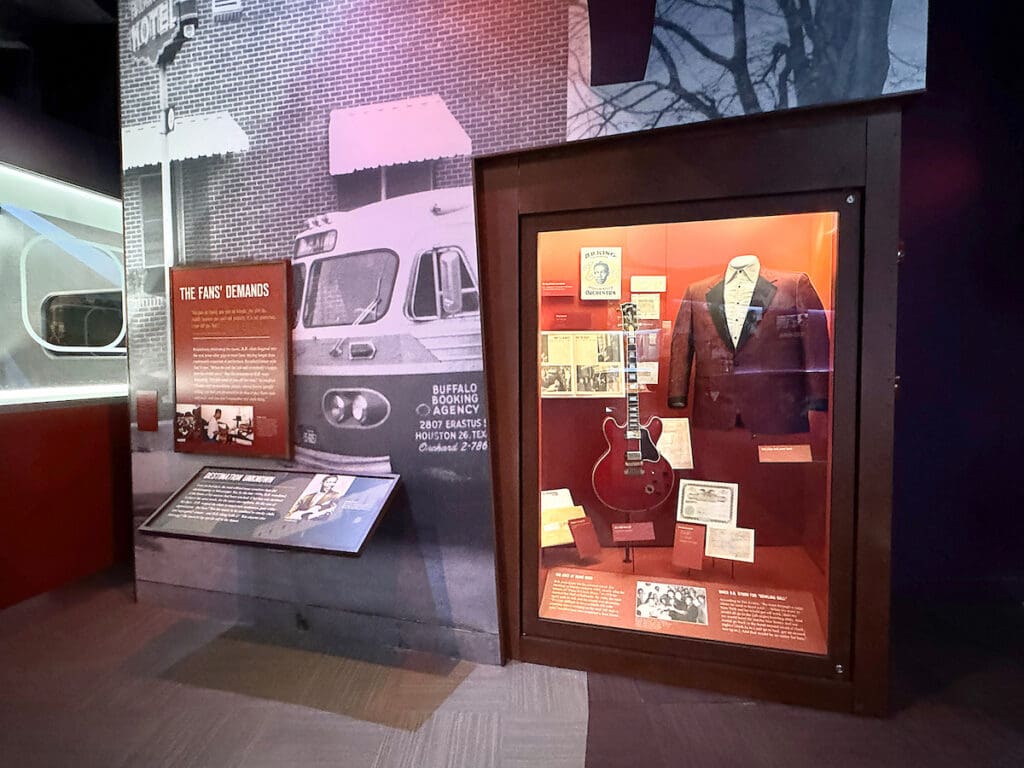
King eventually evolved from a popular radio personality into a bona fide blues icon. He spent years touring the Chitlin’ Circuit with a 13-piece band, performing for African American audiences throughout the South and beyond.
Songs including “Three O’Clock Blues,” “Woke Up This Morning” and “Sweet Sixteen” helped establish King as one of the leading voices of the blues.
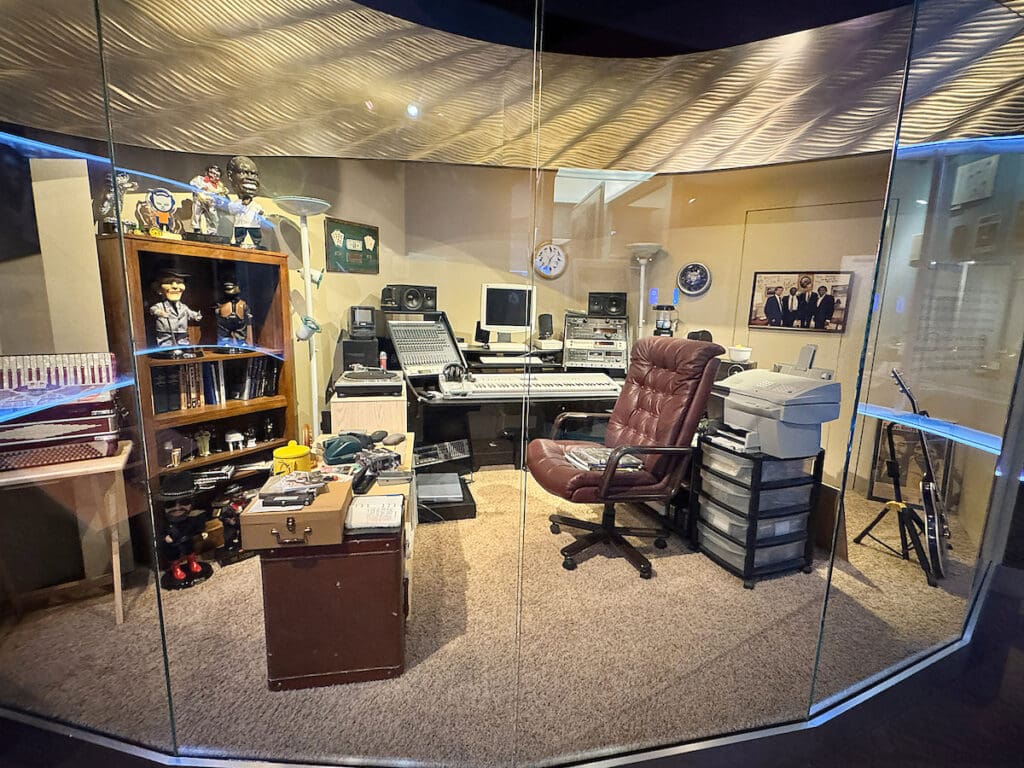
The museum’s Artist to Icon gallery explores this period of his career while also placing King’s music within the broader social landscape of the 1960s. African American music during this era was deeply connected to the Civil Rights struggles taking place throughout the country, and the museum examines those connections as part of King’s story.
B.B. King’s Legacy
One of the newer sections of the museum, The Final Decade, focuses on King’s later years and remarkable accomplishments.
Over the course of his career, King earned 15 GRAMMY Awards, was inducted into the Rock and Roll Hall of Fame, and received the National Medal of Arts in 1990.
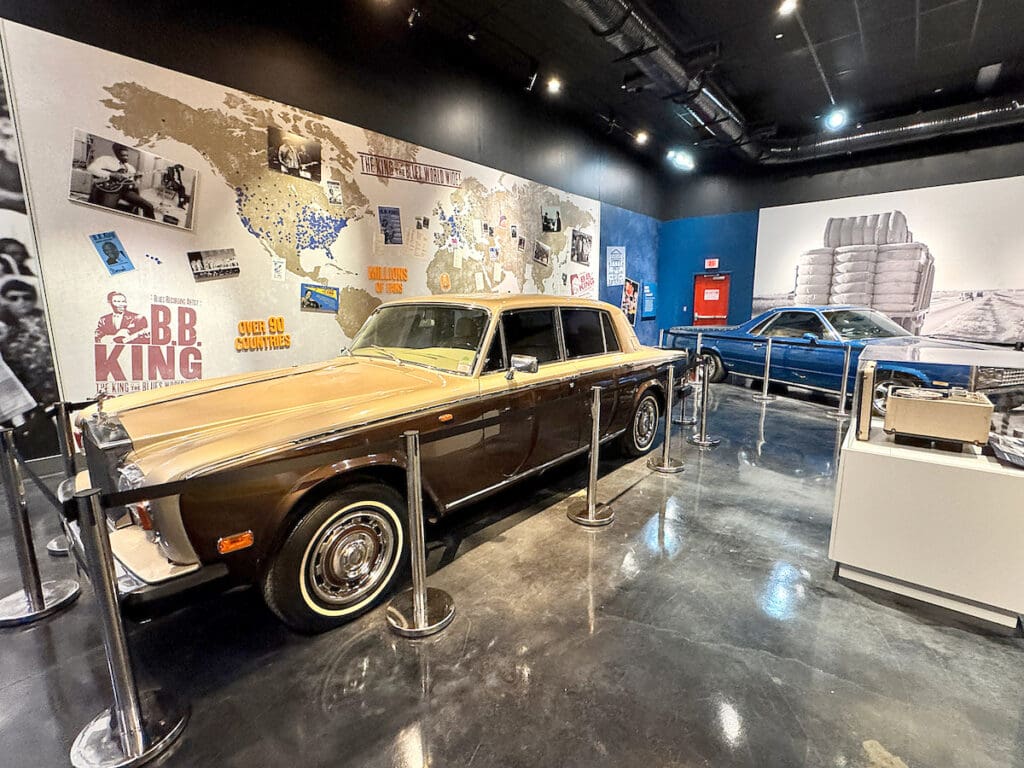
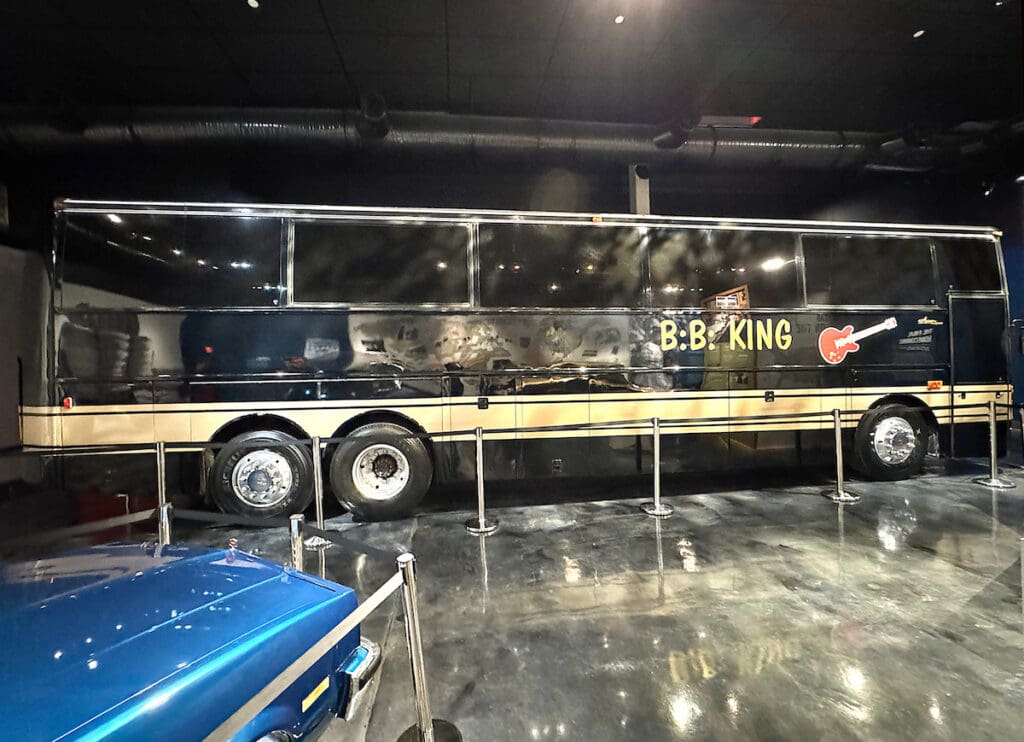
Music memorabilia throughout the museum helps bring that incredible career to life. Among the highlights are two of King’s automobiles: a Rolls-Royce Silver Shadow and a custom-painted Chevy El Camino. Visitors can also see King’s tour bus and his beloved Gibson Les Paul guitar, better known as Lucille.
For music fans, seeing the tour bus is particularly memorable. It offers a tangible reminder of just how much time King spent on the road bringing his music to audiences around the world.
Remembering B.B. King
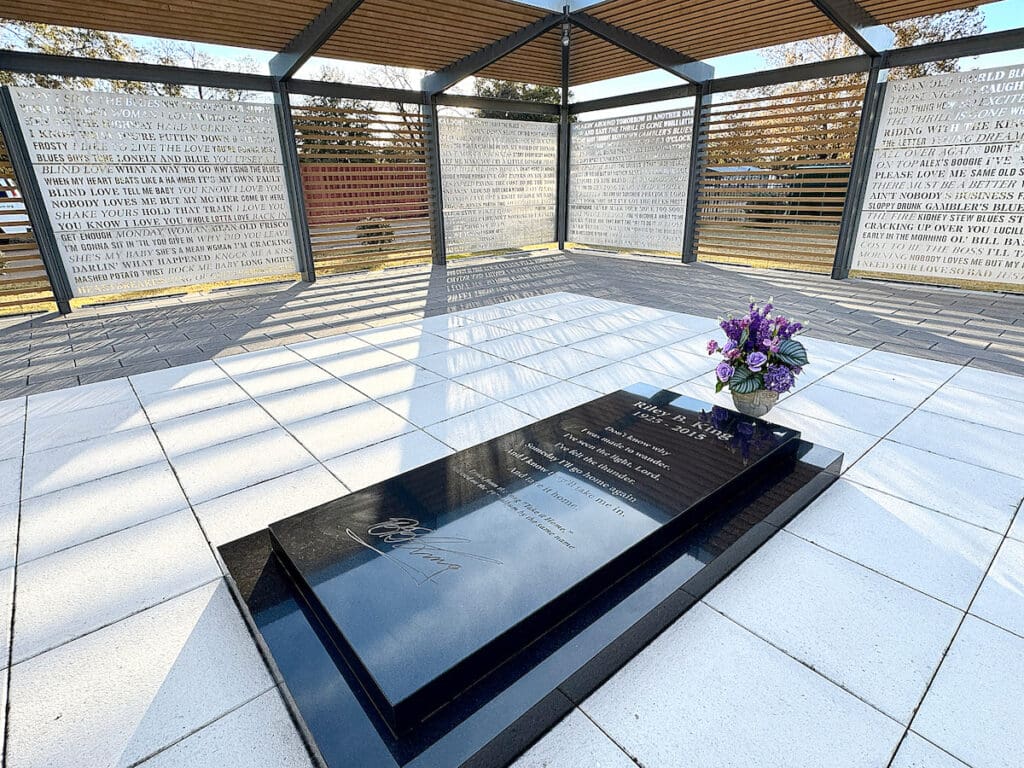
The experience continues outside the museum in the Memorial Courtyard, where King is laid to rest beneath a beautiful pavilion. A granite slab marks his final resting place, providing a peaceful setting for visitors to pause and pay their respects. King’s funeral was held in Indianola on May 30, 2015.
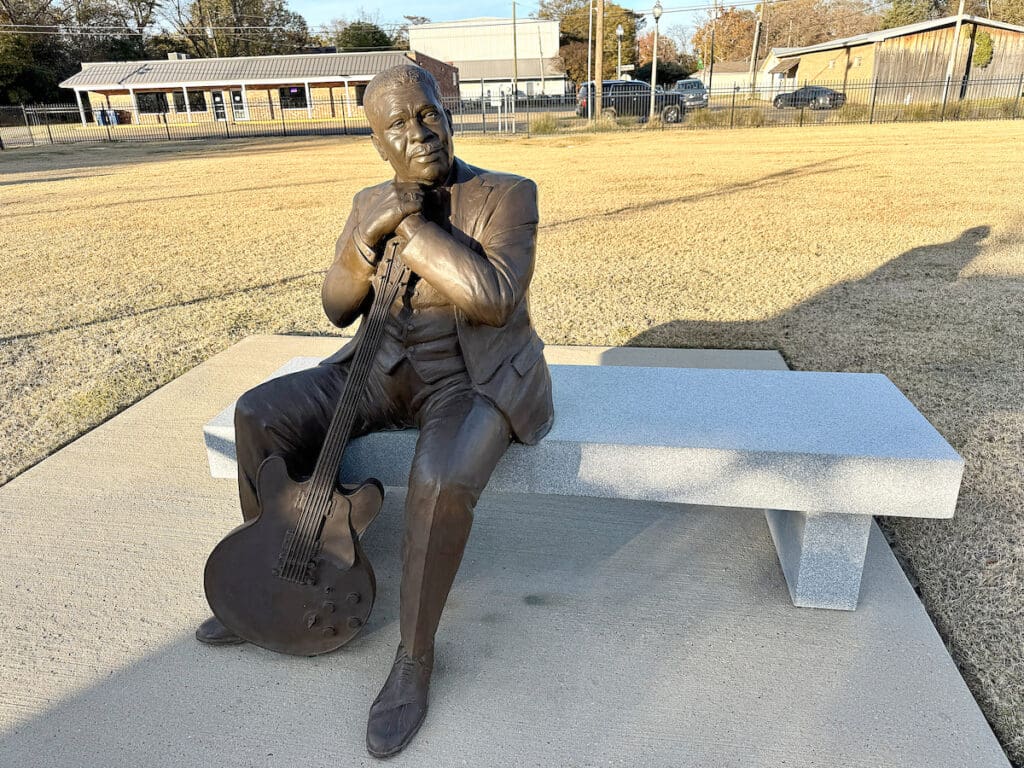
The courtyard is also home to a life-size bronze statue of King holding his beloved guitar, Lucille. It is a fitting tribute to a musician whose sound became synonymous with the blues and whose influence continues to reach generations of artists.
A Must-Visit for Music Lovers
Visiting the B.B. King Museum is about much more than learning about one legendary musician. It is an opportunity to understand the Mississippi Delta and the people, experiences and cultural history that helped shape American music.
For travelers exploring Mississippi by road or experiencing the region aboard a Mississippi River cruise, the museum provides an important connection between the destinations along the river and the music that grew from this part of the country.
If you’re a fan of blues, American music history or simply want to better understand Mississippi’s cultural heritage, the B.B. King Museum & Delta Interpretive Center is well worth adding to your itinerary.
B.B. King Museum & Delta Interpretive Center
Indianola, Mississippi
Hours: Tuesday–Saturday, 10 a.m.–5 p.m.; closed Sunday and Monday
Admission: Adults $15; children ages 5–17 $10; seniors 60+ $12.