


At first glance, food and music might seem like two very different passions. But for acclaimed chef Sean Brock, they are deeply connected by geography, culture, history and memory.
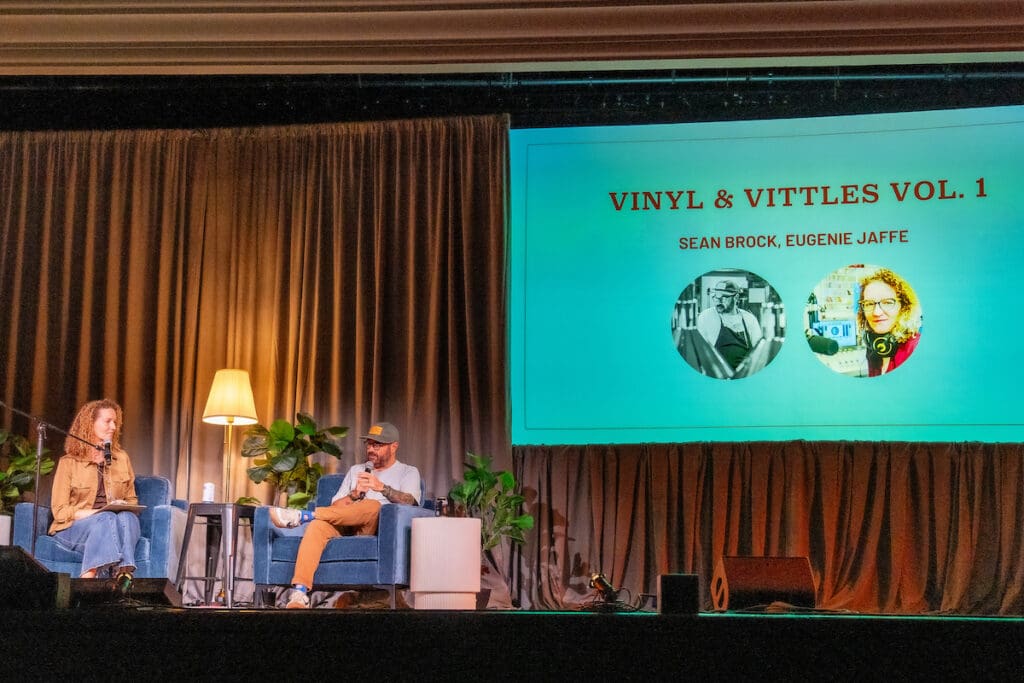
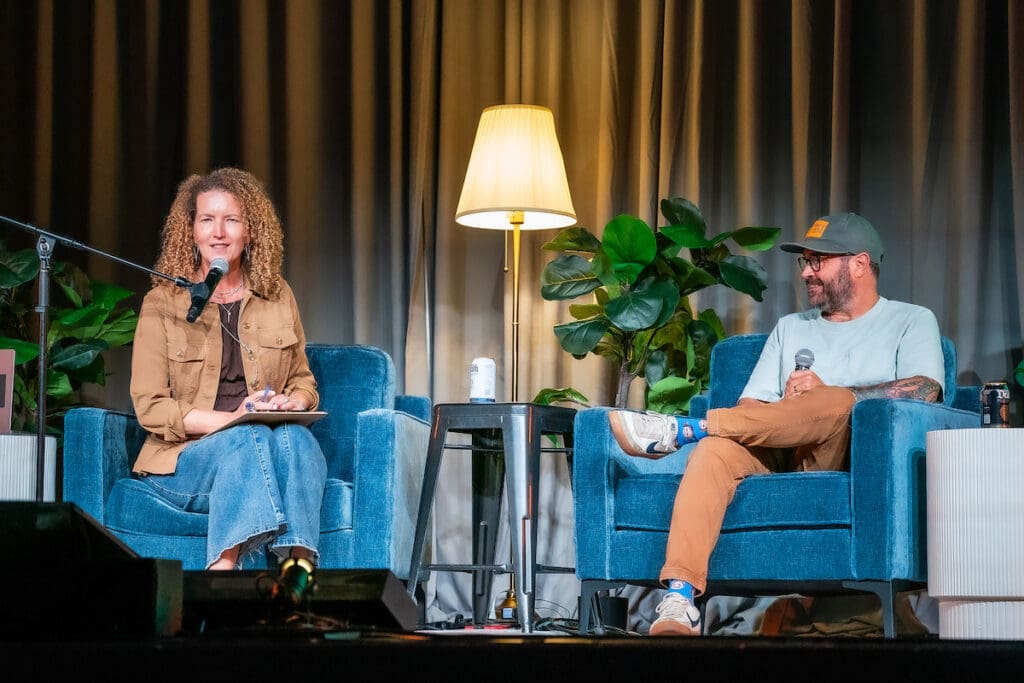
That connection took center stage at Park City Song Summit during “Vinyl & Vittles,” a Summit Lab conversation between Brock and DJ Eugenie Jaffe of KRCL 90.9 FM in Salt Lake City. The two explored everything from Appalachian cooking and New Orleans soul to rare vinyl, heirloom seeds, family recipes, listening bars and the emotional power of a perfect song or meal.
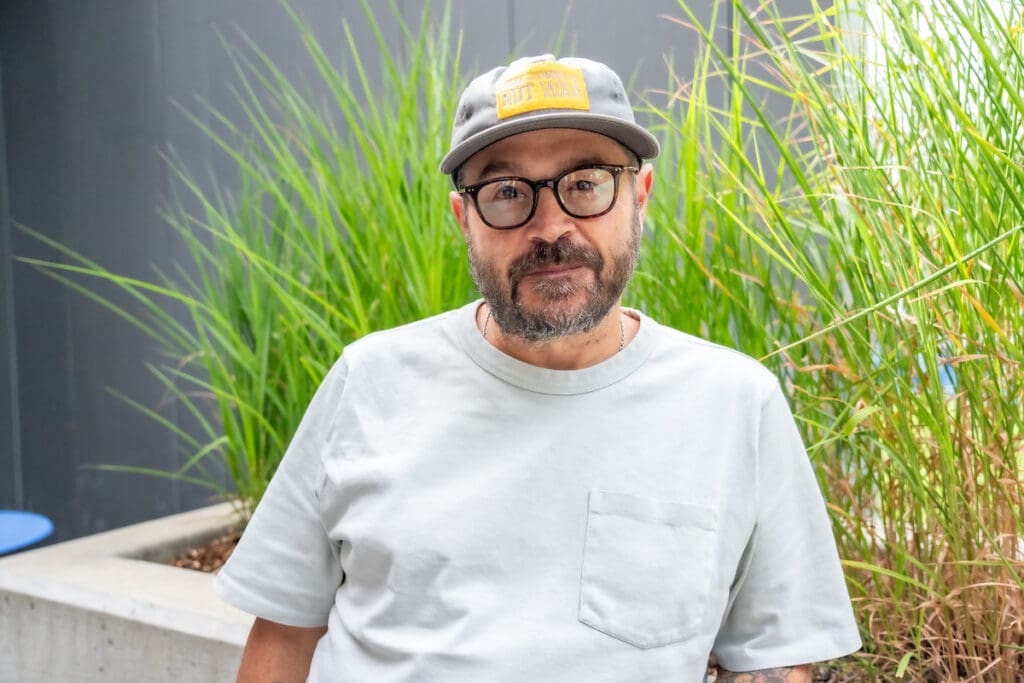
Jaffe, who was born and raised in New Orleans, described herself as both a “music freak” and someone who loves to eat. Brock, a Virginia native and James Beard Award-winning chef, has spent his career examining Southern food at its roots, preserving heirloom ingredients and exploring the cultural forces that shaped the cuisine of the American South.
Increasingly, he is applying that same philosophy to music. “I think my passion for it kind of makes up for my lack of talent in the DJ realm,” Brock joked when Jaffe introduced him as a DJ.
For Brock, however, music is much more than a hobby. It is another form of storytelling and discovery.
From Musician to Chef
Brock originally thought music might be his career. After high school, he moved to Athens, Georgia, with his band and began working at the legendary 40 Watt Club, doing everything from working the door to helping with load-ins and cleaning. He quickly discovered that becoming a professional musician might not be his path. “I realized that I wasn’t very good at playing music,” he said, laughing.
Instead, Brock turned toward food and culinary school. But he never really left music behind. For years, he created playlists for his restaurants, carefully considering what music should accompany different dishes and dining experiences. About four years ago, he began learning how to DJ, and the process felt surprisingly familiar.
He approached music the same way he had approached Southern food: searching for the overlooked, the forgotten and the things in danger of disappearing. “What is unheard? What needs to be put back into the light? What was overlooked? What are we at risk of losing?” Brock explained.
That philosophy has led him deep into the world of rare 45s and vintage recordings, particularly Southern soul. One of his favorite parts of DJing is introducing people to music they have never heard before. His ultimate test? Watching someone try to identify a song on Shazam—only to discover that the obscure track isn’t even listed. “That is truly the best feeling ever,” Jaffe agreed.
The Listening Bar Inspiration
Music has also changed the way Brock thinks about restaurants. He described music as a coping mechanism throughout his life, something he turns to when he is stressed or tired. Playing guitar or putting on a record can provide an escape from the pressures of everyday life.
That fascination eventually led him into the world of high-fidelity audio and, eventually, to Japan’s listening bars. The first time Brock walked into one, he immediately wondered why they weren’t everywhere.
Listening bars are immersive spaces filled with records, high-end speakers and powerful amplifiers, where music is selected thoughtfully for the room. Rather than functioning like a traditional party DJ, the person behind the turntable chooses individual songs based on the mood and atmosphere. Brock was hooked.
For him, sound has become as important to a restaurant as the furniture, architecture or food on the plate. “I’ll always have a hi-fi,” he said. “The sound will be just as important as the type of table or chair or what’s on the plate.”
That philosophy is already reflected in his newest restaurant projects, including Darling in Los Angeles, which features a listening lounge.
Where Food and Music Meet
The deeper Brock has gone into the history of Southern cuisine, the more he has recognized parallels between food and music. He grew up in Appalachia near the birthplace of country music, surrounded by family members who played mandolins, banjos and acoustic guitars. Fiddlers conventions and bluegrass festivals were part of his childhood.
But he eventually realized that the music and food of a region were shaped by many of the same forces. “What causes that food to taste that way, smell that way, look that way and make you feel that way is the same reason the music from that region makes you feel a certain way,” he said.
For Brock, geography is one of the most important pieces of the puzzle. He grew up in the coal fields of Virginia, on top of a mountain, surrounded by the distinctive sound often described as the “high lonesome” sound of Appalachia. His childhood food memories were equally tied to place. He remembered eating squirrel with gravy made by his grandmother, along with other wild foods such as turtle and rattlesnake.
Jaffe found a similar connection in her own Louisiana upbringing. Her family lived near an okra field, and her mother had a simple rule when her children went hunting: If they shot it, they ate it. The stories illustrated the larger theme of “Vinyl & Vittles”: Food and music are often inseparable from the landscape and people who create them.
Pairing Songs With Southern Food
Jaffe put Brock’s theory to the test by asking him to pair specific dishes with music. For deviled eggs, Brock immediately chose J.J. Cale—a laid-back pairing that fit the relaxed character of the dish.
Oysters Rockefeller brought him straight to New Orleans and the music of Allen Toussaint, The Meters and Lee Dorsey. His choice was “Hercules,” a song by Aaron Neville that was produced by Toussaint and features Art Neville.
Cornbread took Brock back to Appalachia and bluegrass. He selected Tony Rice, admiring the way Rice modernized a classic sound while preserving its roots. The exercise demonstrated how Brock thinks about food—not simply as a collection of ingredients, but as a sensory representation of a place.
That idea became particularly powerful when the conversation turned to New Orleans.
The Cultural Roots of Gumbo
Jaffe and Brock discussed the complicated history behind Southern food and the cultures that shaped it. Brock has traveled extensively to research the origins of Southern ingredients and techniques. During trips to West Africa, he encountered fermented foods and ingredients that helped him understand flavors he had previously experienced only through Southern cooking.
One discovery was fermented locust bean, an ingredient used in West African cooking as a paste or powder. For Brock, it was a culinary revelation. He began to see connections between the flavors of West Africa and the development of dishes such as gumbo in Louisiana.
The history of Southern food, he explained, is a collection of cultural influences layered on top of one another. Ingredients, techniques and traditions traveled with people and were transformed by what was available in their new surroundings. Jaffe pointed to Louisiana plantations and the way enslaved Africans adapted European and French culinary traditions through their own knowledge and ingredients.
The history is difficult and painful, but it also helps explain why Southern cuisine became so distinctive. Brock described food and music as forms of nourishment that can emerge from hardship. “They are the things that help you get through the day,” he said. “They help you feel better. They help nurture your soul.”
The Sound of New Orleans
For Jaffe, one of the clearest examples of that connection is the New Orleans second line. The music, dancing and food of New Orleans bring together African, Caribbean, European and American influences, creating a culture unlike anywhere else.
Brock discussed the power of the second-line tradition, particularly the way music and rhythm can transform an atmosphere of mourning into one of celebration. Jaffe described it as one of the most moving experiences in Southern culture—the music that follows a funeral procession and eventually becomes a celebration of life.
The two agreed that music and food can provide a similar kind of healing. At festivals such as the New Orleans Jazz & Heritage Festival, those elements exist side by side: the smell of fried seafood and jambalaya drifting through the air while jazz, blues and zydeco fill the festival grounds.
For Jaffe, the experience represents the very essence of New Orleans. For Brock, it reinforces his belief that geography and cultural history are fundamental to understanding both what people eat and what they hear.

Heirlooms, Vinegar and Family Memories
That same philosophy extends to Brock’s obsession with heirloom ingredients. He considers vinegar one of the South’s most underrated ingredients, recalling how his grandmother made vinegar from muscadine grapes. He still has the “mother” from her vinegar, which he told the story about how he found it and took it after her funeral. The starter culture has since been used to make other vinegars, creating a literal connection between generations.
His passion for preservation also extends to seeds. For years, Brock maintained a seed-saving garden filled with varieties connected to his family and Appalachian history. Some seeds came from his grandmother, who stored them in pill bottles. Others required him to drive rural back roads, knock on doors and ask people for seeds.
Now, with young children of his own, Brock wants to pass that tradition along. One family project involves growing pumpkins each year from seeds saved from the previous year’s crop. It is less about producing the perfect vegetable and more about creating memories.
Finding Joy Outside the Kitchen
Brock also spoke candidly about finding ways to step away from the intensity of the restaurant world. These days, baseball has become an important part of his life. He coaches his son’s team and has become fascinated with the mechanics of pitching and hitting.
For a chef accustomed to running restaurants and obsessing over ingredients, coaching seven- and eight-year-old children offers a completely different kind of challenge. Some of the children have never held a bat or thrown a baseball. Brock enjoys helping them discover the game.
The experience has reminded him of the importance of teaching people to love something rather than simply becoming good at it. That same idea runs through his approach to music and food.
The Thrill of Discovery
Perhaps the strongest connection between Brock’s culinary work and his vinyl collection is the thrill of finding something rare. His most prized record is a promotional 45 of “Hercules,” a song he spent years searching for before finally paying what he described as an “insane price” to acquire it.
But collecting isn’t really about owning something valuable. It is about discovery—and then sharing that discovery with someone else. “When you find something that hits you and affects you, and then you realize that no one else has had that opportunity,” Brock said, “it’s an act of generosity.”
That philosophy explains why he loves DJing. He doesn’t want to play music simply because it makes him look cool. He wants to introduce people to something they might never have encountered otherwise.
The same is true of heirloom seeds, forgotten recipes and traditional Southern ingredients. “You have to taste this. You have to hear this,” he said.
A Shared Language of Place
By the end of “Vinyl & Vittles,” the relationship between food and music seemed less like a theory and more like an obvious truth. Both are shaped by geography. Both carry history. Both preserve memories. Both can tell stories about migration, hardship, celebration and community.
And both have the ability to bring people together. Brock’s work as a chef has always been about looking backward to move forward—finding ingredients, recipes and traditions worth preserving and giving them new life.
His work as a DJ follows the same path. Whether he is dropping a rare Southern soul 45 onto a turntable, saving seeds from his grandmother’s garden, making vinegar from heirloom grapes or cooking food rooted in the history of the American South, Brock is ultimately doing the same thing: searching for stories worth remembering and sharing them with the next generation.
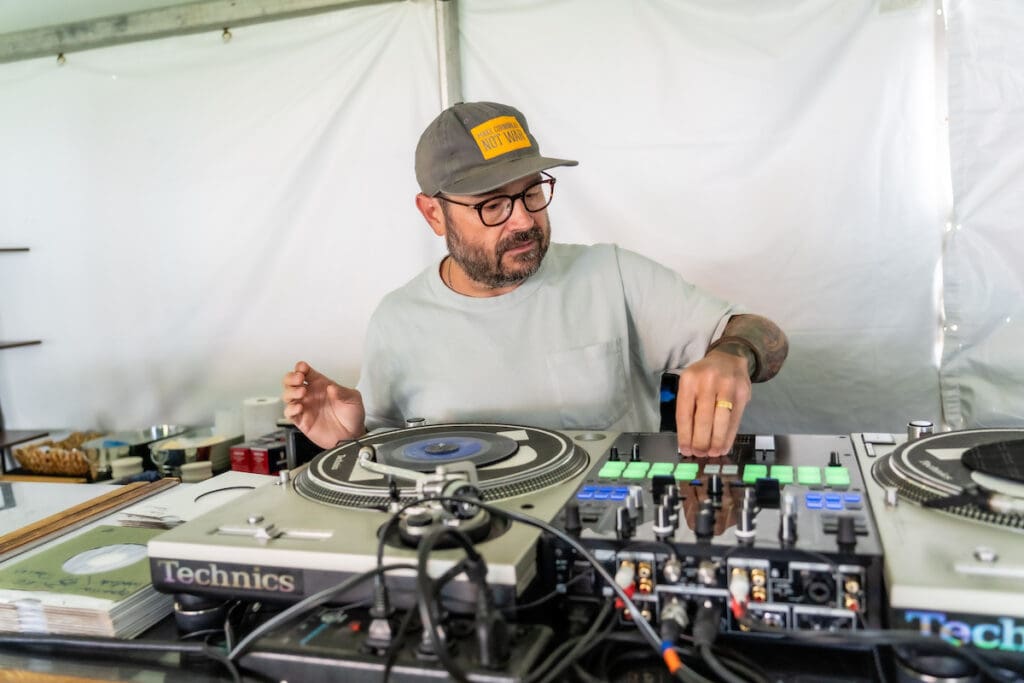
After their talk, Brock headed outside for a public DJ set of New Orleans classics while at the same time teaching the audience how to make the perfect Oysters Rockefeller dish to accompany the music.
At Park City Song Summit, “Vinyl & Vittles” made a compelling case that the best meals and the best songs do more than entertain us.
They tell us where we came from—and sometimes, they help us understand who we are.